The 1960s File Feature
Don't Look Back
Don't Look Back — The Temptations' Early Motown Promise Before the Psychedelic Soul Era To understand Don't Look Back , it helps to understand where the Temp…
01 The Story
Don't Look Back — The Temptations' Early Motown Promise
Before the Psychedelic Soul Era
To understand Don't Look Back, it helps to understand where the Temptations were at the very end of 1965. By December of that year, the group had already established themselves as one of Motown's most reliable hitmakers, with a series of records that demonstrated their extraordinary vocal blend and Berry Gordy's label's gift for crafting pop-soul that crossed demographic lines. The Temptations had scored major hits including My Girl, It's Growing, and Since I Lost My Baby in the preceding months, building a commercial profile that placed them among the elite of the Motown roster.
Don't Look Back arrived in December 1965 as part of this productive run, carrying the group's signature five-part vocal arrangement and the polished production that Motown had refined into a reliable commercial art form. The song has a quality typical of this particular moment in the group's history: it is accomplished, well-made, and emotionally direct without quite reaching the transcendent heights of the group's absolute peaks. That description applies to a great many records from any catalog, and does not diminish the genuine pleasures of the recording.
The Motown Sound and Its Components
Like all Temptations recordings of this period, Don't Look Back benefits from the work of the Funk Brothers, the collective of Detroit session musicians whose playing underpinned virtually everything Motown produced in the 1960s. The rhythmic foundation laid by the Funk Brothers gave every Motown release of this era a characteristic propulsive quality, a sense of forward momentum that kept listeners engaged regardless of the specific lyrical content.
The five-voice lineup of the Temptations at this point, which included David Ruffin, Eddie Kendricks, Paul Williams, Otis Williams, and Melvin Franklin, represented an extraordinary range of vocal colors. David Ruffin's gospel-inflected lead voice had become increasingly central to the group's commercial identity during 1965, and his presence on the track gives it the emotional authority that Motown listeners expected. The interplay between Ruffin's lead and the group's harmonic support represents the Temptations' fundamental approach: one voice out front, carrying the drama, while the others create the world around it.
A Five-Week Chart Presence at Year's End
The chart history of Don't Look Back is modest relative to the group's biggest successes. The track debuted on the Billboard Hot 100 at number 93 on December 18, 1965, and spent the holiday season and the first weeks of 1966 climbing slowly through the chart. Its peak came on January 15, 1966, when it reached number 83, a position it held for one week before the record began its exit from the chart. Five weeks on the Hot 100, with a peak of 83, represents the lower end of the Temptations' chart performance during this productive stretch.
The timing of the record's chart run, straddling the very end of 1965 and the opening weeks of 1966, placed it in a competitive environment saturated with holiday releases and end-of-year chart activity. The Hot 100 around Christmas tends to be particularly crowded as labels push releases to capitalize on holiday purchasing, and records without significant radio push can struggle to distinguish themselves in that environment.
Competition Within the Motown Roster
One of the realities of operating on the Motown label in 1965 and 1966 was that competition for promotional resources was intense. The label had an extraordinary roster, and decisions about which records would receive the full weight of Motown's promotion machinery significantly shaped chart outcomes. The Supremes, Marvin Gaye, and the Four Tops were all releasing major records in the same period, and the internal Motown competition for radio slots and promotional focus was genuine.
Records that might have been prioritized differently at another label could find themselves receiving less aggressive promotion within Motown's competitive internal environment. This does not indicate any diminishment of the label's belief in the record or the group; it reflects the structural challenge of managing an extraordinary roster with finite promotional resources. Don't Look Back may have been a victim of that structural challenge as much as any assessment of the record's own qualities.
The Temptations' Larger Arc
What makes Don't Look Back interesting in retrospect is its position just before the most dramatic transformation in the Temptations' sound. In 1968 and 1969, under the guidance of producer Norman Whitfield, the group would pivot to the "psychedelic soul" style that produced Cloud Nine, Papa Was a Rollin' Stone (in a later configuration), and a series of politically and socially engaged records that represented some of the most artistically ambitious work in Motown's history. The 1965-1966 Temptations, the group heard on Don't Look Back, are a different artistic entity from the late-period Temptations, and listening to this record provides a window into the foundation before the transformation.
David Ruffin, whose presence defines so much of the group's 1965-1966 commercial identity, would depart the group in 1968. Eddie Kendricks, whose falsetto contributes meaningfully to the group's harmonic texture on this recording, would leave in the early 1970s. The configuration of voices heard on Don't Look Back captures a specific, historically bounded version of the group at a moment of genuine commercial strength, even if the individual record did not fully capitalize on that strength.
For anyone building a serious understanding of the Temptations' recorded legacy, Don't Look Back is a worthwhile stop on the timeline.
"Don't Look Back" — The Temptations' singular moment on the 1960s charts.
02 Song Meaning
Don't Look Back — Meaning and the Temptations' Forward Motion
The Imperative of Forward Movement
The title and central command of Don't Look Back positions the song within a well-established tradition of popular music that frames progress and forward movement as emotional necessities. The narrator is not simply offering comfort; he is issuing a directive. Whatever has happened in the past, whatever the temptation to dwell on it or retreat into it, the song insists on a different orientation. Face forward. Keep moving. This kind of motivational directness was one of the Temptations' consistent strengths during their mid-1960s commercial peak.
The emotional logic of the song is fundamentally optimistic. The past is done and cannot be changed; what can be changed is one's relationship to it, and the song argues for releasing it rather than being held by it. That argument is easier to make than to enact, which is why listeners have always needed songs that make it compellingly. The Temptations deliver this one with conviction.
Loss and Recovery in Soul Music
Mid-1960s soul music was deeply engaged with the emotional territory of loss and recovery, and the Temptations' catalog through this period navigated that territory with particular skill. Songs about heartbreak, longing, and the desire to move beyond pain were at the center of the Motown formula, partly because they reflected genuinely universal human experiences and partly because the gospel roots of soul music had developed sophisticated musical vocabularies for exactly those emotional states.
Don't Look Back engages with this tradition while pushing toward its more forward-looking end. Rather than dwelling in the pain of what has been lost, as many soul ballads do so effectively, this song is primarily concerned with what comes next. The grieving moment is acknowledged but not the song's dwelling place; the track's energy is directed toward recovery and possibility rather than the examination of loss.
The Five Voices and Their Meaning
The Temptations' particular contribution to the soul tradition was the extraordinary five-part vocal arrangement that gave their recordings a harmonic richness unavailable to solo acts. When five voices with different colors and ranges unite on a single emotional statement, the effect is not just musical but social: the feeling is shared, communal, validated by multiple perspectives simultaneously.
On Don't Look Back, this communal quality reinforces the song's message. The narrator is not simply expressing his own opinion about the wisdom of forward movement; he is delivering something that feels like collective wisdom, the distilled experience of a community that has learned how to survive difficulty and emerge from it intact. The gospel tradition from which Motown drew so directly was built on exactly this kind of collective vocal witnessing, and the Temptations' approach to harmony preserves that inheritance.
Emotional Resolution as Commercial Formula and Genuine Need
There is a temptation to treat the optimistic emotional arc of songs like Don't Look Back as purely commercial calculation, as a formula for producing consumer-friendly music. The Motown production system was certainly capable of that kind of calculation, and the label did deliberately craft its output for maximum mainstream accessibility. But to reduce these songs entirely to formula is to misunderstand both the artists who performed them and the audiences who needed them.
Black American communities in 1965 and 1966 were living through a period of intense social upheaval, and the consumption of music that insisted on the possibility of moving past difficulty and finding something better ahead was not escapism but a genuine emotional resource. The message of Don't Look Back was not trivial to the people for whom it was primarily made. Forward movement was a survival strategy as much as a romantic consolation.
The Moment Before Transformation
Returning to this song from the vantage point of the Temptations' complete catalog, it also functions as a kind of farewell to one version of the group. The smooth, harmonically focused, romantically themed approach heard here would give way within a few years to Norman Whitfield's more politically engaged, sonically adventurous productions. The forward-looking message of the song turns out to apply to the group's own trajectory. The Temptations who recorded Don't Look Back were themselves about to move forward into a significantly different artistic identity, one that would prove even more enduring in the cultural memory. The song is, in retrospect, an inadvertent self-description.
→ More from The Temptations
View all The Temptations hits →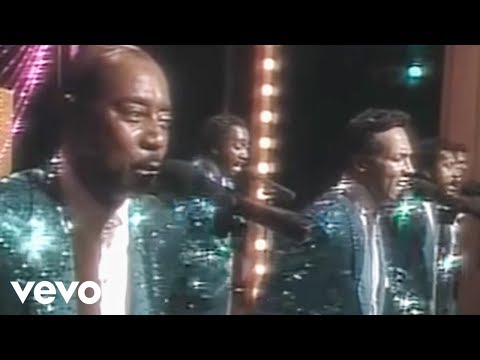


→ More from the 1960s File
View all 1960s hits →




Keep digging