The 1960s File Feature
Cloud Nine
Cloud Nine — The Temptations (1968) "Cloud Nine" by the Temptations, released in the autumn of 1968, represents one of the most consequential pivots in the h…
01 The Story
Cloud Nine — The Temptations (1968)
"Cloud Nine" by the Temptations, released in the autumn of 1968, represents one of the most consequential pivots in the history of Motown Records. The Detroit label had built its commercial empire on a sound defined by polish, sophistication, and a careful calibration of crossover appeal, but by 1968 the world outside Motown's studio walls had changed dramatically. The assassination of Martin Luther King Jr., the escalation of the Vietnam War, the upheavals of the counter-cultural movement, and the increasingly politicized mood of Black America all exerted pressure on the smooth surfaces of Motown's signature sound. "Cloud Nine" was the label's most direct response to these pressures, and it was not merely a stylistic experiment but a genuine artistic breakthrough.
The song was produced by Norman Whitfield, who would become the architect of Motown's psychedelic-soul era, a period of experimentation that transformed the Temptations from a polished vocal group into something stranger, more intense, and more musically adventurous. Whitfield collaborated on the lyric with Barrett Strong, the writer and artist who had recorded one of Motown's earliest hits. Together they produced a lyric that dealt directly with drug use and urban poverty, subject matter that would have been unthinkable on a mainstream Motown record only a few years earlier.
The production was equally radical by Motown's standards. Whitfield layered the track with wah-wah guitar, dense percussion, and shifting psychedelic guitar textures drawn from the rock and soul experimentation then happening in recordings by artists like Sly Stone and the Chambers Brothers. The result was a sound that had no clear precedent in the Motown catalog, a funk-inflected, psychedelic soul production that placed the Temptations in dialogue with the most adventurous music being made in America in 1968. The group's vocal arrangement adapted to the new production paradigm, with lead duties rotating among multiple members rather than being concentrated on David Ruffin, who had anchored much of the group's previous work.
The single reached number two on the Billboard Hot 100 and number six on the R&B chart, remarkable numbers for a record so different from the group's established commercial identity. The chart performance demonstrated that there was a substantial audience for Motown's more experimental direction, and it gave Whitfield the commercial mandate to continue the psychedelic-soul experiment across subsequent albums and singles. The success also validated the broader shift happening within Black popular music toward more politically and culturally engaged content.
Dennis Edwards, who had replaced Ruffin as the group's primary lead vocalist, delivered a performance of particular power on "Cloud Nine." His voice, rougher and more urgent than Ruffin's polished tenor, suited the rawer emotional register of the new material. The ensemble vocal work throughout the track is also exceptional, with the group's five voices creating a layered, sometimes dissonant texture that reinforced the song's psychedelic quality.
"Cloud Nine" won the Grammy Award for Best Rhythm and Blues Group Performance, Vocal or Instrumental, at the 1969 Grammy ceremony, marking the first Grammy won by a Motown act in the label's history. The Grammy win was significant beyond the Temptations' career, representing a formal acknowledgment by the music industry establishment that the new direction Whitfield had initiated was artistically significant, not merely commercially opportunistic. The award gave Motown cover to continue the experimentation that "Cloud Nine" had initiated.
The song inaugurated what fans and historians of Motown have come to call the "psychedelic soul" or "social conscience" period of the Temptations' career, a series of albums and singles including "Runaway Child, Running Wild," "I Can't Get Next to You," "Ball of Confusion," and ultimately "Papa Was a Rollin' Stone" that together constitute one of the most sustained and artistically ambitious runs in the history of American popular music. This period produced music that was harder, darker, more politically engaged, and more formally experimental than almost anything else in the Motown catalog.
The recording has maintained its reputation as a watershed moment and is regularly cited in histories of soul music, Motown, and the intersection of popular music with the social upheavals of the late 1960s. Its influence on subsequent production in soul and funk was substantial, as Whitfield's techniques were widely imitated and the record's demonstration that political content could coexist with commercial success opened doors for a generation of subsequent artists.
02 Song Meaning
What "Cloud Nine" Is Really About
"Cloud Nine" by the Temptations, produced by Norman Whitfield and released on Gordy Records in 1968, was one of the most audacious lyrical departures in Motown's history. Written by Whitfield and Barrett Strong, the song deals directly with drug use as a response to poverty and hopelessness, framing the narrator's escape into an altered state not as moral failing but as the predictable consequence of social conditions that leave people with few other means of relief. This lyrical stance was unprecedented for a mainstream Motown release and represented a genuine artistic risk on the part of everyone involved.
The "cloud nine" of the title is explicitly a state of drug-induced euphoria, a place where the harsh realities of the narrator's life, characterized by poverty, lack of opportunity, and the crushing weight of a system that offers little to people in his situation, can no longer reach. The lyric describes the circumstances of a life shaped by deprivation and the appeal of an escape that, while temporary and destructive, provides at least the sensation of freedom. This was a dramatic departure from the love-song format that had dominated Motown's output, and it positioned the Temptations as artists capable of addressing the full complexity of Black American life in 1968, not merely its romantic dimension.
Norman Whitfield's decision to approach the subject with empathy rather than condemnation was crucial. The song does not lecture the narrator or moralize about the destructiveness of drug use. Instead, it presents the narrator's choice as understandable within the context of the life circumstances described, inviting the listener to consider the social conditions that make such escapes appealing rather than simply condemning the individual who seeks them. This approach reflects a sophisticated understanding of how social critique works in popular song, using the first-person lyrical stance to create identification before expanding outward to broader implications.
The psychedelic production that Whitfield built around the lyric is not incidental to the song's meaning. The wah-wah guitar, the shifting textures, and the layered density of the arrangement create a sonic experience that partially simulates the disorienting quality of the altered state the lyric describes. The listener is not merely told about cloud nine but placed in a sonic environment that has some of the same floating, unmoored quality. This correspondence between lyrical content and sonic texture is one of the reasons the recording has remained so powerful, because the music enacts what the words describe.
For the Temptations, the song marked a transformation in their artistic identity that would define the most critically acclaimed period of their career. The move from polished romantic balladry to socially engaged psychedelic soul required significant courage, both from the artists and from Motown's leadership, at a moment when the commercial consequences of such a pivot were genuinely uncertain. The song's success, both critically and commercially, validated the risk and opened a creative period that produced some of the most significant recordings in the Motown catalog.
The song's importance extends beyond the Temptations' own history. By demonstrating that explicit engagement with social conditions, including drug use and poverty, could succeed commercially on a major label, it helped create space for a subsequent generation of soul and funk artists to be more direct about the circumstances of Black American life. The Grammy win for Best Rhythm and Blues Group Performance gave formal institutional weight to this expanded sense of what soul music could do, signaling to the industry that artistic ambition and social engagement were not incompatible with commercial viability.
→ More from The Temptations
View all The Temptations hits →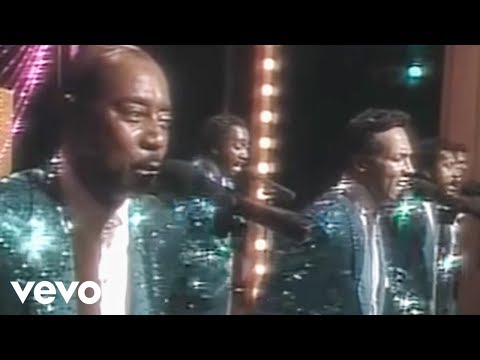



→ More from the 1960s File
View all 1960s hits →




Keep digging