The 1960s File Feature
Why? (Am I Treated So Bad)
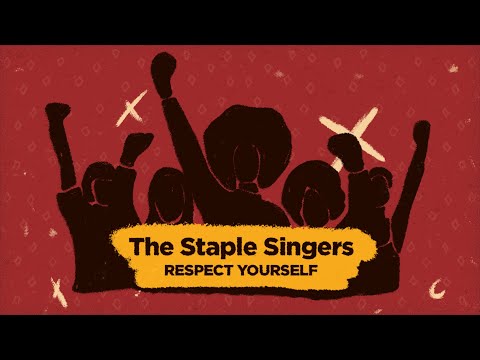
"Why? (Am I Treated So Bad)" — The Staple Singers' Protest Hymn Imagine the summer of 1967: the civil rights movement is at a fever pitch, cities are burning…
01 The Story
"Why? (Am I Treated So Bad)" — The Staple Singers' Protest Hymn
Imagine the summer of 1967: the civil rights movement is at a fever pitch, cities are burning with rage and grief, and on the airwaves something profound is happening. Gospel-rooted voices are crossing over into the pop mainstream, carrying messages that no other genre could hold with such grace or moral authority. Into that moment stepped the Staple Singers, a Chicago family act whose music had been a pillar of the Black church for over a decade, with a song so direct it needed no metaphor.
A Family Forged in Gospel Fire
The Staple Singers were not newcomers to the struggle when "Why? (Am I Treated So Bad)" arrived in mid-1967. Patriarch Roebuck "Pops" Staples had spent years building the group through gospel circuits and civil rights gatherings, his guitar tone unmistakable: low, trembling, rooted in the Mississippi blues he carried north. His daughters Mavis, Cleotha, and Yvonne supplied the harmonies, and Mavis in particular had developed one of the most commanding contralto voices in American music. By the mid-1960s, the family had become close friends with Dr. Martin Luther King Jr., and their music was known in movement circles as much as in sanctuaries.
The Question the Song Asks
The title says everything. In an era when coded language was often considered safer, the Staple Singers chose to be plain. The song asks, directly and without flinching, why Black Americans are subjected to systematic mistreatment. The question hangs in the air of every verse, turning it into both a lament and a demand for accountability. Pops Staples wrote the track with that same economy of phrase that characterizes the best gospel writing: words carefully chosen to do maximum emotional work in minimum syllables. The arrangement gives Mavis room to push and pull around the melody, her voice sometimes preaching, sometimes weeping, sometimes simply testifying.
Recording at the Crossroads of Soul and Gospel
By 1967, the Staple Singers were recording for Stax Records in Memphis, a label that was reshaping American popular music from a modest studio on McLemore Avenue. The Stax sound was defined by the house band Booker T. and the MGs and by a raw, unpolished immediacy that stood in deliberate contrast to the more polished Detroit sound across state lines. That environment suited the Staples perfectly. Their recordings there had a directness that matched their message. Pops Staples' guitar work on the track carries the slow, heavy ache that his Delta roots demanded, and the production never lets sentiment tip into sentimentality.
A Brush with the Billboard Hot 100
The song entered the Billboard Hot 100 on June 3, 1967, reaching a peak position of 95 in its only week on the chart. In raw commercial terms, that is a modest result. In context, however, it represents something more significant: gospel-rooted protest music showing up on America's mainstream pop chart in the most turbulent summer of the decade. The song was not designed to court radio programmers in search of a danceable hook. It debuted and peaked at number 95 on the week of June 3, 1967, and the brevity of its chart run says more about the limits of mainstream pop radio in 1967 than about the song's power or reach.
Legacy and the Long Arc
The Staple Singers would go on to significantly bigger commercial success, eventually reaching number one in 1972 with "I'll Take You There." But songs like "Why? (Am I Treated So Bad)" laid the foundation for everything that came after, both for the group and for the genre they were helping to define. The track stands as an early example of socially conscious Black music finding, however briefly, a foothold in the mainstream. It influenced artists across gospel, soul, and R&B for generations; you can hear its DNA in records made decades later by artists who understood that the most powerful protest is often the one that simply refuses to be indirect. The Staple Singers asked a question that America had not yet answered. Many would argue it still hasn't.
Press play and let Mavis' voice do what no argument can.
"Why? (Am I Treated So Bad)" — The Staple Singers' singular moment on the 1960s charts.
02 Song Meaning
The Moral Weight of a Question: What "Why? (Am I Treated So Bad)" Means
There is a specific kind of courage in choosing simplicity. When injustice is the subject, the temptation in art is often to dress it up, to approach it through allegory or metaphor, to soften its edges so the audience feels comfortable enough to stay in the room. The Staple Singers rejected that approach entirely with this song, and the result is a piece of music whose meaning announces itself without hesitation.
The Power of the Direct Question
A title like "Why? (Am I Treated So Bad)" is a radical act of clarity. It names the experience without flinching, and it refuses to do the emotional labor of making that experience palatable. The song positions its narrator as a person owed an explanation that no one has provided, which is itself a pointed critique of the silence and indifference that surrounds systemic injustice. By framing the song as a question rather than a declaration, Pops Staples placed the burden of answer squarely on the listener, on society, on the institutions that maintained segregation and violence well into the civil rights era.
Gospel Roots, Secular Stakes
The Staple Singers came from gospel, and that tradition shapes the song's emotional architecture in fundamental ways. Gospel music does not treat suffering as an anomaly to be explained away; it takes suffering as a given and asks what spiritual resources are available in the face of it. This song channels that tradition while directing its question outward, toward social structures rather than inward toward personal sin or doubt. The result is a hybrid form: the emotional and spiritual vocabulary of the church applied to the material conditions of racial inequality in the United States. That combination gave the song its particular authority, its sense that what is being said matters beyond any single performance or radio spin.
Mavis Staples and the Embodied Vocal
A song's meaning is inseparable from its performance, and Mavis Staples' voice on this track carries layers of meaning that the lyrics alone cannot. She had developed, by 1967, a way of singing that moved between tenderness and ferocity with disarming ease. When she delivers the central question, it sounds simultaneously like a cry and like an indictment. Her voice does not ask for sympathy; it demands witness. That distinction matters enormously in the context of civil rights-era music, which had to perform the difficult task of speaking truth to power while also building solidarity among those who already knew that truth firsthand.
Why It Resonated Then and Resonates Now
The song appeared in the summer of 1967, a period of extraordinary civil unrest in American cities. The question it asked was not abstract; it was the question on the lips of millions of people who had watched peaceful demonstrators beaten, who had seen children hosed in the streets of Birmingham, who were watching their communities erupt under the accumulated weight of generations of mistreatment. Music that gave voice to that question without dilution offered something rare: acknowledgment. The song told listeners that their experience was real, visible, and worthy of being named out loud. That is what art does at its best, and it is why this song retains its charge across decades.
A Song That Outlasts Its Chart Position
The Billboard Hot 100 measures commercial reach, not cultural importance, and the brief chart life of this song illustrates that gap cleanly. Songs built for confrontation do not always make comfortable radio programming, but they have a way of outlasting their more agreeable contemporaries. The Staple Singers were asking a question in 1967 that no polite pop song would touch. That decision placed them on the right side of history, and the song endures because the question it poses has never received a satisfying answer.
→ More from The Staple Singers
View all The Staple Singers hits →

→ More from the 1960s File
View all 1960s hits →




Keep digging