The 1960s File Feature
Morningtown Ride
Morningtown Ride: The Seekers and the Gentle Power of Folk-Pop Lullabies When The Seekers released their version of "Morningtown Ride" in the mid-1960s, they…
01 The Story
Morningtown Ride: The Seekers and the Gentle Power of Folk-Pop Lullabies
When The Seekers released their version of "Morningtown Ride" in the mid-1960s, they were already one of the most commercially successful acts in the world, having broken through in Britain and Australia with a sound that blended the clarity of folk music with the melodic accessibility of mainstream pop. The song became one of the most beloved entries in their catalog, a gentle, unhurried piece that demonstrated how sophisticated simplicity could be when placed in the hands of genuinely talented performers.
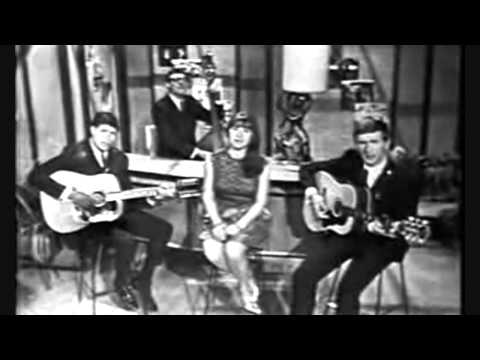
The Seekers formed in Melbourne, Australia, in the early 1960s, originally comprising Judith Durham, Athol Guy, Keith Potger, and Bruce Woodley. Their sound was defined above all by Durham's voice, a pure, crystalline instrument with extraordinary projection and warmth that could make even the simplest melodic line feel like a revelation. The group arrived in Britain in 1964, initially as tourists with musical ambitions, and found themselves signed to Capitol Records and climbing the charts within months of their arrival.
"Morningtown Ride" was written by Malvina Reynolds, the American folk songwriter whose catalog included politically engaged material alongside songs of extraordinary gentleness aimed at younger listeners. Reynolds had composed the song with children in mind, and its subject matter, a train journey through the night toward a destination called Morningtown, belonged to the same tradition of imaginative, lullaby-adjacent material that folk artists had been producing for decades. The Seekers' arrangement honored the song's origins while giving it a contemporary production sheen appropriate to 1967 and to the mid-1960s pop market.
The arrangement featured the group's characteristic blend of acoustic instrumentation with sympathetic orchestral support, never overwhelming the vocal but providing warmth and texture that gave the record a feeling of fullness without heaviness. Judith Durham's lead vocal was placed at the center of the mix with the kind of clarity that comes from genuine technical confidence rather than studio manipulation, and the harmonies provided by the male members of the group created a cushioned backdrop that suited the song's dreamlike quality perfectly.
By the time "Morningtown Ride" reached listeners, The Seekers had already demonstrated their commercial power with "I'll Never Find Another You," which had reached the top of the charts in multiple countries, and "A World of Our Own," which reinforced their position as one of the most bankable acts on the international pop market. Their Capitol Records releases sold in enormous quantities in the United Kingdom, Australia, and territories beyond, and the label had learned to trust the group's instincts about material selection. "Morningtown Ride" was exactly the kind of song that played to their specific strengths: melodic, accessible, emotionally uncomplicated, and vocally showcasing.
The reception of the song was warm and immediate. It connected with a broad demographic that included not only the group's core audience of young adults but also families and older listeners who responded to the song's lack of aggression and its pastoral, optimistic emotional content. In a pop landscape that was beginning to fragment into multiple competing subcultures, the ability to appeal across demographic lines was commercially significant, and The Seekers possessed that ability in unusual measure.
The Australian context of the group's origins gave their music a quality that British and American listeners sometimes found refreshing. Their clean harmonies and acoustic-centered arrangements suggested an alternative to both the increasingly experimental direction of rock music in the mid-to-late 1960s and the more urban sophistication of certain strains of American pop. They occupied a middle ground that felt genuinely distinct rather than merely conservative, and "Morningtown Ride" is perhaps the clearest example of what that middle ground sounded like at its best.
The song has been used in numerous contexts since its initial release, including educational programming and children's media, a use that reflects both the quality of the material and the unusual breadth of its appeal. For The Seekers, it remained a signature moment throughout their career, the kind of record that audiences consistently requested and that the group performed with evident pleasure because it showcased what they did best without straining against their natural inclinations.
Their influence on Australian popular music was recognized formally when the group was named Australians of the Year in 1967, an honor that reflected both their commercial achievements and the pride their success generated at home. "Morningtown Ride" was part of the body of work that earned that recognition, a small but luminous example of what Australian artists were capable of bringing to the international pop stage during one of its most competitive and creatively rich periods.
02 Song Meaning
Morningtown Ride: Dreams, Safety, and the Comfort of a Journey Toward Sleep
"Morningtown Ride" belongs to a specific and honorable tradition within folk and popular music: the adult song written for the sensibility of a child but capable of moving adult listeners with equal effectiveness. Malvina Reynolds composed the song as a lullaby in structure and spirit, and its central image, a train moving through the darkness toward a destination where morning and rest await, is both simple enough for the very young and resonant enough to carry meaning for anyone who has ever needed reassurance in a moment of uncertainty.
The train as metaphor has deep roots in American folk and blues tradition, where it commonly represents departure, longing, freedom, or loss. Reynolds chose to work against the most melancholic dimensions of that tradition, using the train instead as a vehicle for safety and arrival. The journey in "Morningtown Ride" is not a flight from difficulty but a passage toward comfort, a subtle but significant reversal that gives the song its distinctive emotional character. Where many train songs are about leaving something behind, this one is about approaching something good.
The imagery of sleep and dreaming that runs through the song serves several purposes simultaneously. On the most literal level, it describes children drifting off to rest as the train carries them forward. On a more metaphorical level, it suggests that the transition between waking and sleeping is itself a kind of journey, one with its own rhythms and its own geography. Reynolds understood that lullabies are most effective when they make the act of falling asleep feel like an adventure rather than a surrender, and this insight shaped every element of the song's imagery.
The Seekers' interpretation amplified these qualities through the specific character of Judith Durham's voice. There is something in the combination of purity and warmth in her vocal tone that communicates safety without condescension, a rare quality that allowed the group to perform material originally intended for children without making adult listeners feel that the music was beneath them. The song expanded rather than contracted in their hands, becoming something that could genuinely move listeners across a wide age range.
For The Seekers as a group, "Morningtown Ride" represented an important dimension of their artistic identity. They were a group with genuine folk roots but with commercial ambitions that required them to navigate the pop market carefully. Songs like this one allowed them to remain connected to the acoustic, harmony-driven traditions that had formed them while reaching an audience far larger than the folk circuit could provide. The thematic gentleness of the song was not a compromise but a genuine expression of values that the group members held: a belief in music as something that should offer comfort and pleasure rather than shock or confrontation.
The song's relationship to time and transition gives it a universality that songs focused on more specific human situations cannot easily achieve. Almost everyone has experienced the feeling of being carried somewhere in a state of half-sleep, of surrendering to motion and allowing the waking mind to relax its grip. Reynolds captured that experience with extraordinary precision, and The Seekers gave her words a musical home perfectly suited to their quiet power.
In the context of the mid-1960s pop landscape, "Morningtown Ride" was a statement about what kind of art the group wanted to make and what kind of audience they wanted to serve. That it succeeded commercially demonstrates that the appetite for this kind of music was larger than the era's louder and more confrontational sounds might have suggested. The song endures because the need it addresses, the need for comfort and for the feeling of safe passage through the night, does not diminish with changing times.
→ More from The Seekers
View all The Seekers hits →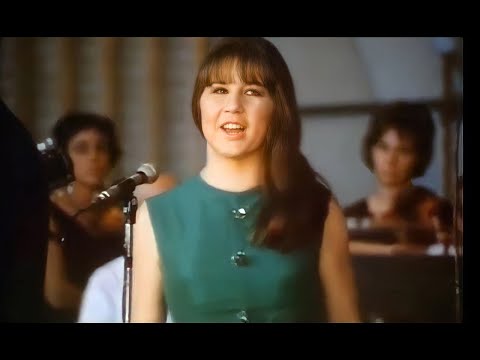
→ More from the 1960s File
View all 1960s hits →




Keep digging