The 1960s File Feature
A World Of Our Own
A World Of Our Own — The Seekers (1965) The Seekers arrived in Britain from Australia in late 1964 carrying a sound unlike anything else on the British chart…
01 The Story
A World Of Our Own — The Seekers (1965)
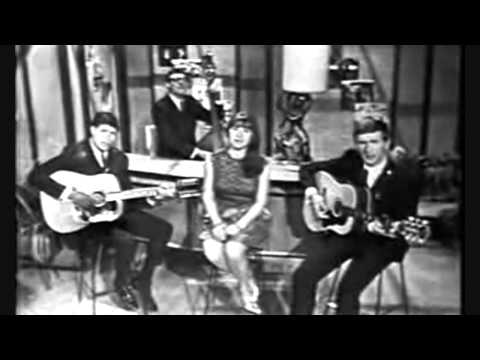
The Seekers arrived in Britain from Australia in late 1964 carrying a sound unlike anything else on the British charts: acoustic guitar, tight three-part harmony, and a warmth that neither the Merseybeat explosion nor the American folk revival had quite replicated. The group consisted of Judith Durham on lead vocals, Athol Guy on double bass, Keith Potger on banjo and guitar, and Bruce Woodley on guitar. Their blend of folk textures with polished pop construction found an immediate audience, and within months of landing in London they had signed with EMI's Columbia label for the United Kingdom market and were preparing material for international release.
The song "A World Of Our Own" was written by Tom Springfield, the brother of Dusty Springfield and the production architect behind much of The Seekers' early commercial success. Springfield had an instinctive understanding of how to frame Judith Durham's soprano voice within arrangements that felt simultaneously intimate and radio-ready. He built the track around a gently strummed acoustic foundation with subtle orchestral sweetening, giving the record a pastoral quality that stood out against the electric-heavy production dominating the era's pop landscape.
The single was released in the United Kingdom in early 1965 and climbed to number one on the UK Singles Chart, where it spent three weeks at the summit. That achievement placed The Seekers among the first Australian artists to top the British charts, a milestone that reverberated across the music industry and signaled that the group was not simply a novelty act riding the British Invasion's coat-tails in reverse but a genuine commercial force. The success in Britain opened doors for the record's release in other territories, including the United States, where it was issued on the Capitol Records label.
On the Billboard Hot 100, "A World Of Our Own" performed strongly, reaching the top twenty and establishing The Seekers as a recognizable name for American audiences who had little prior exposure to Australian pop music. The chart entry was notable because the American market in 1965 was dominated by the British Invasion acts, making the penetration of a folk-oriented Australian group into the top twenty a genuine commercial achievement. Radio programmers found the record easy to support: it was clean, melodically appealing, and occupied a sonic niche that did not directly compete with the harder-edged British groups then dominating playlists.
The production by Tom Springfield gave the record a professional sheen that distinguished it from the rougher edges of the contemporary folk revival. Where groups like Peter, Paul and Mary retained a more deliberately acoustic, coffeehouse aesthetic, The Seekers aimed for something closer to mainstream pop palatability without abandoning the harmonic richness that gave folk music its emotional directness. The choice was commercially shrewd and artistically coherent, and "A World Of Our Own" exemplified that balance.
Judith Durham's vocal performance on the track drew consistent praise from critics and industry observers. Her voice carried a brightness and precision that translated exceptionally well to AM radio, the dominant distribution medium for popular music in 1965. The clarity of her tone above the acoustic backing created a sonic contrast that made the record immediately identifiable within seconds of the introduction. This kind of sonic fingerprinting was essential for chart success in an era when radio listeners made rapid decisions about whether to stay tuned or change station.
The success of "A World Of Our Own" preceded another major international hit, "I'll Never Find Another You," which had actually charted before it in some territories, creating a degree of confusion about the group's release sequence across different markets. Together the two singles established The Seekers' commercial template: melodically straightforward songs built around Durham's lead vocal, Springfield's production, and the group's ensemble harmonic approach. The formula worked with remarkable consistency through the mid-1960s.
In Australia, the song's success was received with particular pride. The Seekers were viewed as cultural ambassadors who had succeeded in the notoriously difficult British and American markets on their own artistic terms. Their achievement helped lay the groundwork for later generations of Australian artists who pursued international careers, demonstrating that the Australian market could produce performers capable of competing at the highest commercial level.
The record's enduring presence in compilation releases, retrospective surveys of 1960s pop, and streaming catalogues reflects its status as a durable representative of its era. "A World Of Our Own" documented a specific moment when the global pop market was genuinely plural, when folk-influenced acoustic music could coexist on the same chart with Motown, the Rolling Stones, and the early British Invasion acts, each occupying distinct audience segments without cannibalizing the others. The Seekers occupied that folk-pop lane with skill and consistency, and this single remains their most recognizable calling card from the period.
02 Song Meaning
Meaning and Themes: A World Of Our Own
At its core, "A World Of Our Own" is a song about romantic self-sufficiency, the fantasy that two people in love can construct an emotional space insulated from external pressures, disappointments, and intrusions. The song describes a private world built entirely from the shared interior life of two lovers, a place where the complications and distractions of ordinary existence cannot reach. This is a classic romantic premise, but Tom Springfield's songwriting treats it with a lightness of touch that prevents the sentiment from becoming saccharine or overwrought.
The song's emotional register is fundamentally optimistic. It does not reach the lyrical theme from a position of loss or yearning, as so many pop ballads of the era did, but from a position of arrival: the couple has already found each other, and the world being described is one they are actively inhabiting rather than merely dreaming about. This distinction gives the song an unusual brightness, a settled contentment rather than anxious longing, which suited Judith Durham's vocal delivery perfectly. Her voice carries warmth and assurance rather than vulnerability, reinforcing the song's message that this private world is real and stable.
The folk-pop setting of the music is not incidental to the meaning. By placing the lyric within an acoustic, pastoral musical context, Springfield aligned the song with a broader cultural ideal of the early 1960s: the notion that authenticity and genuine human connection existed outside the noise of modern urban life. Folk music carried those connotations powerfully in 1965, and a song about building a private sanctuary from the world resonated differently when delivered acoustically than it would have against an electric rock backing. The music itself became part of the meaning, suggesting that the world being described was natural, unforced, and genuine rather than constructed or commercial.
For The Seekers as an ensemble, the song also carried a degree of collective meaning. The three-part harmonies that characterized their arrangement style reinforced the lyric's theme of togetherness: multiple voices blending into a single, unified sound mirrored the song's central image of two individuals merging their lives into a shared world. The harmony was not decorative but structurally meaningful, and audiences responded to that coherence between form and content even if they could not have articulated why.
In the context of 1965's pop landscape, the song's romantic idealism occupied a slightly different emotional register from the more urgent or physically charged love songs that dominated the charts. The British Invasion had brought a harder, more insistent energy to pop, and songs like "A World Of Our Own" offered an alternative emotional vocabulary: quieter, more reassuring, oriented toward lasting companionship rather than passionate pursuit. This made the song attractive to a broad demographic, including older listeners who found the Merseybeat era's energy slightly alienating.
The song's legacy within The Seekers' catalog is as a defining statement of their artistic identity. More than almost any other recording they made, "A World Of Our Own" encapsulates the qualities that made them distinctive: warmth, melodic clarity, harmonic richness, and an emotional honesty that never tips into excess. It represents the group at their most essentially themselves, and its continued presence in retrospective collections confirms that what it communicated resonated far beyond the immediate commercial moment of its release.
→ More from The Seekers
View all The Seekers hits →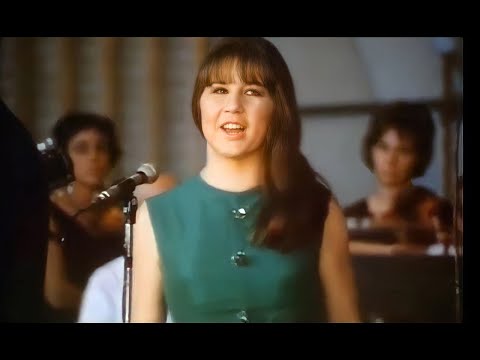
→ More from the 1960s File
View all 1960s hits →




Keep digging