The 1960s File Feature
I'll Be Sweeter Tomorrow (Than I Was Today)
I'll Be Sweeter Tomorrow (Than I Was Today): The O'Jays and Their Pre-Philadelphia International Moment Before Kenny Gamble and Leon Huff transformed The O'J…
01 The Story
I'll Be Sweeter Tomorrow (Than I Was Today): The O'Jays and Their Pre-Philadelphia International Moment
Before Kenny Gamble and Leon Huff transformed The O'Jays into architects of the Philadelphia International sound that would define early-1970s soul music, the group spent the better part of a decade navigating the competitive and uncertain terrain of the rhythm and blues market as it shifted through the transitions of the mid-1960s. Their journey from Massillon, Ohio, where they formed in the late 1950s as The Mascots, through a series of label relationships and regional breakthroughs, to their emergence as a nationally recognized act illustrates how resilience, vocal talent, and the right material at the right moment could combine to produce a career capable of surviving multiple commercial cycles.
By 1967, The O'Jays had been recording under that name, adopted in honor of Cleveland disc jockey Eddie O'Jay who had championed their early work, for several years. They had passed through Imperial Records after earlier stints at smaller labels, and their Imperial period produced the recording of "I'll Be Sweeter Tomorrow (Than I Was Today)", a song that would become their highest-charting single to that point. The track was recorded and released during a period when the group was still finding its commercial footing, building an audience through consistent touring and a series of R&B market releases without yet achieving the crossover breakthrough that would come in the early 1970s.
The song itself was a straightforward exercise in the apologetic love song tradition that had deep roots in both gospel and secular R&B. The premise, a narrator acknowledging past shortcomings and pledging future improvement in the context of a romantic relationship, was one that the genre had explored across many variations; what distinguished "I'll Be Sweeter Tomorrow" was the particular quality of the group's vocal performance and the emotional sincerity with which they delivered the material. Eddie Levert's lead vocal was already displaying the qualities that would make him one of the most celebrated voices in soul music: a combination of gritty, gospel-rooted directness with the controlled technical ability to sustain and shape extended melodic phrases.
The record entered the Billboard Hot 100 on November 25, 1967, debuting at number ninety-seven. Its chart movement over the following weeks was characteristic of a mid-tier R&B release crossing over into the broader pop market: slow and incremental, building through the nineties before reaching the seventies and then climbing toward its peak. The track reached number sixty-six during the week of January 6, 1968, spending nine weeks on the chart in total. On the rhythm and blues charts, where the group's core audience was concentrated, its performance was more substantial.
The timing of the release placed it within one of the most contested periods in the history of American soul music. The late 1960s saw the genre fragmenting between the Stax-Volt approach centered in Memphis, the Detroit sound of Motown, and the various regional centers that were developing their own approaches to the basic formula of gospel feeling applied to secular subject matter. Imperial Records, the Los Angeles-based label that had also provided a home for Fats Domino in his commercial prime, occupied an interesting position in this landscape: not a soul specialist in the way Stax or Motown were, but with sufficient roster diversity and distribution capability to bring an act like The O'Jays before a national audience.
The O'Jays' subsequent trajectory, from their modest Imperial period successes through a period of commercial difficulty into their definitive reinvention as the flagship act of Philadelphia International Records beginning in 1972, is one of the more instructive narratives in the history of soul music. Their Philadelphia International recordings, including "Back Stabbers" and "Love Train," would be landmark documents in the genre's early-1970s evolution, and the commercial and artistic heights they reached in that period required the years of development that the Imperial period represented.
Retrospective assessments of The O'Jays' pre-Philadelphia International catalog have consistently identified the Imperial recordings as undervalued documents of a vocal group in the process of becoming something exceptional. "I'll Be Sweeter Tomorrow (Than I Was Today)" is frequently cited in these assessments as a track that demonstrated, in miniature, the qualities that would eventually make the group a dominant force in soul music: the combination of vocal strength, emotional directness, and the ability to inhabit the emotional demands of a lyric with genuine conviction.
The group's name itself deserves mention in any historical account: having taken it from a disc jockey who had supported them in their regional breakthrough phase, The O'Jays honored a relationship of mutual benefit between recording artists and radio that characterized the soul music ecosystem of the era. Regional disc jockeys in cities like Cleveland, Detroit, Chicago, and Philadelphia were crucial gatekeepers and advocates for acts attempting to build from local recognition to national presence, and the group's acknowledgment of that relationship in their name reflected an awareness of how careers in the industry actually developed.
02 Song Meaning
The Meaning Behind I'll Be Sweeter Tomorrow (Than I Was Today): Contrition, Promise, and Soul's Gospel Inheritance
"I'll Be Sweeter Tomorrow (Than I Was Today)," as recorded by The O'Jays for Imperial Records in 1967, participates in one of the oldest and most central traditions in African American popular music: the song of contrition and promised transformation. This tradition runs directly from the church, where the act of acknowledging failure and pledging renewal is a foundational spiritual practice, into the secular world of rhythm and blues, where the same emotional structure is applied to romantic rather than theological relationships. The O'Jays, who like nearly all the great soul acts of their era had developed their vocal skills in gospel contexts, inhabited this tradition with the authority of genuine familiarity.
The song's basic premise, a narrator acknowledging that he has not been the partner he should have been and pledging that tomorrow will bring improvement, is simple enough to risk sentimentality. What elevates the material above the merely formulaic is the quality of Eddie Levert's vocal delivery and the emotional intelligence with which the group's harmonies frame his lead. The promise of being "sweeter tomorrow" is not delivered as a confident assertion but as a genuine plea, a recognition that the relationship's survival depends on the credibility of the commitment being made.
The temporal structure of the song's promise is worth examining. The narrator commits to improvement specifically in the future: not "I am changing" but "I will be sweeter tomorrow." This distinction matters because it acknowledges the gap between present inadequacy and future aspiration without pretending that the gap has already been closed. This is a more honest emotional position than the straightforward declaration of transformation, and it carries more weight precisely because of that honesty. The soul tradition at its best operated in this zone of acknowledged imperfection reaching toward something better.
The O'Jays as a group were at this stage in their career still developing the collective vocal identity that would make their Philadelphia International recordings landmarks of the genre. The harmonic blend between Levert, Walter Williams, and William Powell that characterized their later work was present in embryonic form in the Imperial recordings, and "I'll Be Sweeter Tomorrow" offers an early example of how their voices worked together to create a unified emotional statement greater than the sum of its individual parts.
The song also participates in a recurring thematic concern of soul music: the relationship between love and accountability. Where pop music of the era often treated romantic relationships in idealized terms, the best soul writing engaged with the difficulties of maintaining love through imperfect behavior, misunderstanding, and the ordinary failures of human beings trying to be what their partners needed them to be. This grounding in the actual texture of relational experience, informed by the church's understanding of human fallibility, gave soul music its particular emotional credibility.
The subtitle structure of the song's title, "Than I Was Today," is itself meaningful. It frames the promised improvement not against an abstract standard but against the specific inadequacy of the present day. This grounds the song's narrative in a specific moment rather than allowing it to float in generic aspiration, and it connects the emotional content to the kind of concrete, circumstantially grounded experience that the best soul songwriting consistently privileged over abstraction.
The track's place in the context of The O'Jays' longer career invests it with retrospective significance. Knowing what the group would become, the promise embedded in their name, their vocal approach, and their engagement with the contritional tradition of soul feels, in hindsight, like an early sign of an artistic character that would eventually find its fullest expression in the Philadelphia International years. The sweeter tomorrow that the song promised arrived, for this remarkable group, several years later than the narrator had imagined but with a richness that exceeded any specific promise.
→ More from The O'Jays
View all The O'Jays hits →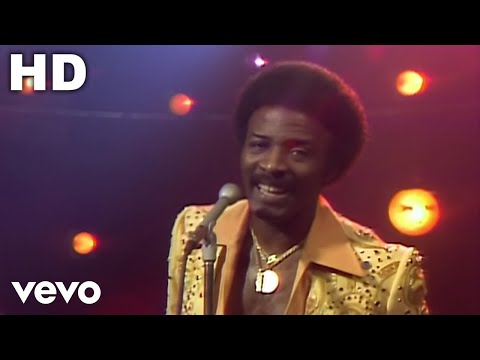

→ More from the 1960s File
View all 1960s hits →




Keep digging