The 1960s File Feature
Go Now!
"Go Now!" — The Moody Blues and the Track That Changed Everything Birmingham Blues in a British Pop World Early 1965 was a bewildering time to be a British b…
01 The Story
"Go Now!" — The Moody Blues and the Track That Changed Everything
Birmingham Blues in a British Pop World
Early 1965 was a bewildering time to be a British beat group. The Beatles had detonated the previous year's American music scene, and the charts on both sides of the Atlantic were glutted with groups in matching suits offering energetic, guitar-forward rock and roll variations. Into this crowded landscape walked The Moody Blues, a Birmingham quintet who had been grinding through club dates and regional gigs since 1964. They needed a song that could cut through the noise. What they found was something unexpected: a piece of American soul that would give them their first and most enduring early hit.
The Source Material and the Transformation
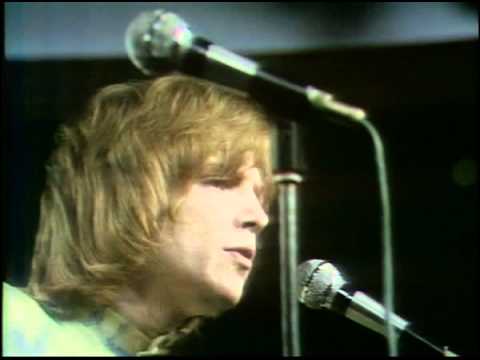
Go Now! was originally recorded by American singer Bessie Banks in 1964. Banks recorded the song for Tiger Records, and the original version drew on the raw, pleading tradition of American R&B. The Moody Blues heard something in it that they believed could work for a British audience shaped by the beat boom. Their arrangement retained the emotional core of the original while giving it a harder rhythmic drive and a more polished studio sheen appropriate to the British pop production conventions of the period. Denny Laine's lead vocal brought an aching quality to the performance, his voice carrying a sense of genuine loss that kept the track from becoming a mere stylistic exercise.
From Club Circuit to the Charts
The single was released in the United Kingdom at the close of 1964, where it reached number one on the UK charts, a result that demonstrated the group's capacity to connect with a mass audience. The American chart performance followed in early 1965. The single debuted on the Billboard Hot 100 on February 20, 1965, entering at position 96. Over the following weeks, it climbed steadily: 86, then 71, 56, 46, continuing its ascent through March and April. The track peaked at number 10 on the Billboard Hot 100 on April 17, 1965, spending a total of 14 weeks on the chart. That peak represented a genuine transatlantic hit at a moment when American radio was particularly receptive to British acts.
The Paradox of the Breakthrough
The commercial success of Go Now! created an unusual problem for The Moody Blues. The group had arrived at the charts with a song rooted in American soul tradition, recorded during a period when their musical identity was still forming. Their subsequent singles struggled to replicate the impact of the debut, and Denny Laine departed the group by 1966, eventually going on to prominence with Paul McCartney's Wings. The lineup that emerged from that transitional period, anchored by Justin Hayward and John Lodge, would evolve The Moody Blues into a very different kind of act, one associated with orchestral art rock rather than R&B-inflected beat pop.
A Necessary Beginning
Music historians often treat Go Now! as a curiosity, the first chapter of a story whose later chapters took an entirely different direction. The song's place in the Moody Blues catalog is something like the foundation of a building whose upper floors were constructed in a completely different architectural style. Yet the track deserves to be appreciated on its own terms. As a piece of early 1960s British pop, it is remarkably assured: urgent, emotionally direct, and anchored by a vocal performance that carries genuine conviction. The chart trajectory, steady and determined across fourteen weeks, reflects an audience responding to something that worked on its own terms.
Pull up Go Now! and you hear 1965 with unusual clarity: the specific energy of the British beat era at full throttle, before everything changed.
"Go Now!" — The Moody Blues's singular moment on the 1960s charts.
02 Song Meaning
"Go Now!" — Departure, Longing, and the Soul Beneath the Beat
A Plea at the Edge of Goodbye
The emotional situation in Go Now! is rendered with unusual clarity for a pop song of its era. The narrator is watching someone leave, already knowing the outcome is fixed, and is urging that departure to happen now rather than be prolonged. There is no anger in the vocal delivery, no attempt to renegotiate or reverse the decision. The dominant feeling is one of profound, aching resignation. The lyric describes a speaker who has accepted the end of something and now simply wants the mercy of a clean break, because the drawn-out version of losing someone is harder to bear than the loss itself.
The Tradition It Inherited
The song's roots in American soul and gospel music are audible in its structure and emotional temperature. The call-and-response feel of the arrangement, the way the instrumentation seems to breathe around the vocal, the emphasis on expressive performance over harmonic complexity: these are the hallmarks of a tradition that prioritized feeling over technique. Bessie Banks's original recording drew directly from that well, and The Moody Blues absorbed enough of it that their version still carries the weight of the genre, even filtered through a British beat group sensibility. Soul music of the early 1960s had a particular gift for expressing the specific grief of an ending relationship with dignity rather than melodrama, and this song belongs firmly in that lineage.
Why the Message Traveled
The scenario described in Go Now! is specific enough to feel real and universal enough to travel across cultures and decades without friction. Audiences in Birmingham and in Chicago, in 1964 and in 1974, shared the experience of watching someone they loved walk away. The song's emotional accessibility explains its transatlantic chart performance as much as any marketing strategy or radio promotion could. It arrived at a feeling that listeners recognized immediately, and it delivered that feeling with enough musical force to be memorable rather than merely pleasant.
Dignity in Surrender
One of the things that distinguishes Go Now! from many breakup songs of its era is its refusal of self-pity. The narrator is not cataloguing grievances or arguing for reconsideration. The posture of the lyric is essentially generous: an acknowledgment that the other person has already made their choice, and a request that they honor it rather than prolong uncertainty. That emotional maturity, unusual in pop songwriting of the period, is part of what gives the song its lasting dignity. It does not perform suffering; it quietly, honestly depicts it.
Historical Resonance
Listening to Go Now! today, what strikes most forcefully is how cleanly it crosses the usual boundaries of era and genre. The British beat group setting and the soul tradition behind it coexist without friction, producing something that sounds neither like a mere imitation of American R&B nor like a straightforward British pop product. The Moody Blues found a genuine middle ground, and within that space, the song's emotional argument lands with undiminished force. As a document of what popular music could accomplish in the mid-1960s, it remains entirely worth your time.
→ More from The Moody Blues
View all The Moody Blues hits →



→ More from the 1960s File
View all 1960s hits →




Keep digging