The 1960s File Feature
Mickey's Monkey
"Mickey's Monkey" — The Miracles and the Dance Craze Era Motown in the Summer of 1963 The summer of 1963 was extraordinary for American popular music. The Br…
01 The Story
"Mickey's Monkey" — The Miracles and the Dance Craze Era
Motown in the Summer of 1963
The summer of 1963 was extraordinary for American popular music. The British Invasion had not yet arrived to reshape the landscape, and Motown Records was in the midst of what would prove to be one of the most concentrated runs of commercial and artistic success in the history of the recording industry. Berry Gordy's Detroit operation was producing hit after hit, refining a formula that combined the emotional directness of gospel and R&B with the melodic polish and sonic sophistication needed to reach white radio audiences. The Miracles were among the earliest and most important acts in that operation, and their 1963 single "Mickey's Monkey" captured the label at a moment of joyful, confident creativity.
Smokey Robinson, the group's lead vocalist and principal creative force, had already demonstrated his gifts as a songwriter and performer across a series of earlier Motown recordings. Robinson's talent for combining seemingly simple melodic ideas with subtle harmonic and lyrical sophistication had made the Miracles one of the label's flagship acts. "Mickey's Monkey" arrived in this context as something slightly different: a dance song built around a specific craze rather than an emotional narrative.
The Holland-Dozier-Holland Connection
"Mickey's Monkey" was written and produced by Brian Holland, Lamont Dozier, and Eddie Holland, the songwriting and production team who would go on to create an astonishing sequence of Motown hits throughout the 1960s, including massive recordings with the Four Tops, the Supremes, and others. Their work on this track shows the HDH formula in an early iteration: a propulsive rhythm, a melody that lodges immediately in the ear, and a lyrical concept simple enough to be grasped in a single listen.
The production drives the track with an urgency that suited the dance crazes of the era, when specific songs were tied to specific movements and radio play, live performance, and teenage social life were intertwined in ways that are difficult to reproduce today. The recording has the quality of inevitability, as though the arrangement could not possibly be arranged any other way.
Climbing the Chart
The single debuted on the Billboard Hot 100 on August 17, 1963, entering at number 88. The climb was rapid and sustained. Within four weeks the track had moved through 59, 39, 21, and 15, suggesting strong radio rotation and genuine listener purchase activity. The song peaked at number 8 on the Hot 100 during the chart run, ultimately spending 12 weeks on the chart. A top-10 performance was a significant commercial achievement, confirming the Miracles' standing as one of Motown's proven hit-making acts.
Reaching the top 10 in the summer of 1963 meant competing with some of the most commercially powerful music of the era. The Hot 100 that summer was a showcase of American popular music's extraordinary diversity, from country crossovers to girl group recordings to surfing pop, and placing number 8 within that competition was a genuine accomplishment.
Dance Crazes and Pop Culture in 1963
Dance songs occupied a particular place in early 1960s pop culture. The Twist had demonstrated that a song tied to a specific physical activity could generate enormous commercial momentum, and record labels and songwriters were eager to replicate that formula. Motown embraced the dance song format while infusing it with the label's characteristic production values, creating tracks that were more polished and melodically sophisticated than many of their competitors in the craze category.
"Mickey's Monkey" benefited from this context. The track was heard not only on radio but in the specific social contexts where dance crazes propagated, parties, sock hops, and the dance floor television programs that broadcast to teenage audiences throughout the country.
The Miracles in the Larger Motown Story
Looking back, "Mickey's Monkey" belongs to a pivotal period in both Motown's history and in the Miracles' own development. Robinson and his group were laying the groundwork for the more sophisticated recordings that would follow in the mid-1960s, including some of Robinson's most celebrated writing. This track, pure and uncomplicated in its ambitions, demonstrated that the formula was working and that the audience was ready for whatever came next.
Fire it up and hear 1963 Motown at its most immediate, the groove unstoppable, the melody unforgettable, the whole thing built to make you move.
"Mickey's Monkey" — The Miracles' singular moment on the 1960s charts.
02 Song Meaning
"Mickey's Monkey" — Dance, Collective Joy, and Early Motown's Emotional Language
The Dance Song as Social Document
A song built around a dance craze occupies an interesting place in popular music's cultural history. On the surface, these tracks seem purely functional: a rhythm to move to, a name to attach to the movement, enough melodic interest to keep the record playing through repeated spins. Beneath that functional surface, dance songs of the early 1960s documented something significant about how young Americans were experiencing their own bodies, their social lives, and their emerging culture. "Mickey's Monkey" is a small but vivid chapter in that documentation, a snapshot of a moment when music and physical movement were inseparable parts of teenage life.
The early 1960s dance craze phenomenon produced a remarkable number of records, from the Twist to the Mashed Potato to the Watusi, each tied to a set of moves that could be learned, practiced, and displayed in social settings. The dance gave young people a shared vocabulary, a way of participating in a collective experience through individual bodies moving in approximate unison.
Motown's Emotional Architecture
Holland-Dozier-Holland built "Mickey's Monkey" on the same principles that animated all their best work: clarity of rhythm, immediacy of melody, and a production that made the music feel inevitable. The Holland-Dozier-Holland approach to pop songwriting found the simplest possible path to emotional engagement and then followed that path with complete commitment. The result was music that felt like it had always existed, as though the song had been waiting to be discovered rather than composed.
On a song about a specific dance, the emotional content is primarily kinetic: the feeling of moving well, of being part of a group sharing pleasure through synchronized motion. That experience has its own depth; the joy of collective dancing is not trivial, and Motown understood how to capture it on record better than almost anyone else in the early 1960s.
Race, Radio, and Crossover Appeal
The Miracles' success on the Hot 100, which represented mainstream American sales and radio play across demographic lines, reflected Motown's carefully calibrated approach to crossover appeal. Berry Gordy designed his label's sound to reach white radio audiences without asking Black artists to abandon their musical roots, a commercial and cultural negotiation that operated on multiple levels simultaneously. "Mickey's Monkey" and its top-10 performance demonstrated how effectively that negotiation could work.
Dance songs were particularly useful vehicles for crossover because they displaced some of the social anxiety around the music's origins. A song that invites a specific physical activity can be evaluated primarily on its kinetic effectiveness, and "Mickey's Monkey" was kinetically undeniable.
Lasting Resonance of the Simple Gesture
The track's place in Motown's history is modest compared to the towering achievements that followed in the mid-1960s. But modesty is not the same as insignificance. "Mickey's Monkey" represents the early Motown sound in a state of cheerful, uncomplicated confidence, a moment before the label's music became weighted with the larger social meanings it would later carry.
There is something genuinely moving about that early confidence, that sense of a group of musicians and a record label discovering what they were capable of and moving toward it with full energy. The song captures a kind of innocence not naivety, exactly, but the freshness of something that does not yet know how significant it will become.
"Mickey's Monkey" — The Miracles' singular moment on the 1960s charts.
→ More from The Miracles
View all The Miracles hits →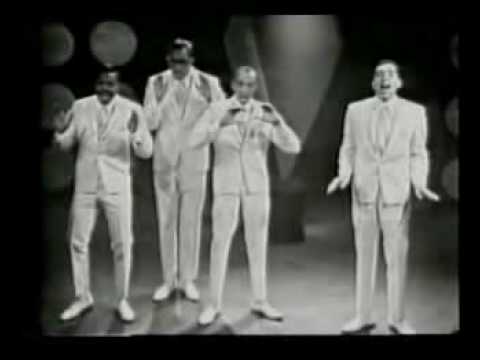

→ More from the 1960s File
View all 1960s hits →




Keep digging