The 1960s File Feature
Going To A Go-Go
Going to a Go-Go: Smokey Robinson, the Miracles, and Motown's Dance Floor Command "Going to a Go-Go" stands as one of the defining singles of the Miracles' l…
01 The Story
Going to a Go-Go: Smokey Robinson, the Miracles, and Motown's Dance Floor Command
"Going to a Go-Go" stands as one of the defining singles of the Miracles' long run as one of Motown's most celebrated acts, a record that captured the excitement and communal energy of mid-1960s urban dance culture while demonstrating Smokey Robinson's gifts as both vocalist and songwriter at a key moment in his development. Released in 1965 on Tamla Records, the song reached the upper reaches of the Billboard Hot 100 and performed powerfully on the R&B chart, where it connected with the core audience that Motown's Tamla subsidiary was serving so effectively during this period.
The song was written by Smokey Robinson, Marvin Tarplin, William "Mickey" Stevenson, and Hank Cosby, a writing collaboration that drew on the deep Motown songwriting pool that Berry Gordy had assembled in Detroit. Marvin Tarplin was Smokey Robinson's most consistent guitar collaborator, the architect of the distinctive guitar figures that appeared throughout Robinson's work with the Miracles, and his contribution to "Going to a Go-Go" was evident in the song's propulsive, hook-driven energy. The production was tight and efficient in the classic Tamla manner, the rhythm section driving the track forward with the precision that distinguished the best Motown recordings of the era.
The go-go clubs referenced in the song's title were a real and significant feature of mid-1960s urban entertainment culture, venues where live music and dance occupied a central social function. For young Black audiences in Detroit and across American cities, these spaces represented a form of cultural life that was simultaneously pleasure and community, places where music was not merely heard but physically inhabited through dance. Robinson's lyric addressed this experience directly and enthusiastically, turning the act of going out to dance into a celebration of a specific way of being young and alive in a particular moment.
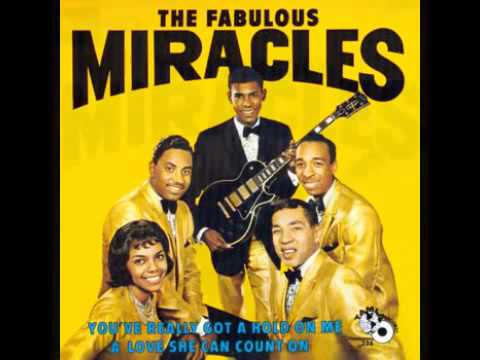
The Miracles had been performing and recording since the late 1950s, and by 1965 they were one of Motown's most established and reliable acts. Robinson's distinctive high tenor, his gift for melody, and his increasingly sophisticated approach to songwriting had made him Berry Gordy's most trusted creative partner at the label. The Miracles' earlier hits, including "Shop Around," which had been Motown's first million-selling single, and "You've Really Got a Hold on Me," had demonstrated the range of emotional territory Robinson could explore. "Going to a Go-Go" represented the more celebratory and kinetic end of his songwriting register.
The record fit into a broader Motown strategy of producing songs that could serve multiple functions simultaneously: radio-friendly pop hits, R&B chart performers, and music that worked on the dance floor. Berry Gordy's foundational insight about popular music was that these functions were not in conflict but mutually reinforcing, and the Motown production system was designed to produce records that operated on all three levels at once. "Going to a Go-Go" is a particularly clean example of this triple functionality, a record that sounded excellent on radio, dominated the R&B chart, and was designed for dancing from the ground up.
The song appeared on the Miracles' album Going to a Go-Go, which the label released in the same year and which bore the single's name as its title, reflecting the commercial and creative significance of the recording to the album project. The album performed strongly and helped consolidate the Miracles' position as one of Motown's flagship acts at a moment when the label's roster was extraordinarily deep with talent. 1965 was one of Motown's most commercially dominant years, and "Going to a Go-Go" contributed to a chart presence that was remarkable in its consistency and range.
The song's cultural afterlife was extended significantly when the Rolling Stones recorded their own version for their 1982 live album Still Life: American Concert 1981, introducing the song to a new generation of rock listeners. This transmission across genre lines confirmed the song's status as a genuine pop classic with appeal beyond any single musical context. Robinson himself remained proud of the song, performing it regularly across his long career and acknowledging its place as one of the essential records in the Miracles' catalog.
In the broader story of Motown's mid-1960s dominance of American popular music, "Going to a Go-Go" is one of the essential recordings, a song that captures both the label's commercial ambitions and its deep roots in the specific pleasures and communities of Black American urban life.
02 Song Meaning
Dance as Community and Desire: The Social Logic of "Going to a Go-Go"
"Going to a Go-Go" does something relatively rare in the canon of great pop songs: it celebrates the social act of going out rather than any particular romantic relationship. The song's subject is not a specific beloved but a destination and a mode of being, the communal experience of gathering to dance and the anticipation that precedes it. In this sense, it participates in a tradition of songs about the dance itself as a form of life, from the blues and swing era forward through rhythm and blues and into the Motown era's considerable repertoire of dance-occasion songs.
The go-go club as a social institution in mid-1960s America was more than mere entertainment. For Black communities in cities like Detroit, Chicago, and New York, these venues represented a specific form of cultural space, one in which the pleasures of music, movement, and community were organized around Black expressive traditions while also participating in the broader youth culture of the moment. Smokey Robinson's lyric honors this space by treating the act of going out as genuinely worthy of celebration, something significant and desirable rather than trivial.
The song's emotional register is one of uncomplicated anticipation and pleasure, which is rarer in the pop canon than one might expect. Much of the most celebrated songwriting deals in longing, loss, or the complicated aftermath of love, and songs of pure forward-looking joy require a particular kind of confidence to execute without tipping into shallowness. Robinson's achievement here is to make the simplicity itself feel earned, a genuine statement of what dancing and community meant rather than a formulaic celebration of fun.
There is also a social dimension to the song that registers even in its most light-hearted moments. The go-go club was, in the mid-1960s, a site of integration as well as Black cultural expression, a place where the pleasures of youth culture crossed racial boundaries in ways that the broader society still restricted. The song's invitation is open and inclusive, a call to communal participation that fits with Motown's broader commercial strategy of making Black music accessible and appealing to white audiences without sacrificing its roots and authenticity.
Robinson's vocal performance is central to the song's emotional success. His high tenor, with its characteristic combination of brightness and warmth, communicates enthusiasm that is genuine rather than performed. Robinson was always a singer of considerable emotional intelligence, capable of registering multiple feelings simultaneously, and even in a celebratory context like "Going to a Go-Go" he brings enough individual quality to the performance to make it feel personal rather than generic. The song works because it sounds like someone who genuinely wants to go dancing, not like someone executing a commercial brief about dance culture.
Within the Miracles' catalog, the song represents the kinetic, celebratory pole of Robinson's artistic range, the complement to the tender ballads and the more complex emotional explorations that make up much of his most critically admired work. Together, these modes demonstrate the full scope of what Robinson understood about what pop music could do, how it could serve different human needs and occasions while remaining rooted in genuine musical quality and emotional honesty. "Going to a Go-Go" is the record you put on when you want to remember that music can be simply, purely fun without any of that being a diminishment.
→ More from The Miracles
View all The Miracles hits →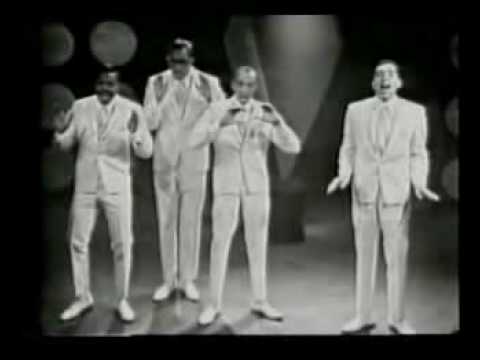

→ More from the 1960s File
View all 1960s hits →




Keep digging