The 1960s File Feature
Look-Ka Py Py
"Look-Ka Py Py" — The Meters and the Birth of New Orleans Funk The Crescent City at the End of the Sixties New Orleans in 1969 was doing what it had always d…
01 The Story
"Look-Ka Py Py" — The Meters and the Birth of New Orleans Funk
The Crescent City at the End of the Sixties
New Orleans in 1969 was doing what it had always done: creating music the rest of the country would spend decades catching up to. While San Francisco was winding down its psychedelic summer and Nashville was refining its countrypolitan sound, a group of young musicians working the clubs and sessions of the Crescent City were quietly inventing something that would rewire popular music's rhythmic foundation. The Meters had been playing together as a unit since the mid-1960s, absorbing the city's deep musical culture and condensing it into something precise and relentless. Look-Ka Py Py was the document of that condensation.
The band, comprising Art Neville, Leo Nocentelli, George Porter Jr., and Joseph "Zigaboo" Modeliste, had started as a house band and session unit, providing the rhythmic and harmonic foundation for countless recordings made in New Orleans studios. That experience gave them a collective musical intelligence that went beyond what most working groups possessed. They could lock into a groove and sustain it with a precision that felt both mechanical and deeply human simultaneously.
The Sound That Defined a Groove
What the Meters were doing rhythmically in 1969 was genuinely new. Modeliste's drum approach, full of unexpected syncopations and fills that landed in places the ear did not anticipate, gave the band's recordings an almost physical quality. Porter's bass locked with Modeliste so tightly that the relationship felt almost telepathic. Nocentelli's guitar and Art Neville's keyboards added layers of texture that were spare without being thin, funky without being excessive. The Meters invented a rhythmic vocabulary that would become the vocabulary of funk, cited by artists and producers for the following five decades.
On Look-Ka Py Py, that vocabulary was on full display. The track was built on repetition and incremental variation, the fundamental technique of groove music: establish a pattern, lock into it, then find the tiny adjustments within that lock that keep the listener from ever getting fully comfortable. It is music designed to keep you moving.
The Billboard Hot 100 Appearance
Look-Ka Py Py debuted on the Billboard Hot 100 on December 6, 1969, entering at number 91. The chart run was brief, holding around positions 91 and 82 before peaking at number 80 on December 27, 1969, spending a total of four weeks on the chart. Four weeks and a peak of 80 might seem modest, but for an instrumental funk track competing against the full pop landscape of late 1969, the Hot 100 appearance itself was remarkable. The record was finding ears beyond New Orleans.
The song performed significantly better on R&B-specific charts, where its audience was more concentrated. The Hot 100 appearance, modest as it was, confirmed that the Meters' music had crossover appeal even in an era when genre boundaries were policed more carefully than they would be in subsequent decades.
The Meters as the Invisible Foundation
One of the curious facts of the Meters' career is how their influence spread in ways that often left their names unattached. They performed on recordings by artists including Lee Dorsey, Allen Toussaint, Dr. John, and LaBelle, providing rhythmic and harmonic foundations that made those records what they are. Their session work during the late 1960s and early 1970s effectively trained a generation's ear in New Orleans rhythmic principles without necessarily broadcasting the Meters' name in the process.
This dynamic changed as knowledge of the group's output grew through subsequent decades. Hip-hop producers discovered their recordings and sampled them extensively, a form of posthumous recognition that reframed the band's historical importance for new audiences who might otherwise not have encountered their name.
The Long Echo
Few groups from the late 1960s have had their influence more widely distributed across subsequent musical history than the Meters. The rhythmic techniques codified on Look-Ka Py Py and their other Josie Records releases became part of the DNA of funk, soul, hip-hop, and numerous genres that built on those foundations. The band's four-week Hot 100 run in late 1969 was a whisper of commercial recognition compared to the tidal wave of musical influence they were simultaneously generating.
Listen to this record and you hear the ground floor of something enormous. Press play and feel where American rhythm music began to shift.
"Look-Ka Py Py" — The Meters' singular moment on the 1960s charts.
02 Song Meaning
The Meaning Behind "Look-Ka Py Py" by The Meters
Groove as Statement
There are songs that communicate through lyrics, songs that communicate through melody, and then there are songs that communicate through pure rhythmic assertion. Look-Ka Py Py belongs emphatically to the third category. As an instrumental, it carries its meaning in the relationship between its parts: the way the bass and drums interlock, the way the guitar punctuates rather than fills, the way space itself becomes a musical element. The song's meaning is inseparable from its groove, which is itself a statement about what music can be when it trusts rhythm completely.
In 1969, this was a deliberate artistic position. The late 1960s had produced an enormous amount of music that prioritized lyrical complexity, psychedelic texture, and extended sonic experimentation. The Meters' answer was to strip back, to find the pulse, to trust that rhythmic precision was its own form of expression. The minimalism was intentional and philosophically committed.
New Orleans as Cultural Argument
The Meters were making music that carried the specific cultural logic of New Orleans in its every measure. That city's musical tradition is built on collective participation, on the interplay between individual voices within a unified rhythmic structure. The second-line parade tradition, the jazz funeral, the club band that transforms a room full of strangers into a moving community: all of these feed into what the Meters were doing. The groove was a form of community, a way of organizing bodies and attention around a shared pulse.
For listeners who encountered the record in 1969, this might not have been consciously legible. But the physical response it produced was the product of those deep traditions, transmitted through the musicians' training and sensibility even when the historical context was invisible.
The Influence Machine
The meaning of "Look-Ka Py Py" expanded considerably in subsequent decades as the record became a touchstone for producers and musicians working in funk, soul, and hip-hop. The song's rhythmic ideas were cited, sampled, and built upon by a remarkable range of subsequent artists, which gave it a kind of ongoing creative life that most pop recordings never achieve. Each new artist who absorbed its lessons was extending the song's meaning into new contexts and new audiences.
This is an unusual form of musical meaning, one that accretes rather than being fixed at the moment of creation. The song means something different to the hip-hop producer discovering it in the 1980s, and to the listener who heard it on a late 1969 jukebox, and to the contemporary listener encountering it through a sample credit. All of those meanings are real and coexist.
The Joy in the Precision
It would be a mistake to read the Meters' precision as mere technical accomplishment divorced from emotional content. The music on Look-Ka Py Py is joyful. The tightness of the groove is itself a source of pleasure, both for the musicians playing it and for the listener receiving it. There is exuberance in the absolute lock between these four players, a quality that communicates directly to the listener's body before the mind has had time to categorize what is happening.
This capacity to produce physical joy through rhythmic precision is the Meters' deepest contribution, and Look-Ka Py Py is one of its purest expressions. The song endures because that joy does not expire.
→ More from The Meters
View all The Meters hits →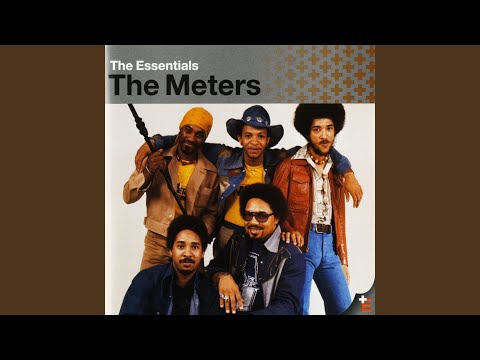
→ More from the 1960s File
View all 1960s hits →




Keep digging