The 1960s File Feature
Ease Back
The Meters and "Ease Back": New Orleans Funk Arrives on the National Chart In the summer of 1969, a record emerged from New Orleans that sounded like nothing…
01 The Story
The Meters and "Ease Back": New Orleans Funk Arrives on the National Chart
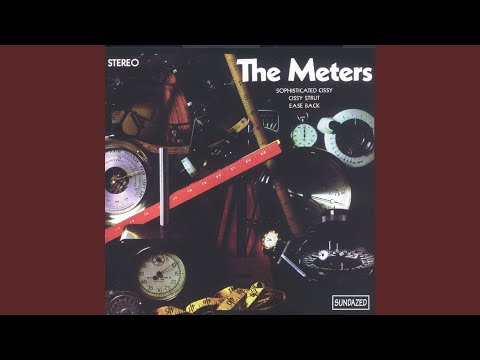
In the summer of 1969, a record emerged from New Orleans that sounded like nothing else on the Billboard Hot 100. "Ease Back" by The Meters, released on Josie Records, debuted at position 98 on July 26, 1969, and climbed over six weeks to its peak position of number 61 during the chart week of August 23, 1969. The modest chart showing did not begin to capture what the record represented: the national commercial arrival of a sound that would reshape popular music across the next decade and that would prove, in retrospect, to be among the most influential instrumental recordings of its era.
The Meters had coalesced in New Orleans from musicians who had been working together in various configurations through the city's dense network of clubs, recording sessions, and informal musical relationships. The core lineup: Art Neville on keyboards and vocals, Leo Nocentelli on guitar, George Porter Jr. on bass, and Zigaboo Modeliste on drums. Each was an exceptional musician individually; together, they constituted something rare: a group so internally locked, so finely calibrated to each other's tendencies and instincts, that their combined output was qualitatively different from anything any of them might have achieved separately.
Art Neville's background was central to the group's identity. As a member of the Neville family, he was embedded in a New Orleans musical dynasty that had produced multiple generations of performers deeply rooted in the city's specific traditions: the second-line parade rhythms, the funk inflections of the Mardi Gras Indian music, the R&B lineage that ran through Fats Domino and Professor Longhair and beyond. The Neville family's relationship to New Orleans music was not merely professional but biographical, and that depth of cultural embeddedness gave The Meters' recordings a quality of authenticity that could not be manufactured.
The Josie Records deal came through Allen Toussaint and Marshall Sehorn, the producer-businessman partnership that was simultaneously one of the most significant forces in New Orleans music of the period and one of the most complicated relationships the Meters would navigate. Toussaint, already a legend in the city for his work as songwriter, arranger, and producer across multiple acts, had recognized in the Meters something distinctive and potentially important. Their recordings for Josie, including "Ease Back," were produced under the Toussaint-Sehorn banner, which gave them professional infrastructure while rooting them in the New Orleans tradition that Toussaint personified.
"Ease Back" was an instrumental, a choice that in 1969 required some commercial courage given that instrumental pop hits were rarer than they had been in the early 1960s. The record relied entirely on the groove to carry its argument, with no vocal hook to provide immediate accessibility for listeners accustomed to song-based material. The fact that it climbed to number 61 on the Hot 100 as a pure groove record demonstrated the strength of the underlying music: it reached listeners through nothing except the physical and emotional impact of the rhythm itself.
Zigaboo Modeliste's drumming on "Ease Back" was, even for listeners then encountering it without any theoretical framework for what they were hearing, the record's most immediately striking element. His approach to the kit was unlike anything in rock or straight pop drumming; it was a conversation with the other instruments rather than a foundation beneath them, a dialogue in which the drums could anticipate, respond, and redirect rather than simply maintain a pulse. Modeliste's rhythmic vocabulary drew on second-line traditions, on the syncopated parade rhythms that New Orleans had developed across more than a century of outdoor musical performance, and on an intuitive sense of when to compress and when to expand the groove.
George Porter Jr.'s bass was the gravitational center of the Meters' sound, providing the anchor against which Modeliste's drums could range freely and Nocentelli's guitar could make its melodic arguments. Porter played with a combination of restraint and personality that was difficult to analyze but immediately felt: the bass lines were never excessive, never demonstrating for their own sake, but they were also never merely functional. They were musical statements in their own right, contributions to a collective argument rather than supporting infrastructure for someone else's lead.
Leo Nocentelli's guitar work on the early Meters recordings was similarly characterized by economy and precision. Rather than the extended soloing that rock guitar of the era frequently featured, Nocentelli's parts were more about rhythmic punctuation and melodic implication, about the spaces between notes as much as the notes themselves. This approach to guitar as a rhythmic-melodic instrument rather than a lead voice was itself an innovation, one that would influence funk guitarists for decades.
The record's Hot 100 performance at number 61 was supplemented by a stronger showing on the R&B chart, where the Meters' music found its most natural audience. New Orleans had a large African American population with deep roots in the musical traditions the Meters represented, and the city's musicians had always played an outsize role in shaping Black popular music nationally. "Ease Back" confirmed that the Meters were capable of reaching beyond their local base while rooted there absolutely.
The record stands now as a foundational document of American funk music, a demonstration of what the genre sounded like before it acquired the high-gloss production values that would characterize much of its 1970s commercial peak. The Meters' particular version of funk was stripped-down, conversational, almost spare, driven by the interaction between four musicians who had developed an intuitive understanding of each other's choices that no amount of explicit coordination could have produced. "Ease Back" captured that understanding in permanent form.
02 Song Meaning
The Groove as Meaning: Understanding "Ease Back" by The Meters
"Ease Back" by The Meters poses a particular interpretive challenge for the encyclopedic approach to popular music: it is an instrumental, and instrumentals resist the kind of lyric-based analysis that most pop criticism defaults to. But the absence of words does not mean the absence of meaning; it means that meaning must be located elsewhere, in the musical choices themselves, in the relationship between the performers, and in the cultural context that shaped both the record's production and its reception.
The title offers an immediate entry point. "Ease back" is a directive, a command to reduce tension, to slow down, to occupy the present moment rather than rushing through it. As a title for an instrumental groove record, it is precisely appropriate: the music does not build toward a climax or resolve into a conclusion but instead establishes a rhythmic state and invites the listener to inhabit it. The record is not going anywhere in the conventional narrative sense; it is being somewhere, and the somewhere it occupies is a specifically New Orleans somewhere, rooted in the city's particular relationship to time and celebration.
New Orleans has long maintained a cultural relationship with music that differs from the entertainment-oriented relationship most American cities assume. In New Orleans, music is fundamentally communal and participatory rather than presentational. The second-line parade tradition, the Mardi Gras Indian music, the social aid and pleasure club events that punctuate the city's calendar: all of these are contexts in which music exists to enable collective physical experience rather than to be consumed by passive audiences. "Ease Back" carries this value system into the commercial recording format without fully domesticating it.
The interaction between the four Meters, meaning Art Neville, Leo Nocentelli, George Porter Jr., and Zigaboo Modeliste, is itself the record's primary subject. What the recording documents is the experience of four musicians in deep collective understanding, making decisions in real time that respond to each other rather than to a predetermined plan. Zigaboo Modeliste's drum part is not simply the rhythmic foundation but an active participant in a conversation; when he makes a choice, the other musicians hear it and respond, and their responses shape his subsequent choices. This feedback loop, invisible to anyone not listening carefully, is what gives the groove its sense of organic life.
This kind of musical conversation requires trust, and the trust requires history: shared time, shared experience, a depth of mutual knowledge that allows each musician to predict where the others are going before they arrive. The Meters had spent years developing this depth of acquaintance before "Ease Back" was recorded, and the record reflects that investment. The groove sounds easy because it is the product of sustained difficulty; the relaxed authority of the performance is the result of considerable work.
For listeners in 1969 and subsequently, "Ease Back" offered an experience that mainstream pop largely did not provide: the opportunity to be absorbed into a rhythm rather than simply to register it. The groove's repetition, so foreign to the verse-chorus-verse logic of conventional pop songwriting, created a different relationship between music and time, one in which duration was not a problem to be managed but a quality to be savored. This approach to musical time was itself a meaning, an implicit argument about what music was for and how it should be experienced.
The record's influence on subsequent music, particularly on the development of funk, hip-hop, and the production techniques of the 1980s and 1990s, gives "Ease Back" a significance that extends well beyond its original chart position. The Meters' approach to rhythm, groove, and collective improvisation became a foundational resource for several generations of producers and musicians who found in their recordings a model for how organic, conversational, and deeply rooted music could be made with minimal means and maximum impact.
→ More from The Meters
View all The Meters hits →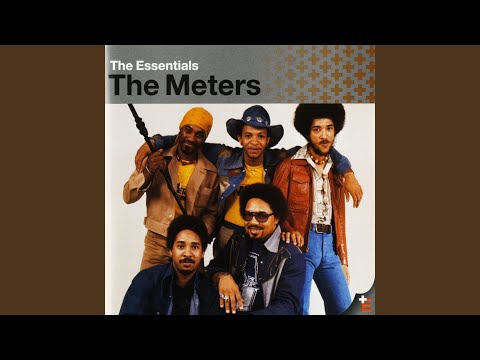
→ More from the 1960s File
View all 1960s hits →




Keep digging