The 1960s File Feature
Playboy
"Playboy" — The Marvelettes' Confident Early-60s Follow-Up Spring 1962 found the Marvelettes in a position that few acts in pop music history had occupied at…
01 The Story
"Playboy" — The Marvelettes' Confident Early-60s Follow-Up
Spring 1962 found the Marvelettes in a position that few acts in pop music history had occupied at such a young age. Their debut single "Please Mr. Postman" had reached number one on the Billboard Hot 100 in December 1961, becoming Motown Records' first chart-topper, which is a distinction that placed them at the precise center of one of American music's most significant emerging stories. Following that kind of debut required something both commercially strong and artistically convincing, and "Playboy" delivered on both counts.
Motown's First Number-One Act
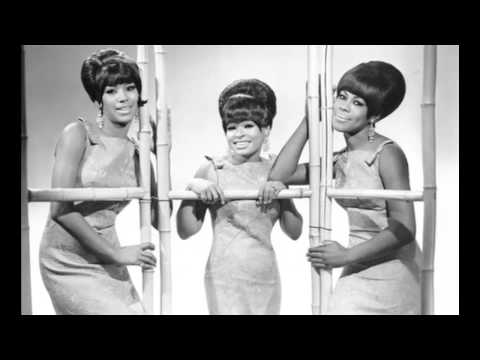
The Marvelettes were young women from Inkster, Michigan, who had come to Berry Gordy's attention through a school talent show. The success of "Please Mr. Postman" had announced them to the world, but it had also placed an enormous expectation on whatever came next. Motown's production infrastructure, increasingly defined by the songwriting and production partnerships that would come to be known as the Motown Sound, provided the material and the arrangements; the Marvelettes provided the voices and the infectious energy. The group's lead vocal rotation gave them flexibility that many girl groups of the era lacked, with different members taking primary responsibility on different tracks depending on the material's demands.
The Song's Personality
"Playboy" has a personality quite different from "Please Mr. Postman." Where the debut was about longing and waiting, "Playboy" addresses a different kind of relationship dynamic with more assertiveness. The narrator is not waiting for someone; she is observing someone's behavior and drawing conclusions from it, positioning herself as perceptive rather than passive. That shift in posture gave the Marvelettes a slightly more complex identity than the lovelorn girl group that "Please Mr. Postman" might have suggested, demonstrating range within a single career moment that many acts took years to develop.
Fifteen Weeks to Number 7
The song debuted on the Billboard Hot 100 on May 5, 1962, at position 88. Its ascent was one of the more satisfying chart climbs of that year: from 56 to 46 to 33 to 19, continuing upward through late May and June before reaching its peak. The song peaked at number 7 on the week of June 23, 1962, after 15 weeks on the Hot 100. That peak confirmed the Marvelettes as genuine chart presences capable of repeating their initial success, and it validated Motown's judgment that the group had more than one hit in them. Top ten on the Hot 100, on a second consecutive single, is a commercial achievement that justified the investment in their development.
Early Motown's Production Machine
The Marvelettes were products of Motown's developing production system, which was in its early stages in 1962 but already showing the organizational genius that would produce dozens of number-one hits over the following decade. The arrangement on "Playboy" reflects the label's house style: tight rhythmic drive, prominent bass, and vocal arrangements that highlighted the group's natural energy without over-polishing it. The Funk Brothers, Motown's legendary house band, provided the musical foundation for the Marvelettes' recordings, as they did for virtually every Motown act of the era, giving the label's output a consistent instrumental quality that was part of what made the sound so recognizable.
Legacy in the Girl Group Pantheon
The Marvelettes occupied a specific position in the girl group tradition of the early 1960s: they were Motown's founding girl group, predating the Supremes' commercial breakthrough by two years, and their early success created the template that the label would refine and expand throughout the decade. "Playboy" stands as evidence that the initial success of "Please Mr. Postman" was not a fluke. The group's ability to deliver a second major pop hit with a different emotional register demonstrated real artistic range and secured their place in Motown history.
Put the needle down on 1962 and let this one remind you how good early Motown already was.
"Playboy" — The Marvelettes' singular moment on the 1960s charts.
02 Song Meaning
Seeing Through the Performance: The Meaning of "Playboy"
The early 1960s girl group tradition was populated primarily by songs of longing: records about waiting for boys to notice, to commit, to come back. These songs served real emotional purposes for their audiences, giving voice to experiences that the culture did not otherwise address with much directness. But within this tradition there was also room for a different kind of emotional positioning, and the Marvelettes' "Playboy" is one of the cleaner early examples of the girl group narrator as observer and judge rather than as supplicant.
The Knowing Eye
The narrator of "Playboy" has information that others around her may lack: she can see through the performance that the title character puts on, recognizing the pattern of behavior that defines him. This positions her as someone with perceptual authority, someone whose assessment of the situation should be trusted. That shift from longing to knowing is significant in the context of early 1960s pop, where female narrators were more commonly positioned as emotionally reactive than as analytically clear-eyed. The Marvelettes here are doing something slightly more sophisticated than the genre's default.
What the Term "Playboy" Carried in 1962
The term had cultural resonance in 1962 beyond its role in the song. Hugh Hefner's magazine had been publishing since 1953 and had created a specific cultural archetype: the urbane, unattached man who treated women as objects of entertainment rather than as partners in genuine connection. The song deploys this cultural shorthand with reasonable precision, using the term to invoke a type that its audience would recognize immediately. By giving this type a name that the culture had already supplied, the Marvelettes were able to address a recognizable social dynamic with economy of language.
The Audience's Recognition
The songs that resonated most deeply with the early 1960s teenage girl audience were often the ones that articulated experiences those listeners were having or observing around them. A song about recognizing the patterns of someone who is not sincere in their romantic attentions addresses something real and common in the social world that the Marvelettes' audience inhabited. The girl group tradition at its best functioned as a form of collective processing of shared experience, giving listeners a language for what they were living through and the reassurance that they were not alone in it.
Confidence as Emotional Architecture
What separates "Playboy" emotionally from many of its contemporaries is the narrator's evident confidence in her own perception. She does not doubt what she sees; she does not apologize for naming it. This confidence is itself meaningful, particularly in a cultural context that often required young women to defer to male self-presentation rather than trust their own assessment of what was happening. The song models a form of perceptual self-trust that was not universal in the pop music of its era and that gave it a particular appeal to listeners who had learned to doubt their own reading of social situations.
The Girl Group's Social Function
Scholars of popular music have argued that the girl group tradition of the early 1960s served a more complex social function than its frivolous surface suggested: it gave young women a public space in which their emotional experiences were taken seriously, named, and shared collectively. "Playboy" participates in this function by affirming the narrator's perceptual authority at a moment when young women's ability to accurately assess their social world was not always culturally validated. The song's confidence is its most politically significant quality, even though it would not have described itself in those terms.
→ More from The Marvelettes
View all The Marvelettes hits →



→ More from the 1960s File
View all 1960s hits →




Keep digging