The 1960s File Feature
Beechwood 4-5789
Beechwood 4-5789: The Marvelettes Dial Up a Motown Classic By the summer of 1962, Motown Records was still assembling the machinery that would soon dominate …
01 The Story
Beechwood 4-5789: The Marvelettes Dial Up a Motown Classic
By the summer of 1962, Motown Records was still assembling the machinery that would soon dominate American popular music. The Marvelettes had already given the label its very first Billboard Hot 100 number one with "Please Mr. Postman" in late 1961, and the pressure to follow up that breakthrough was considerable. What emerged from the Hitsville U.S.A. studios on West Grand Boulevard in Detroit was a song built around one of the most immediately memorable conceits in early-sixties pop: a telephone number rendered as a lyric hook.
"Beechwood 4-5789" was written by William "Mickey" Stevenson, Marvin Gaye, and George Gordy. Stevenson, who served as Motown's first A&R director, was instrumental in shaping the label's early sound, and he brought Marvin Gaye, then still a young staff writer and performer, into the composition. The song was recorded at Hitsville U.S.A., the converted house on West Grand Boulevard where Berry Gordy had built his recording operation, and it benefited from the tight ensemble of session musicians who would later be celebrated as the Funk Brothers.
The premise of the song is disarmingly simple: a young woman invites a man she has met to telephone her at the number referenced in the title. The use of a real-sounding exchange, rendered in the older alphanumeric format that American telephone numbers carried before all-digit dialing became standard in the mid-1960s, gave the record an air of playful intimacy. Listeners across the country could imagine themselves on the receiving end of the invitation. The "Beechwood" exchange format was the kind of detail that grounded the song in everyday American social life, and it became one of the record's most effective selling points.
Released on Tamla Records in July 1962, "Beechwood 4-5789" entered the Billboard Hot 100 and climbed with the efficiency typical of well-executed Motown product. The single peaked at number 17 on the Hot 100, placing it solidly in the top twenty and confirming that the Marvelettes remained a commercially viable act after their blockbuster debut. The record also performed on the rhythm and blues charts, extending the group's reach beyond the pop mainstream into the core audience that Motown was simultaneously courting on both fronts.
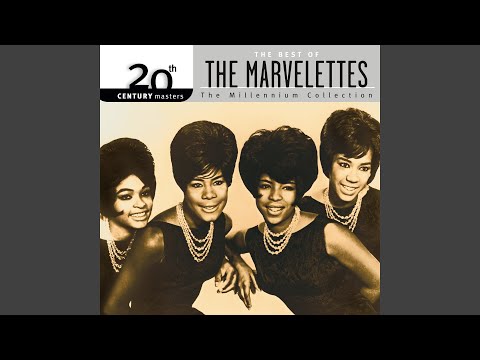
The Marvelettes at this point consisted of Gladys Horton, Wyanetta "Wanda" Young, Georgia Dobbins, Juanita Cowart, and Katherine Anderson, though personnel and lead vocal duties shifted throughout the group's run. Gladys Horton took the lead on this record, delivering the invitation at the center of the lyric with a confidence that suited the material. Horton had been the primary lead voice on "Please Mr. Postman" as well, and her direct, unaffected delivery was well matched to the kind of conversational scenarios that early Motown singles often favored.
Production on the record reflected the developing Motown house style: crisp rhythm section work, prominent bass lines, call-and-response between the lead and the backing voices, and a tempo calibrated for the dance floor while remaining accessible to pop radio. The Funk Brothers provided the instrumental bed, as they did on virtually every Motown release of the era, and their musicianship gave the track a professional sheen that distinguished Hitsville's output from many independent label recordings of the time.
The song spent multiple weeks on the Hot 100 through the late summer and early autumn of 1962, a period when the American pop charts were still in the process of being reshaped by the soul and rhythm-and-blues sounds emerging from Detroit, Chicago, and Philadelphia. "Beechwood 4-5789" arrived at a moment when Motown was refining its crossover strategy, building a catalog of records that could travel across the racial and format boundaries that still structured American radio.
The cultural resonance of the telephone-number conceit proved durable. The song was revisited and referenced in later decades, and it appeared in retrospective compilations of early Motown output throughout the years that followed. It became one of the defining tracks associated with the Marvelettes' early period, a group whose commercial importance to Motown's founding years is sometimes underappreciated relative to the label's later superstars.
The record was produced by William "Mickey" Stevenson, and it stands as a representative example of the Hitsville formula in its early, most exploratory phase, before the sophistication of the mid-decade productions arrived. The combination of a memorable hook, a relatable social scenario, and the distinctive ensemble sound of the Motown studio made "Beechwood 4-5789" a minor classic of the era and a significant chapter in the Marvelettes' commercial story.
In the broader history of American pop, the record occupies a place among the early Motown singles that established the label's credibility across multiple demographics. It demonstrated that the success of "Please Mr. Postman" was not accidental and that the Marvelettes, and Motown more broadly, were capable of producing consistent, chart-worthy material. The song's place in the canon of early-sixties girl-group pop is secure, and its infectious premise continues to make it one of the more instantly recognizable titles from the label's formative years.
02 Song Meaning
What "Beechwood 4-5789" Means: Invitation, Agency, and Girl-Group Power
"Beechwood 4-5789" operates on a premise that was both simple and quietly subversive for its era. A young woman extends an invitation to a man on her own terms, providing her telephone number and specifying that she wants him to call. In the social landscape of 1962, this represented a small but meaningful inversion of conventional courtship dynamics, where it was generally expected that men would initiate contact. The song's narrator is confident, unhurried, and in control of the pace of the relationship she is proposing.
The lyrical approach avoids melodrama entirely. There is no heartbreak, no longing, no anxiety about rejection. The scenario is framed as an opportunity rather than a plea, and this tonal choice gives the record an unusual lightness. Where many girl-group records of the period traded in vulnerability or submission to romantic authority, this song places its narrator in a position of cheerful self-possession. She knows what she wants, she knows how to obtain it, and she communicates both facts without hesitation.
The use of a telephone number as a lyrical hook was a stroke of songwriting ingenuity. It transformed the abstraction of romantic invitation into something concrete and participatory. Listeners, particularly young women, could project themselves into the scenario with unusual ease, because the mechanism of the invitation, a phone number offered freely, was drawn directly from the texture of everyday social life. The song met its audience in a recognizable world rather than in a stylized romantic fantasy.
Within the Marvelettes' catalog, "Beechwood 4-5789" represents the group at their most playfully assertive. The record sits in deliberate contrast to more plaintive material in the girl-group tradition and demonstrates that Gladys Horton's lead vocal style was capable of conveying something other than longing. Her delivery here is bright and slightly teasing, qualities that suit the material's spirit perfectly and that help explain why the record connected with audiences across demographic lines.
The song also carries a dimension of communal female experience that characterized much of the best Motown girl-group work. The backing voices do not merely provide harmonic support; they function as a chorus of endorsement, amplifying the lead's confidence and suggesting that this kind of self-directed romantic agency was not unusual but shared among the women in the song's world. The group dynamic reinforces the message: this is not one woman's unusual boldness but a collectively understood approach to romantic life.
In the context of early Motown's crossover ambitions, the song's emotional register, warm, accessible, and free of the social friction that could complicate a record's radio viability, was deliberate. Berry Gordy's vision for the label involved music that could travel across the boundaries of race and class that still structured American broadcasting, and "Beechwood 4-5789" was precisely the kind of material that achieved this. Its subject matter was universal enough to resonate without friction, while its rhythmic energy and call-and-response structure carried the markers of the Black musical tradition from which it emerged.
Decades after its original release, the song retains its clarity and its charm. It belongs to a tradition of pop songs that find meaning in the ordinary moments of social life, rendering a telephone number into something that feels like a declaration of selfhood. For listeners returning to early Motown, it offers a reminder that the label's founding energy was not only about heartbreak and aspiration but also about joy, confidence, and the pleasure of connection offered on one's own terms.
→ More from The Marvelettes
View all The Marvelettes hits →



→ More from the 1960s File
View all 1960s hits →




Keep digging