The 1960s File Feature
Reverend Mr. Black
The Kingston Trio and "Reverend Mr. Black": Folk Music's Gospel Crossover In the spring of 1963, "Reverend Mr. Black" by The Kingston Trio became one of the …
01 The Story
The Kingston Trio and "Reverend Mr. Black": Folk Music's Gospel Crossover
In the spring of 1963, "Reverend Mr. Black" by The Kingston Trio became one of the most unexpected commercial successes of the group's remarkable run on the Billboard Hot 100. The single debuted at number 88 on April 6, 1963, and over the following weeks mounted one of the most dramatic climbs of the trio's career, ascending to number 62, then 31, then 16, then 14, before reaching its peak position of number 8 on May 18, 1963. The eleven-week chart run placed it among the trio's strongest commercial performances and demonstrated that the folk revival audience of the early 1960s was willing to embrace material with explicitly religious content when it was delivered with the sincerity and craft that The Kingston Trio consistently brought to their recordings.
The song was written by the songwriting team of Billy Wheeler, Jerry Lieber, and Mike Stoller, the last two of whom were among the most prolific and successful popular music composers of the postwar era. Lieber and Stoller's contributions to American music ranged from foundational rhythm and blues recordings to sophisticated pop compositions, and their involvement in "Reverend Mr. Black" reflected the versatility that made them such central figures in the commercial music landscape of the period. Wheeler brought a folk and gospel sensibility to the collaboration that suited The Kingston Trio's interpretive style perfectly.
By 1963, The Kingston Trio had been a defining force in American popular music for nearly five years. Their 1958 recording of "Tom Dooley" had introduced folk music to a mass commercial audience in a way that no previous act had managed, reaching number one on the Billboard Hot 100 and establishing the group as one of the most commercially successful acts of the late Eisenhower era. The success that followed was sustained and substantial: multiple albums reached the top of the charts, and the group's combination of accessible harmonies, skillful instrumental playing, and carefully selected repertoire made them the template for the commercial folk boom that shaped American popular music in the early 1960s.
The Kingston Trio who recorded "Reverend Mr. Black" was, however, a somewhat different group from the one that had recorded "Tom Dooley." The original lineup of Dave Guard, Bob Shane, and Nick Reynolds had undergone a significant change in 1961 when Guard departed and was replaced by John Stewart, who brought additional musical breadth and songwriting ability to the group. Stewart's presence helped the trio navigate the rapidly changing musical landscape of the early 1960s, as the folk revival began to fragment into different directions and the commercial formulas of the late 1950s were being challenged by new styles and new artists.
"Reverend Mr. Black" appeared on the album New Frontier, released on Capitol Records in 1962. The album title was a reference to President Kennedy's political vision, reflecting the degree to which the Kennedy administration had become intertwined with the cultural moment of the folk revival. The trio's material consistently engaged with the social and political currents of the period, and "Reverend Mr. Black" fit this pattern even as it drew on gospel and spiritual traditions that predated any immediate political context.
The song's narrative concerned a traveling preacher, a figure deeply embedded in American religious and cultural mythology, who moves through communities delivering a message of faith and moral accountability. The character of the Reverend drew on the tradition of the circuit rider, the itinerant minister who served rural communities that had no permanent clergy, and on the broader American fascination with religious figures who stand outside established institutional structures while still embodying spiritual authority. This was material that resonated with audiences across regional and denominational lines.
The Kingston Trio's treatment of the song reflected the group's characteristic approach: tight three-part harmonies, a rhythmic energy derived from their banjo-driven arrangements, and a clarity of diction that ensured every word of the narrative registered with listeners. Bob Shane's lead vocal on the recording brought warmth and conviction to the preacher character without tipping into caricature, a balance that was essential to the song's effectiveness. The group's ability to make folk and traditional material sound simultaneously authentic and accessible was at the heart of their commercial appeal, and "Reverend Mr. Black" exemplified this quality.
The spring of 1963 was a pivotal moment in American popular music more broadly. The British Invasion that would transform the commercial landscape was still nearly a year away, and the American music scene was in a period of transition, with early rock and roll settling into a more polished form, soul and rhythm and blues gaining mainstream attention, and the folk revival producing artists like Bob Dylan whose ambitions extended well beyond commercial folk entertainment. The Kingston Trio operated in this context as established stars whose audience remained loyal even as younger listeners began gravitating toward rawer, more politically explicit forms of folk expression.
"Reverend Mr. Black" reaching number 8 in May 1963 was therefore a significant achievement, demonstrating that the trio could still command substantial mainstream attention even as the musical culture around them was shifting. The song's success also testified to the enduring appetite in American popular culture for material that engaged seriously with religious and spiritual themes, an appetite that would continue to generate commercially successful recordings across decades and genres.
02 Song Meaning
The Meaning of "Reverend Mr. Black": Authority, Faith, and the American Preacher Tradition
"Reverend Mr. Black" belongs to a rich and specifically American tradition of narrative songs built around the figure of the traveling preacher. The character at the center of the song drew on a deep reservoir of cultural mythology, reaching back to the circuit riders of the frontier era and forward through decades of revival meetings, tent services, and small-congregation worship that shaped the religious life of rural and small-town America. When The Kingston Trio brought this figure to the folk revival audience of the early 1960s, they were connecting contemporary listeners to a strand of American experience that formal education and urban sophistication had largely distanced them from.
The Reverend of the song's title embodies a particular kind of moral authority: one that is earned through personal conduct and spiritual conviction rather than institutional credential. This distinction was meaningful in the cultural moment of the early 1960s, when established institutions of various kinds were beginning to face the scrutiny that would intensify dramatically as the decade progressed. The figure of the self-authenticating preacher, whose authority comes from the directness of his relationship to his faith and his community, carried an implicit critique of more bureaucratic forms of religious and social organization.
The gospel and spiritual traditions that informed the song's musical and thematic content were themselves repositories of profound American meaning. Gospel music developed as one of the primary expressive forms of African American religious life, but its influence spread throughout American popular music across the twentieth century, shaping country, soul, rhythm and blues, and rock and roll. By drawing on these traditions, "Reverend Mr. Black" participated in the ongoing process by which folk revival performers mediated between diverse American musical heritages and a predominantly white, college-educated audience.
The song's treatment of faith was neither doctrinaire nor ironic. It presented religious belief as a genuine human response to the conditions of life, particularly the hardships and uncertainties that the traveling preacher's communities faced. This evenhandedness was one of the factors that gave the song broad appeal. Listeners who held personal religious convictions could find their experiences affirmed, while those who approached religious material from a more secular perspective could appreciate the song as a portrait of a cultural type and a way of life that was genuinely moving on human terms.
The narrative structure of the song, in which the preacher arrives, ministers to a community, and moves on, reflected the American mythology of mobility and purpose: the individual who is defined not by place but by mission, whose home is the road and whose congregation is whoever he encounters. This figure had deep roots in American literature and culture, from the circuit riders of the Methodist and Baptist traditions through the medicine show entertainers and the evangelical revivalists of the nineteenth and twentieth centuries. The Kingston Trio's recording placed this figure within the context of the folk revival, where questions of authenticity, tradition, and American identity were being actively explored.
Bob Shane's vocal delivery gave the Reverend's character a humanity that made the song's faith-based content accessible to listeners who might otherwise have kept their distance from overtly religious material. The trio's characteristic harmonies surrounded the narrative with a warmth that functioned as a kind of musical congregation, the sense of community that the song's content described being enacted in the very sound of its performance. This was the kind of subtle, effective communication that made The Kingston Trio such skilled interpreters of folk and traditional material.
→ More from The Kingston Trio
View all The Kingston Trio hits →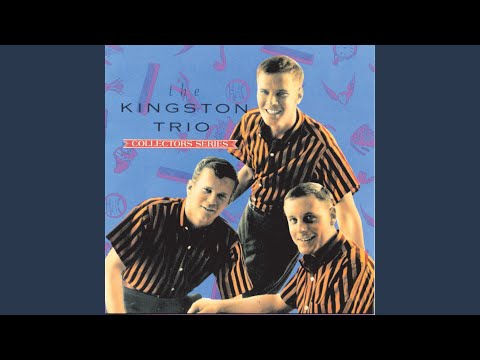


→ More from the 1960s File
View all 1960s hits →




Keep digging