The 1960s File Feature
We're A Winner
We're A Winner — The Impressions: Recording, Release, and Chart History By the autumn of 1967, Curtis Mayfield had already established himself as one of the …
01 The Story
We're A Winner — The Impressions: Recording, Release, and Chart History
By the autumn of 1967, Curtis Mayfield had already established himself as one of the most gifted songwriter-producers in American rhythm and blues. Leading The Impressions through a string of socially conscious singles on ABC-Paramount, he had explored themes of racial dignity and spiritual perseverance with a delicacy that placed his group at the forefront of the soul movement's political awakening. Nothing he had written or recorded, however, carried quite the blunt declarative force of the song he was about to release.
"We're A Winner" was recorded in Chicago in 1967 and released on ABC Records in late December of that year, with national distribution pushing it into the market just as the civil rights movement was entering one of its most turbulent phases. The record was produced by Mayfield himself, a role he had begun taking on more frequently as his commercial and artistic instincts proved impossible to separate. He arranged the lush orchestral bed over a gospel-rooted groove, and the combination of his falsetto lead with the deep harmonics of Fred Cash and Sam Gooden gave the track a choir-like authority that demanded attention.
The response from radio was immediate, though not uncomplicated. Several radio stations, particularly in certain Southern markets, declined to add the record to their playlists. The song's unapologetic celebration of Black pride and advancement was read in some quarters as inflammatory during a period when the term "Black Power" had become a flashpoint in national political discourse. This controversy did nothing to suppress demand among the record's intended audience. If anything, the attempts to silence it amplified its message.
The single reached number 1 on the Billboard R&B chart, a position that reflected its near-total embrace by Black radio and Black record buyers across the country. On the Billboard Hot 100, it climbed to number 14, a strong showing for a record that faced active suppression in parts of the country. The chart run extended across several weeks into early 1968, giving the song a sustained commercial presence that matched its cultural impact.
ABC Records initially had reservations about releasing the record at all. According to accounts that circulated widely at the time, label executives debated whether the lyrical content was too overtly political for mainstream consumption. Mayfield pushed back, insisting that the message was not separatist but aspirational, grounded in the same spiritual tradition that had animated gospel and earlier civil rights-era soul. He won the argument, and the record went out.
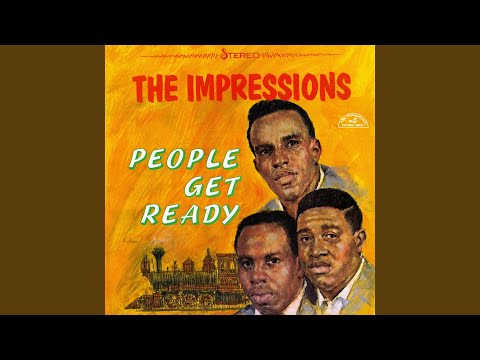
The Impressions had been recording together in various configurations since the late 1950s, with their elegant 1963 hit "It's All Right" and the 1965 anthem "People Get Ready" establishing the template: warm harmonies, spare but sophisticated production, and lyrics that moved between the personal and the communal. "We're A Winner" pushed further in the communal direction than almost anything they had done before. It named a collective aspiration without ambiguity.
Mayfield's production on the track demonstrated his mastery of layering. The rhythm section established an insistent pulse without ever overwhelming the voices. Strings and horns entered in waves, providing the sense of forward momentum that the lyrical content demanded. The arrangement sounded triumphant without tipping into bombast, which was a difficult balance to strike given the emotional stakes of the material.
The record became a touchstone in the developing vocabulary of soul music as political speech. It arrived in the same cultural moment as Aretha Franklin's transformation of "Respect" and James Brown's ongoing experiments with funk as assertion. Together these recordings were articulating a new confidence in Black American popular music, one that spoke directly to its core audience rather than filtering its message for crossover palatability.
The Impressions earned a Grammy nomination in the R&B category for their work during this period, and "We're A Winner" was central to that recognition. Mayfield's reputation as a producer-songwriter was now operating on a different level entirely. He would go on to write and produce for other artists and eventually launch his own Curtom Records label in 1968, but the artistic framework he had constructed with The Impressions provided the foundation for everything that followed.
In the decades since its release, the song has been sampled, covered, and cited by artists across genres. Its place in the canon of socially conscious American popular music is secure. When scholars and critics compile definitive accounts of soul music's engagement with the civil rights struggle, "We're A Winner" appears consistently as one of the records that made the argument most clearly and most memorably. The single was later reissued and included on multiple Impressions compilation albums, ensuring that new generations of listeners would encounter it in the proper context of Mayfield's extraordinary run of socially engaged recordings.
02 Song Meaning
We're A Winner — Meaning, Themes, and Cultural Significance
"We're A Winner" functions simultaneously as a rally cry, a spiritual affirmation, and a political statement. Curtis Mayfield structured its central message around collective advancement rather than individual triumph, a choice that aligned the song with the communal grammar of gospel music even as it addressed thoroughly secular and political concerns. The "we" in the title is doing enormous work. It refuses to locate pride or progress in a single exceptional figure and insists instead on a shared condition, a shared movement, a shared destination.
The lyrical argument the song makes is rooted in resilience over time. It describes a historical arc, a long period of endurance followed by a moment of undeniable forward motion. Mayfield draws on the tradition of African American religious rhetoric, which has always found its most powerful language in the imagery of exodus and promised arrival. The song does not dwell on suffering for its own sake but uses it as contrast, as the before against which the current moment of progress becomes legible and meaningful.
Mayfield's decision to write in the direct, declarative register of an affirmation rather than the narrative register of a story was a calculated artistic choice. He could have told a particular character's story. Instead he made a statement of collective fact, which forced listeners into the position of either accepting the claim as their own or explicitly rejecting it. For the Black American audiences who embraced the record immediately and passionately, that structure was precisely what gave the song its emotional force.
The emotional register of the recording shifts interestingly between confidence and urgency. The vocal performance carries absolute assurance, but the arrangement never fully relaxes, maintaining a forward lean that suggests the work is ongoing even as the victory is being declared. This tension between celebration and continued striving is one of Mayfield's most sophisticated artistic achievements. The song does not permit complacency. It insists that winning is a continuous process rather than a permanent destination.
Within The Impressions' catalog, the song represents the fullest expression of the political direction Mayfield had been developing across several years of recording. Earlier records had couched their messages in spiritual metaphor or romantic allegory, lending them deniability in markets where explicitly political content might meet resistance. "We're A Winner" abandoned that strategy almost entirely. Its message was on the surface, unmediated, addressed directly to a specific community at a specific historical moment.
The song's relationship to the broader Black Power movement of the late 1960s was both genuine and complicated. Mayfield had always identified with a tradition of nonviolent resistance and uplift grounded in church culture and the integrationist civil rights movement. "We're A Winner" could be read within that tradition as a celebration of progress made through collective perseverance. At the same time, its unapologetic assertion of Black pride resonated with audiences drawn to the more assertive politics emerging in the late 1960s, crossing ideological lines within the community it addressed.
For Mayfield's own artistic trajectory, the record marked a decisive turn. His subsequent work on Curtom Records and especially his landmark 1972 soundtrack for "Superfly" would extend his engagement with social commentary into darker and more ambivalent territory. But the blueprint for that work, the willingness to address his community directly through song without filtering the message for outside consumption, was established definitively with "We're A Winner."
The song endures because its central argument has remained relevant across the decades, carrying different weights and meanings depending on the historical moment in which it is heard. New generations of listeners have continued to find in it both a document of its particular historical context and a statement of continuing aspiration.
→ More from The Impressions
View all The Impressions hits →


→ More from the 1960s File
View all 1960s hits →




Keep digging