The 1960s File Feature
Choice Of Colors
Choice Of Colors — The Impressions A Question That Shook the Radio The summer of 1969 was not a summer for easy answers. The United States was still at war i…
01 The Story
Choice Of Colors — The Impressions
A Question That Shook the Radio
The summer of 1969 was not a summer for easy answers. The United States was still at war in Vietnam, the civil rights movement had survived assassinations and legislative battles and was now confronting deeper structural questions about economic justice and political power, and the country's cities were still carrying the scars of the uprisings that had followed the murder of Martin Luther King Jr. in 1968. Into this atmosphere, Curtis Mayfield and The Impressions released "Choice Of Colors" in June 1969, a song that posed its central question with the directness of a sermon and the grace of a soul ballad.
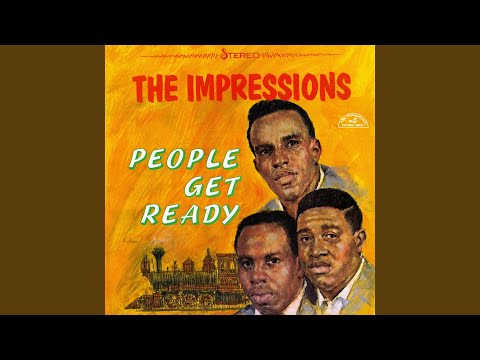
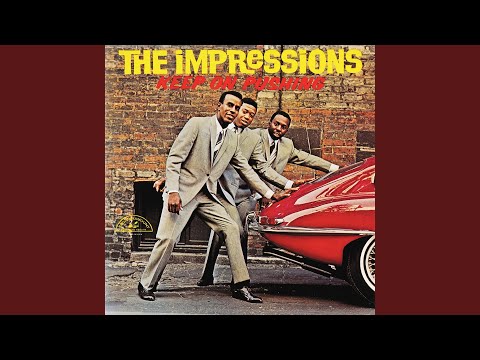
The Impressions had been making socially conscious music for years by this point. Their 1964 recording Keep On Pushing and their 1965 gospel-inflected anthem People Get Ready had already established Curtis Mayfield as one of the most thoughtful and morally serious songwriters working in American pop music. Choice Of Colors carried that lineage forward while sharpening its political edge considerably.
Curtis Mayfield and the Group at Their Peak
By 1969, the group's original trio configuration of Curtis Mayfield, Fred Cash, and Sam Gooden had been operating together for nearly a decade. Mayfield was the primary creative engine, writing the bulk of the group's material and producing their recordings for Curtom Records, the label he had co-founded in 1968. Curtom gave Mayfield unusual creative independence at a time when Black artists frequently had little control over their recording careers, and that independence is audible in the music. Choice Of Colors could not have been made the way it was made under typical major-label oversight of the era.
The song's production is measured and deliberate. There is no rush to the chorus, no artificial uplift imposed on lyrics that are asking genuinely hard questions. The arrangement lets the words land with weight. Mayfield's falsetto, which had always been the group's most distinctive sonic signature, here carries an almost pastoral tenderness even as the lyrical content pushes listeners toward self-examination.
The Chart Run and Reception
The single debuted on the Billboard Hot 100 on June 28, 1969, entering at position 77. It climbed steadily through the summer weeks, moving to 48, then 40, then 32, then 29. The song peaked at number 21 on August 16, 1969, and spent a total of 11 weeks on the Hot 100. Simultaneously, it performed even more strongly on the rhythm and blues chart, where it reached number one, confirming its particular resonance with the Black American audiences at whom its message was most directly aimed.
Critical reception recognized the song's ambition. Mayfield had not written a protest song in the confrontational mode that some listeners expected from socially engaged artists of the era. The song asks its audience to reflect, to make choices, to consider what kind of world they want to live in and what actions follow from that consideration. That gentleness was its own kind of radicalism.
Curtom Records and the Broader Context
The founding of Curtom Records in 1968 was a significant moment in the history of Black-owned music enterprises. Mayfield and his business partner Eddie Thomas built Curtom at a time when the notion of an independent label run by African American artists was still genuinely unusual in the mainstream music industry. The label would go on to release some of the most important recordings of the early 1970s, including Mayfield's landmark solo work after he left The Impressions in 1970.
Choice Of Colors thus occupies an interesting transitional position: it is one of the last major Impressions recordings before Mayfield began the solo career that would produce Superfly and cement his reputation as one of the great auteurs of Black American music. Heard now, the song sounds like both a culmination and a threshold.
The Impressions' Place in Soul History
The Impressions never quite achieved the crossover ubiquity of some of their contemporaries, but their influence on the development of soul, gospel-inflected pop, and politically conscious Black music is enormous. Artists from Stevie Wonder to Bob Marley have cited Mayfield's melodic sensibility and moral seriousness as formative influences. Choice Of Colors is one of the clearest examples of what that seriousness sounded like in practice: a song that trusted its audience to think while they danced, to feel while they reflected.
Press play and let that question settle over you. It has not grown any easier to answer.
"Choice Of Colors" — The Impressions' singular moment on the 1960s charts.
02 Song Meaning
Choice Of Colors — The Impressions: Meaning and Legacy
The Central Question
The title of the song is itself a provocation. Choice Of Colors asks, at its most literal level, whether a person would prefer to be born Black or white, and what that preference reveals about the values of the person asked. But Curtis Mayfield's lyrical intelligence prevents the song from settling into a simple rhetorical trap. The question is posed not as an accusation but as an invitation to honest self-examination, which makes it considerably more uncomfortable than a straightforward political challenge would be.
The song argues, ultimately, that the choice should not matter, that human worth is not located in racial category, and that the persistence of racial hierarchy is a moral failure that implicates everyone. This was not a new argument in 1969, but the gentleness with which Mayfield delivered it gave it unusual penetrating power. Anger can be dismissed; a question asked with sincerity is harder to evade.
The Gospel Inheritance
The Impressions were rooted in gospel music, and that inheritance shapes Choice Of Colors in ways that go beyond Mayfield's falsetto delivery. The song's structure is closer to a sermon than to a conventional pop narrative. It moves through a series of propositions, pauses to let them breathe, and returns to its central theme with patient insistence. The effect is of a congregation being led through a process of collective reflection rather than an audience being entertained.
This was deliberate. Mayfield understood that the Black church was the institutional backbone of the civil rights movement, and that music connecting to that tradition would carry weight with the communities most affected by the issues he was addressing. At the same time, the song was pop enough in its melody and arrangement to reach listeners who had no particular relationship to gospel tradition.
The Social Landscape of 1969
Understanding what Choice Of Colors meant in its original moment requires understanding the particular mood of 1969. The legislative victories of the mid-1960s, the Civil Rights Act and the Voting Rights Act, had not resolved the deeper structural inequalities that shaped Black American life. Economic disparity, housing segregation, and police violence remained persistent realities even as formal legal equality had been established. The question of what came next, of how to build genuine social equality rather than its legal form, was the central preoccupation of Black political thought at the time.
Mayfield's song engaged this question without pretending it had a simple answer. The song asks people to choose, but it knows the choosing is hard and that the world that created the question was not built overnight and would not be dismantled overnight either.
Lasting Influence and Cultural Weight
The song's influence extended well beyond its chart run. Curtis Mayfield's approach to socially conscious soul music became a template that shaped artists across multiple genres and decades, from the politically engaged funk of the 1970s to the conscious hip-hop that emerged in the 1980s and 1990s. The willingness to ask hard questions through music with melodic beauty rather than sonic aggression is a tradition that runs directly through Mayfield's work with The Impressions.
Choice Of Colors remains one of the most precise and affecting expressions of that tradition: a song that chose grace over fury and trusted that grace could go further. Nearly six decades after its release, the question it poses has lost none of its urgency.
→ More from The Impressions
View all The Impressions hits →


→ More from the 1960s File
View all 1960s hits →




Keep digging