The 1960s File Feature
Amen
The Impressions' "Amen": Curtis Mayfield's Gospel-Soul Ascent to Number Seven In the autumn of 1964, Curtis Mayfield and The Impressions were operating at th…
01 The Story
The Impressions' "Amen": Curtis Mayfield's Gospel-Soul Ascent to Number Seven
In the autumn of 1964, Curtis Mayfield and The Impressions were operating at the intersection of gospel tradition and contemporary soul with a fluency and conviction that few acts in American popular music could match. Their run of social and spiritual anthems had already established them as one of the most meaningful voices in the civil rights moment, and their ability to address the deepest questions of collective Black American life through the idiom of popular song had given them both commercial success and cultural authority of an unusual order.
"Amen" arrived in the context of Lilies of the Field, the 1963 film starring Sidney Poitier, in which the traditional spiritual had already been prominently featured. Poitier's performance in the film had won him the Academy Award for Best Actor, making him the first Black actor to win in that category, and the film's association with a specifically interracial Christian community working toward a shared goal gave the word "amen" a resonance that went beyond its liturgical function. When The Impressions recorded their version of the traditional spiritual for ABC-Paramount Records, they were therefore working with material that carried an extraordinary weight of cultural and historical association.
The Impressions in late 1964 consisted of Curtis Mayfield, Fred Cash, and Sam Gooden, the configuration that would remain stable through the group's most celebrated period. Mayfield's production sensibility had evolved considerably since the group's early recordings, incorporating the lessons he had absorbed from gospel music, the Chicago soul production style pioneered by producers like Carl Davis and Johnny Pate, and his own instincts about the relationship between musical form and emotional content. Johnny Pate's orchestral arrangements for the group during this period were a crucial element of their sound, giving the recordings a grandeur that matched the ambitions of the material without overwhelming the intimacy that Mayfield's vocal approach required.
The recording of "Amen" built on the traditional spiritual framework while adding the rhythmic vitality and contemporary polish that characterized the best of Chicago soul production. The call-and-response structure between Mayfield's lead vocal and the harmonies of Cash and Gooden created a connection to the congregational worship practices from which gospel music drew its energy, and this connection was essential to the song's ability to function simultaneously as popular entertainment and spiritual invocation.
The single entered the Billboard Hot 100 on November 21, 1964, debuting at number 96. Its climb was swift and sustained: the song moved to 59, then 43, 30, 24, before continuing upward through December 1964 and into January 1965, eventually reaching its peak of number 7 on January 9, 1965. The eleven weeks it spent on the chart represented a major commercial success, and the song's strong performance on the R&B charts simultaneously confirmed its resonance within the Black musical community.
The timing of the song's chart run placed it in the immediate aftermath of the passage of the Civil Rights Act of 1964, signed into law by President Lyndon Johnson in July of that year. The political and social landscape was charged with both the energy of legislative achievement and the awareness that legal change was necessary but insufficient to address the full scope of racial inequality in American life. A song that connected the word "amen" to a tradition of collective affirmation and communal aspiration carried meaning that its listeners understood in ways that went beyond the purely musical.
Curtis Mayfield's role as a composer and arranger in "Amen" demonstrated the full range of his abilities as a musical thinker. His understanding of how to move an audience, how to build energy within a performance through dynamics and repetition, and how to connect the formal resources of gospel music to the commercial structures of popular recording was more sophisticated than most of his contemporaries. The song achieved its effect through accumulation, through the building of communal feeling across its duration.
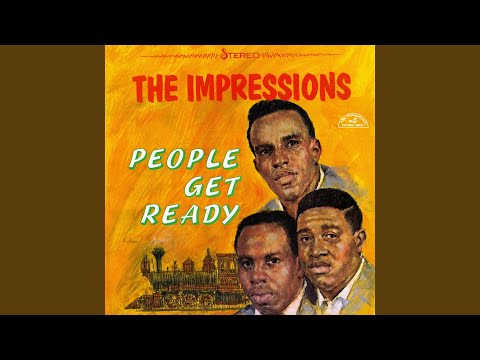
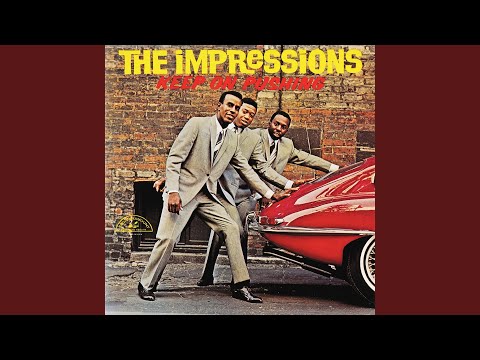
The Impressions' association with the civil rights movement was not incidental; it was a product of deliberate artistic choices that Mayfield made about what his music should accomplish. He had already written "Keep On Pushing" and "People Get Ready," songs that had become anthems of the movement, and "Amen" extended that work by invoking the deepest linguistic expression of communal assent available in African American religious tradition. The song's commercial success in the mainstream pop market confirmed that its message had found a hearing across demographic lines, a fact that was itself meaningful in the context of 1964 and 1965 American social history.
02 Song Meaning
Sacred Assent: The Meaning of The Impressions' "Amen"
Few words in the English language carry the accumulated weight of "amen." Across centuries of religious practice in Jewish, Christian, and Islamic traditions, the word has served as the communal ratification of prayer, the collective voice of a congregation affirming what has been spoken on its behalf. When The Impressions built a song around this single syllable in 1964, they were drawing on the full depth of that history and channeling it through the idiom of popular music in a way that transformed both the word and the medium through which it was delivered.
The song's genius lies in its understanding that "amen" does not require elaboration. The word is not a metaphor or a symbol; it is a direct act of communal assent, a declaration that what has been said is accepted as true and binding. By making this word the centerpiece of a popular song in 1964, Curtis Mayfield and The Impressions were inviting their audience to participate in something that felt larger than entertainment. They were offering a form of collective affirmation that resonated with particular force in the context of the civil rights struggle.
The civil rights movement had drawn heavily on the resources of Black church tradition, and the relationship between gospel music and the political aspirations of the movement was not incidental but structural. Church buildings served as organizing spaces; gospel songs provided the collective soundtrack for marches and demonstrations. "People Get Ready," one of Mayfield's compositions from this same period, had already become an anthem of the movement, and "Amen" extended this work by invoking the deepest linguistic root of congregational practice.
The connection to the film Lilies of the Field added another layer of meaning. The film depicted a Black Baptist handyman helping a group of German-speaking Catholic nuns build a chapel, and the "Amen" sequence in the film became one of its most celebrated moments: a spontaneous convergence of different religious and cultural traditions around a shared act of communal worship. The song therefore arrived pre-loaded with associations about the possibility of interracial and intercultural connection around shared spiritual values, a message of enormous resonance in 1964.
The musical structure of the recording reinforced its meaning through the formal device of call and response. Mayfield's lead vocal set up a series of declarations to which the harmonies of Fred Cash and Sam Gooden responded with affirmations, recreating within the pop-song format the dynamics of congregational worship. Listeners who brought knowledge of that tradition to the song experienced it as a familiar form given contemporary dress; listeners who did not bring that knowledge were nonetheless drawn into the pattern of declaration and response, experiencing the social dynamic of collective affirmation even without knowing its precise cultural origins.
The song's meaning has continued to expand in the decades since its release. Each period in which it has been rediscovered or recontextualized has brought new associations to the word at its center, but the core meaning has remained stable: this is a song about saying yes together, about the power of a community that affirms shared values in a shared voice. That affirmation was never more needed than in 1964 and 1965, and the song's peak position of number seven on the Billboard Hot 100 confirmed that the need was felt across a broader audience than its specifically gospel-inflected style might have predicted.
The Impressions' ability to make sacred material fully available within the commercial pop format without diminishing either was one of the defining achievements of Curtis Mayfield's extraordinary career as a songwriter and producer. "Amen" is among the clearest demonstrations of that ability, a song that asks its listeners to participate in something ancient and continues to find listeners willing to do so.
→ More from The Impressions
View all The Impressions hits →


→ More from the 1960s File
View all 1960s hits →




Keep digging