The 1960s File Feature
Because
Because: The Dave Clark Five and the Ballad Side of the British Invasion The British Invasion of 1964 is remembered primarily as a phenomenon of energetic ro…
01 The Story
Because: The Dave Clark Five and the Ballad Side of the British Invasion
The British Invasion of 1964 is remembered primarily as a phenomenon of energetic rock and roll, of driving rhythms and shouted vocals that disrupted the relatively smooth surface of early-1960s American pop. But the invasion's leading groups were more versatile than that summary suggests, and the Dave Clark Five in particular demonstrated a capacity for melodic ballad work that sat alongside their more kinetic material. "Because," released in 1964 on the Epic label in the United States, was one of the clearest demonstrations of that capacity, a song that found the group operating in the emotionally direct mode of classic pop balladry.
The Dave Clark Five had arrived in the United States in early 1964 as part of the same wave that brought the Beatles to American shores, and their commercial success had been substantial and swift. Unlike the Beatles, who were managed with careful attention to both image and artistic development, the Dave Clark Five had a more straightforwardly commercial orientation, releasing material at a high volume and allowing the market to select its favorites. This approach generated consistent chart presence throughout 1964 and 1965, and "Because" was among the records that demonstrated the group's range beyond their driving, drum-heavy signature sound.
The song was written by Dave Clark and Mike Smith, Clark serving as the group's drummer and commercial driving force while Smith was its primary vocalist. Smith's voice was among the most powerful and expressive in the British Invasion cohort, a raw baritone that could handle both the aggressive delivery their harder material required and the more vulnerable register that ballad material called for. On "Because," Smith's vocal performance was central to the record's emotional effectiveness, inhabiting the song's romantic subject matter with a directness and sincerity that gave the production its core appeal.
Released in 1964 on Epic Records in the United States, "Because" entered the Billboard Hot 100 and demonstrated that the Dave Clark Five's American audience was responsive to their ballad work as well as their more aggressive output. The song reached the top 3 of the Hot 100, peaking at number three, a commercial performance that matched or exceeded many of their harder-driving singles and confirmed that Smith's ballad singing was as commercially effective as his work on more uptempo material.
The production of "Because" reflected the British recording aesthetic of the period, which was evolving rapidly in response to the new commercial and creative possibilities that the Beatles had opened up. The arrangement was cleaner and less cluttered than American pop productions of equivalent commercial ambition, with the rhythm section and guitar work providing a foundation for Smith's voice rather than competing with it. This clarity of production, which made the vocal the unambiguous center of the listening experience, was characteristic of the better British pop productions of the period.
The competitive landscape for "Because" in 1964 was extraordinarily dense. The American pop charts in that year were filled with British acts competing against each other as well as against American artists who were adjusting to the new commercial reality of the invasion. In this context, the Dave Clark Five's ability to produce a ballad that reached the top three was a significant commercial achievement, indicating that their appeal was not dependent on the specific rhythmic intensity that characterized their most characteristic sound.
The Epic Records relationship that brought the Dave Clark Five to American audiences was an important commercial arrangement that gave the group consistent promotional support in the American market. Epic was a Columbia Records subsidiary with strong distribution and promotion capabilities, and the label's backing was crucial to the group's sustained commercial presence in the United States through the mid-1960s.
Mike Smith's vocal contribution to "Because" represents one of the more underappreciated vocal performances of the British Invasion era. His capacity to inhabit romantic material with genuine emotional conviction, without the ironic distance that some of his British contemporaries brought to similar material, gave the record a quality of earnestness that connected with audiences in ways that more detached performances might not have. This quality of vocal sincerity was among the Dave Clark Five's less often discussed but genuinely significant commercial and artistic assets.
The song's cultural position within the British Invasion narrative is somewhat peripheral, overshadowed by the simultaneous output of the Beatles and the Rolling Stones, but evaluated on its own terms it is an accomplished piece of commercial pop that holds up well against the era's best comparable work. Its chart performance was exceptional, and the recording itself demonstrates the Dave Clark Five operating at a high level of professional competence in a mode quite different from their signature sound.
02 Song Meaning
Simple Declarations and Romantic Sincerity: The Meaning of "Because" by the Dave Clark Five
The power of "Because" lies in a quality that is surprisingly rare in popular music despite its apparent simplicity: genuine emotional directness. Many pop songs about romantic love dress their subject matter in metaphor, in narrative, in oblique approaches that create distance between the expressed emotion and the direct statement of it. "Because" dispensed with most of those protective devices, offering instead a relatively unguarded declaration of romantic feeling in which the reasons for love, the "becauses" of the title, were presented as self-evident and sufficient.
This structural simplicity was not a failure of imagination but a deliberate artistic choice, one that trusted the emotional content of the song to carry its weight without elaborate ornamentation. The title itself announced this approach: a conjunction that introduces a reason, suspended in a state of perpetual incompletion, dependent on what follows it for its meaning. The word "because" is fundamentally relational, grammatically incomplete without the clause it anticipates, and deploying it as a song title placed the listener in a position of active participation, waiting for the explanation that the song would supply.
Mike Smith's vocal performance was the essential vehicle for the song's meaning. His voice carried a quality of emotional nakedness that suited the material precisely, approaching the declaration of romantic feeling without irony or detachment. This sincerity was both artistically and commercially significant: British pop of the period was moving in multiple directions simultaneously, and the earnest ballad mode that "Because" exemplified was genuinely in tension with the more knowing, sophisticated approaches that other British acts of the era were developing.
The song's engagement with romantic motivation, its attempt to articulate why one loves another person, placed it in a philosophical tradition of love songs that had concerned itself with this question since the earliest days of Western lyric poetry. The question of why we love whom we love is philosophically complex, but popular song has generally resolved that complexity through one of two strategies: either by declaring that love is beyond rational explanation, or by offering specific, concrete reasons that ground the feeling in observable qualities. "Because" worked in the latter mode, and the specificity of its emotional claims, even when those claims were modest in their ambition, gave the song a grounded quality that vague romantic generalization would have lacked.
For the Dave Clark Five as a group, the song's meaning extended to questions of artistic identity and commercial positioning. Their reputation rested primarily on a harder-edged, rhythm-driven sound that was more aggressive than the ballad mode of "Because," and the song's success demonstrated that they possessed emotional range that their signature sound sometimes obscured. The commercial validation of that range, reaching number three on the Hot 100, confirmed that their audience was interested in more than one dimension of their musical personality.
The broader context of the British Invasion gave "Because" an additional layer of cultural meaning. British pop artists demonstrating their capacity for sincere emotional expression in the mode of American romantic balladry was itself a kind of cultural translation, an argument that the British pop sensibility could inhabit the emotional territory that American pop audiences had developed through decades of exposure to Tin Pan Alley balladry and its successors. The fact that this translation was convincingly accomplished on "Because" was part of the record's cultural significance in the American market.
Heard today, "Because" communicates the specific quality of hopefulness that characterized British pop balladry at its best in the mid-1960s, a period when the sheer enthusiasm of the invasion had not yet given way to the more complex emotional registers that the late decade would bring. Its sincerity is both a period quality and a genuinely human one, and that combination gives it a durability that purely fashionable recordings from the same period have often failed to sustain.
→ More from The Dave Clark Five
View all The Dave Clark Five hits →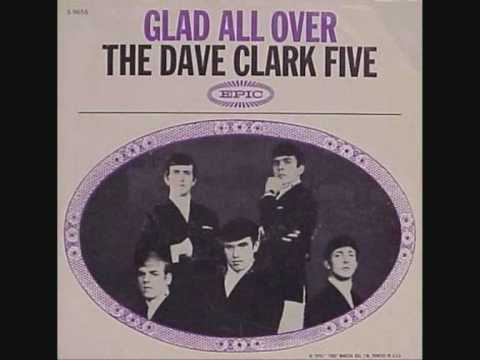



→ More from the 1960s File
View all 1960s hits →




Keep digging