The 1960s File Feature
Turn! Turn! Turn! (To Everything There Is A Season)
Turn! Turn! Turn! (To Everything There Is A Season) — The Byrds Scripture Meets the Sunset Strip Autumn of 1965 was a strange, unsettled season in American l…
01 The Story
Turn! Turn! Turn! (To Everything There Is A Season) — The Byrds
Scripture Meets the Sunset Strip
Autumn of 1965 was a strange, unsettled season in American life. The country was deepening its involvement in Vietnam, college campuses were beginning to stir with protest, and the radio dial offered an increasingly wild mix of British Invasion polish and homegrown folk ferment. Into that charged atmosphere, The Byrds released a song that had been waiting, in a sense, for three thousand years. Turn! Turn! Turn! drew its text almost entirely from the Book of Ecclesiastes, filtered through the pen of Pete Seeger, who had adapted the ancient words in the late 1950s. The result was one of the most unusual number-one singles in the history of American pop music.
The Byrds arrived at this recording as a band that had already proven itself capable of bridging folk idealism and rock electricity. Their debut single, a reworking of Bob Dylan's Mr. Tambourine Man, had reached the top of the Hot 100 earlier in 1965, establishing them as the premier architects of what critics were beginning to call folk rock. Roger McGuinn's twelve-string Rickenbacker had become the defining sonic signature of the genre, its chiming, layered tones creating a sound that felt simultaneously ancient and futuristic. By the time the group entered the studio to record their second album, they were a band with both momentum and artistic confidence.
Pete Seeger's Long Road to Columbia Records
The song's origin predates the Byrds by nearly a decade. Pete Seeger wrote and arranged "Turn! Turn! Turn!" sometime around 1959, setting the text of Ecclesiastes 3:1-8 to an original melody, adding only a brief additional phrase at the close about peace. Seeger recorded the song himself, and it circulated in folk circles for years before The Byrds encountered it. The decision to record the track for their second album came through producer Terry Melcher, who recognized the potential for the Byrds' electric treatment to transform Seeger's earnest folk piece into something with genuine commercial reach.
In the studio, the group layered McGuinn's signature twelve-string work over rhythm tracks that locked together with unusual precision for a rock band of that era. The arrangement retained the circular, meditative quality of Seeger's original while adding the kind of chiming propulsion that had made Mr. Tambourine Man so irresistible to radio programmers. The production was crisp and uncluttered, trusting the song's inherent gravitas rather than burying it in studio effect.
A Rocket Ascent Up the Hot 100
The chart performance of Turn! Turn! Turn! traced one of the more satisfying trajectories on the Billboard Hot 100 that year. The single debuted at number 80 on October 23, 1965, then climbed with increasing velocity through the late autumn weeks: 61, then 31, then 12, then 6. By the first weekend of December, it had reached the summit. The track hit number 1 on December 4, 1965, and remained on the Hot 100 for 14 weeks in total. For a song whose text was lifted directly from Old Testament scripture, the commercial embrace was remarkable, a sign that listeners sensed something genuine and timely in its message.
The timing was not incidental. An ancient meditation on cycles, impermanence, and the turning of seasons resonated with a country experiencing genuine upheaval. The song's argument that every human condition has its appointed time carried comfort and perspective that purely secular pop could not easily provide.
The Byrds at the Crest of Their Commercial Powers
For The Byrds, the success of Turn! Turn! Turn! confirmed what Mr. Tambourine Man had suggested: they were not a novelty act but a band with sustained commercial and artistic relevance. The group would continue to evolve dramatically over the following years, incorporating country, raga, and experimental sounds into their work, sometimes at the cost of commercial accessibility. Their influence on American rock music proved enormous, touching everything from country rock to jangle pop and beyond. But in late 1965, they occupied a singular position as the band that could take folk music's moral seriousness and deliver it at hit-single velocity.
The feat of taking ancient scripture to number one on a contemporary pop chart remains genuinely extraordinary. No other act in the Hot 100 era had done it before, and few have managed it since. The song's success also helped cement Pete Seeger's songwriting legacy in the mainstream consciousness, connecting his work in the folk revival to a generation of listeners who knew The Byrds from Top 40 radio.
An Enduring Presence in American Culture
Decades later, Turn! Turn! Turn! has not faded into nostalgia. It appears regularly in film scores, television dramas, and political speeches when writers reach for a piece of music that suggests the passage of time with both grace and seriousness. Its lyrical argument that every moment has its purpose and that change is the only constant has proven durable across cultural shifts that would have seemed unimaginable in 1965. The song has accumulated over 6.8 million YouTube views, a figure that speaks to continuous discovery by new listeners rather than mere archival interest.
Roger McGuinn and the other Byrds produced music across several more years and configurations, but this recording represents the moment when their particular chemistry was at its most potent: idealistic, melodically irresistible, and carrying the weight of something much older than rock and roll. Press play and let those twelve strings do what they have been doing for sixty years.
"Turn! Turn! Turn! (To Everything There Is A Season)" — The Byrds' singular moment on the 1960s charts.
02 Song Meaning
Turn! Turn! Turn! (To Everything There Is A Season) — The Byrds
Ancient Wisdom in a Pop Frame
There is something genuinely unusual about a song whose primary text was composed roughly three thousand years before the recording sessions that made it famous. Turn! Turn! Turn! drew almost its entire lyrical content from the Book of Ecclesiastes, one of the most philosophically rich and tonally complex books in the Hebrew Bible. The Preacher's meditation on cycles, seasons, and the rhythm underlying all human activity translates with surprising ease into a pop structure, which itself suggests something about the universality of the underlying ideas. Pete Seeger recognized the potential when he arranged the words in the late 1950s, and The Byrds confirmed it when they took the track to number one in 1965.
The central argument of the lyrics rests on the idea that every human experience, every emotion and activity, has its appointed time and place. Mourning and dancing, war and peace, silence and speech: the song cycles through these contrasts not to produce despair but to suggest perspective. The emotional core of the track is fundamentally consoling, offering the listener a cosmic frame in which personal suffering and joy alike are part of an intelligible, recurring pattern.
The Season of 1965 and Why It Landed
The timing of the song's success was not accidental. By late 1965, American society was moving into a period of intensifying division: over civil rights, over Vietnam, over the rapid transformation of social norms that the decade was accelerating. A song that acknowledged the reality of conflict while insisting that peace, too, had its time carried genuine emotional weight for listeners caught between generational loyalties and new political realities.
Folk music had always functioned partly as a vehicle for social commentary and collective feeling, and The Byrds' electric treatment of Seeger's arrangement brought that tradition into the commercial mainstream. Young listeners who had grown up with rock and roll discovered in this recording something that their usual pop diet rarely offered: a sense of historical depth, a suggestion that the anxieties of the present moment were neither unique nor final.
Ecclesiastes and the Pop Imagination
The Book of Ecclesiastes occupies a distinctive place in biblical literature, noted for its unusual willingness to acknowledge ambiguity, limitation, and the mystery of human experience. Its argument is neither simply optimistic nor simply pessimistic; it insists on the reality of both joy and suffering while refusing to offer easy resolution. This philosophical complexity transferred intact to the pop recording, which is part of why the song has proven so lastingly resonant. Listeners sense that they are in contact with something that takes their experience seriously.
Pete Seeger added only a brief closing phrase about peace to the scriptural text, a small editorial gesture that transformed the song from pure reflection into a modest statement of hope. That addition gave the recording its most explicitly contemporary dimension, connecting ancient wisdom to the specific political urgencies of the mid-1960s.
Legacy and Continuing Resonance
The lasting power of Turn! Turn! Turn! lies in its unusual combination of humility and assurance. It neither promises easy answers nor leaves the listener in despair, insisting instead that the pattern of human experience is larger and more complex than any single moment can contain. That combination has made the song useful in contexts far removed from its original chart run: it appears in film and television when writers need a piece of music that suggests the passage of time without sentimentality, and it surfaces in political discourse when speakers want to invoke shared human experience across division.
The Byrds delivered this message with a musical arrangement that made the ancient feel immediate, and in doing so they created a recording that has genuinely outlasted its era. Few pop songs of the 1960s can claim the same philosophical reach.
→ More from The Byrds
View all The Byrds hits →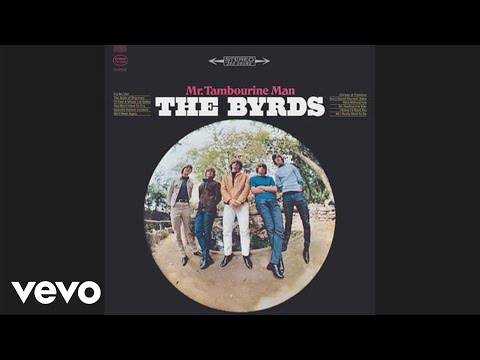
→ More from the 1960s File
View all 1960s hits →




Keep digging