The 1960s File Feature
So You Want To Be A Rock 'N' Roll Star
The Byrds' "So You Want to Be a Rock 'N' Roll Star": Satire at the Height of Pop Stardom "So You Want to Be a Rock 'N' Roll Star" by The Byrds reached number…
01 The Story
The Byrds' "So You Want to Be a Rock 'N' Roll Star": Satire at the Height of Pop Stardom
"So You Want to Be a Rock 'N' Roll Star" by The Byrds reached number twenty-nine on the Billboard Hot 100 in early 1967 and spent seven weeks on the chart, a performance that accurately reflected the song's somewhat unconventional position in the commercial landscape. The record was not a straightforward pop offering; it was a piece of pointed cultural commentary aimed at the machinery of the very industry in which The Byrds were operating. That it charted at all was a measure of the group's established commercial credibility. That it peaked only at twenty-nine was perhaps a measure of how well the audience understood what they were being told.
The song was written by Roger McGuinn and Chris Hillman, two of the group's core members, in a burst of creative energy that reflected both their growing sophistication as songwriters and their growing disillusionment with certain aspects of the pop music industry. By 1967, The Byrds had already experienced the full arc of commercial breakthrough, massive success, internal tension, and the pressure of maintaining relevance in an environment that was changing at extraordinary speed. They had watched other groups manufactured and discarded, had observed the mechanics of hype and promotion from the inside, and were in a position to comment on those mechanics with authority.
The recording opens with a bugle call fanfare that had been sourced from a Mamas and the Papas session, giving the track an immediately theatrical quality that signals its satirical intent. This opening gesture sets the tone: what follows is a performance, a presentation of a formula, an exposure of a process. The song then proceeds to lay out, in remarkably concise fashion, the steps by which a manufactured pop star is assembled and deployed. Buy a guitar. Get your face on television. Sell your soul to the company that gives you the biggest advance.
McGuinn's twelve-string Rickenbacker guitar remained central to the track's sound, providing the jangly, chiming texture that had been The Byrds' sonic signature since their breakthrough with "Mr. Tambourine Man" in 1965. The irony of using this instantly recognizable sound — itself a product of the commercial rock process the song was satirizing — to deliver the satire was presumably intentional. The Byrds were critiquing a system they had benefited from, and the presence of their trademark sound in the arrangement made that critique self-implicating in productive ways.
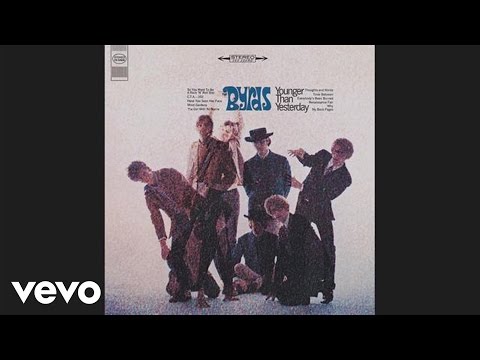
The album on which the song appeared, Younger Than Yesterday, represented a significant artistic maturation for the group. The record as a whole showed McGuinn and Hillman developing as composers while David Crosby was contributing some of his most adventurous early work. "So You Want to Be a Rock 'N' Roll Star" appeared as one of the album's more immediately accessible tracks while also functioning as one of its most intellectually pointed moments. Columbia Records, The Byrds' label, released it as a single in January 1967.
The song featured a notable guest: South African trumpeter Hugh Masekela contributed a trumpet part that appeared during the song's bridge section, adding an unexpected texture that reflected the broader musical openness that characterized The Byrds' work during this period. Masekela's presence was not merely decorative; it represented a genuine international musical dialogue at a moment when American rock was beginning to engage with global influences in substantive ways.
The historical context of early 1967 is essential. The Beatles had released Revolver the previous year and were on the verge of Sgt. Pepper's Lonely Hearts Club Band. The Summer of Love was approaching. The counterculture was generating an enormous amount of cultural energy, some of it genuine and some of it manufactured. The music industry was simultaneously trying to capitalize on that energy and to package it for mass consumption. The Byrds were writing from inside this situation, and their satire was timely in ways that a less engaged group might not have achieved.
Seven weeks on the Hot 100 and a peak of twenty-nine was a respectable if not spectacular chart performance for a single that was as much a cultural statement as a commercial product. The song has proven considerably more durable than its chart position might suggest; it has been covered extensively, cited as an influence by subsequent satirists of the music industry, and remains one of the most frequently referenced tracks in discussions of The Byrds' artistic legacy. The seven weeks it spent on the chart were only the beginning of its useful life.
02 Song Meaning
Manufacturing Fame: The Satirical Argument of "So You Want to Be a Rock 'N' Roll Star"
"So You Want to Be a Rock 'N' Roll Star" by The Byrds is one of popular music's most economical pieces of industry satire. Written by Roger McGuinn and Chris Hillman in 1967, the song constructs a step-by-step manual for achieving pop stardom that is, simultaneously, a devastating critique of what that achievement actually involves. The manual is accurate; the critique operates through the accuracy. By describing the process without apparent judgment, the song allows the process to judge itself.
The song's satirical method is one of deadpan instruction. The narrator does not express outrage at the mechanisms being described; he presents them as simple facts, as a how-to guide anyone could follow. This tone of matter-of-fact pragmatism is what makes the satire effective. If the narrator railed against the exploitation and inauthenticity of manufactured pop stardom, listeners could disagree with the emotional valence of the complaint. Because he simply describes, the listener is left to supply the moral response themselves, and that response tends to be more powerful for having been internally generated.
The specific elements of the recipe for stardom that the song identifies are telling. The guitar arrives first — the instrument of rock and roll authenticity — but immediately in a commercial context. Television exposure follows, because visibility is the currency of pop success. The screaming girls are next, because fan hysteria is both a measure and a product of the promotional machine. Each element is real; each element is also, in the song's framing, interchangeable and ultimately hollow.
The song's most pointed observation concerns the relationship between the aspiring star and the commercial machinery that produces stardom. The deal being described is transactional: one sells something — authenticity, creative control, the integrity of one's artistic impulse — in exchange for the fame that the title character desires. The song does not argue that this transaction is not worth making. It simply makes the terms visible, which is a more uncomfortable kind of honesty.
The Byrds themselves were implicated in their own satire, and this self-implication gives the song an additional layer of complexity. They had, by 1967, navigated precisely the machinery they were describing. They had appeared on television, generated fan hysteria, experienced the commercial pressure to produce hit singles, and felt the tension between artistic ambition and market expectation. Their authority to satirize the pop star manufacturing process derived from their first-hand experience of it.
The presence of Hugh Masekela's trumpet in the arrangement is itself a subtle commentary. Here is a musician of serious artistic credentials, contributing to a pop record that is simultaneously critiquing the pop industry. The trumpet's presence neither endorses nor condemns; it simply adds another layer of musical sophistication to a song that is already doing more than it appears to be doing.
Decades after its release, the song's argument has only become more resonant as the mechanisms of pop star manufacture have grown more sophisticated, more visible, and more thoroughly normalized. Reality television, social media follower counts, and algorithmically optimized content strategies are the modern equivalents of the elements The Byrds were describing. The song anticipated a trajectory that the entertainment industry has followed with considerable consistency, which is what transforms a 1967 satire into an enduring cultural document.
→ More from The Byrds
View all The Byrds hits →
→ More from the 1960s File
View all 1960s hits →




Keep digging