The 1960s File Feature
Have You Seen Her Face
Have You Seen Her Face: The Byrds' Garage-Rock Gem from Younger Than Yesterday By 1967, The Byrds were in the middle of one of the most restless and producti…
01 The Story
Have You Seen Her Face: The Byrds' Garage-Rock Gem from Younger Than Yesterday
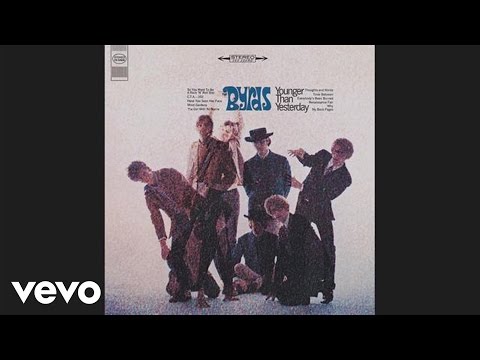
By 1967, The Byrds were in the middle of one of the most restless and productive periods of creative reinvention in rock music history. Having essentially invented folk rock with their 1965 cover of Bob Dylan's "Mr. Tambourine Man," the band had subsequently moved through psychedelic experimentation, jazz-influenced harmonics, and increasingly complex studio work. Younger Than Yesterday, released in February 1967, was the album on which all those threads were most coherently synthesized, and it remains one of the group's most critically acclaimed records. "Have You Seen Her Face," issued as a single from that album, reached number 74 on the Billboard Hot 100 and spent four weeks on the chart — a modest commercial showing for a song that represented some of the band's most vital rock playing.
The Byrds at this point consisted of Roger McGuinn, David Crosby, Chris Hillman, and Michael Clarke. It was Hillman who wrote "Have You Seen Her Face," and the song is in many respects his most pure expression of the straightforward rock and roll instincts that sometimes sat uneasily alongside McGuinn and Crosby's more experimental tendencies. Where much of Younger Than Yesterday leans into complexity — jazz chords, drone experiments, existential lyrics — "Have You Seen Her Face" is almost defiantly simple: a driving beat, a clean guitar riff, and a direct, energetic celebration of infatuation with a girl whose face has captivated the narrator.
Chris Hillman was primarily the band's bassist but also one of their most consistent songwriters during this period. His contribution to Younger Than Yesterday was substantial, and "Have You Seen Her Face" demonstrated his affinity for a tighter, more immediate rock sound than the group often pursued. The track has a garage-rock quality — raw, slightly rough around the edges, propulsive in a way that prioritizes feel over polish. In the context of an album that also contained psychedelic experiments like "CTA-102" and "Mind Gardens," the directness of "Have You Seen Her Face" served an important structural function, providing rhythmic and emotional grounding.
The recording captures the Byrds at their most stripped-back. McGuinn's twelve-string Rickenbacker , the instrument most associated with the band's signature sound , is present but deployed more as a rhythmic texture than as the chiming lead element that defined "Mr. Tambourine Man" and "Turn! Turn! Turn!" Clarke's drumming is driving and confident. Hillman's bass provides a strong melodic foundation. The overall effect is of a band playing with genuine enjoyment in the rock and roll idiom they had initially built their sound on before expanding into more experimental territory.
The choice to release "Have You Seen Her Face" as a single reflected Columbia Records' preference for the more commercially accessible material on an album that also contained more challenging recordings. The single charted modestly, which was becoming a pattern for the Byrds during this period. Their experimental instincts and the increasingly fragmented pop marketplace made sustained Top 40 presence difficult, even as their critical reputation was expanding. Younger Than Yesterday was recognized by critics as a major artistic achievement, but critical recognition did not consistently translate to commercial radio performance.
The period surrounding Younger Than Yesterday was also marked by significant internal tensions within the group. David Crosby's increasingly combative relationship with his bandmates , particularly his insistence on including his own compositions and his vocal criticisms of the band's direction , would culminate in his departure later in 1967. McGuinn would subsequently guide the Byrds through further reinventions, most dramatically with Sweetheart of the Rodeo in 1968, which helped pioneer country rock. But the lineup that made Younger Than Yesterday captured something irreplaceable in the Byrds' evolution.
"Have You Seen Her Face" did not become a standard or an enduring radio staple in the way that some of the Byrds' more immediately recognizable recordings did. But it is a significant document of a band that was, in 1967, simultaneously looking backward at their rock and roll roots and forward into territories no one had yet fully mapped. The Byrds were one of the most important American bands of the 1960s, and every record they made during this fertile period , including this compact, energetic single , is part of a body of work whose influence on rock music extended far beyond its chart positions.
02 Song Meaning
Seeing and Feeling: The Emotional Directness of "Have You Seen Her Face"
"Have You Seen Her Face" is a song about infatuation in its most elemental form — the experience of encountering someone whose physical presence creates an immediate, overwhelming impression that the narrator cannot stop thinking about. It is not a song about love in any developed or complex sense, but about that earlier, rawer stage of attraction in which a person becomes almost involuntarily preoccupied with another. The simplicity of this subject matter is part of what makes the song distinctive within the Byrds' 1967 catalog, which was otherwise occupied with considerably more ambitious thematic territory.
Chris Hillman's songwriting on this track is deliberately straightforward. There is no metaphorical complexity, no philosophical undertow, no cultural or political reference. The narrator has seen a face and cannot stop thinking about it, and the song communicates that experience with an urgency and directness that bypasses intellectualization entirely. This was a conscious choice on Hillman's part — he was drawn to rock and roll's capacity for uncomplicated emotional directness, and "Have You Seen Her Face" is his purest expression of that instinct within the Byrds' discography.
The rhetorical device of addressing a second person — the implied friend or confidant of "have you seen" — is effective because it transforms the narrator's private experience into something shared. The narrator is not keeping the infatuation to himself but broadcasting it, almost frantically, to anyone who will listen. This is an accurate representation of how intense early attraction actually feels: the desire to communicate the experience to others, to have someone else confirm that the object of attention is as remarkable as she seems. The social dimension of infatuation, rarely captured well in pop song, is one of "Have You Seen Her Face's" more perceptive observations.
The song's position within Younger Than Yesterday gives it a particular resonance. Surrounded by recordings that reach for cosmic significance , explorations of space ("CTA-102"), explorations of consciousness ("Mind Gardens"), explorations of social complexity ("So You Want to Be a Rock 'n' Roll Star") , "Have You Seen Her Face" provides a kind of grounded humanity. It insists that before all the philosophical exploration and cultural commentary, there is still the basic human experience of seeing someone across a room and being stopped in one's tracks. This insistence on the ordinary is itself a kind of statement.
The musical arrangement enforces the lyrical directness through its own simplicity. The driving rhythm, the clean guitar work, the absence of psychedelic embellishment , all of these choices model the unmediated quality of the feeling the song describes. There is nothing between the narrator and the object of his attention, no layers of irony or sophistication, and the music reproduces that condition of unguarded exposure. The production's refusal to complicate the material formally mirrors the lyric's refusal to complicate the emotion philosophically.
In the context of the Byrds' creative development, "Have You Seen Her Face" represents the rock and roll foundation that the group never entirely left behind, even as they explored increasingly ambitious territory. The song is a reminder that the band's identity was rooted in the basic pleasures of rhythm, melody, and direct emotional communication, and that all their experiments existed in relation to those roots rather than as replacements for them. Hillman's contribution to the Byrds' sound was precisely this quality of groundedness , a reminder that sophistication and simplicity could coexist within the same artistic vision, and that neither was more authentically rock and roll than the other.
→ More from The Byrds
View all The Byrds hits →

→ More from the 1960s File
View all 1960s hits →




Keep digging