The 1960s File Feature
Ballad Of Easy Rider
The Byrds and "Ballad Of Easy Rider" — A Song Born from a Film and a Generational Mythology Few cultural artifacts of the late 1960s captured the fractured A…
01 The Story
The Byrds and "Ballad Of Easy Rider" — A Song Born from a Film and a Generational Mythology
Few cultural artifacts of the late 1960s captured the fractured American psyche as precisely as Dennis Hopper's 1969 film Easy Rider. Released into a country still processing the assassinations of 1968, the failures of the Summer of Love, and the mounting costs of Vietnam, the film offered a road narrative that turned tragic as a comment on the limits of freedom in a nation that feared its own dissident children. The Byrds and their primary architect in this period, Roger McGuinn, contributed the title track that closed the film, a song that distilled the movie's ambivalence into a few minutes of country-tinged folk-rock.
The story of how "Ballad Of Easy Rider" came to exist involves one of the most fascinating creative collaborations of the era. Bob Dylan, who had already become something like a patron saint of the counterculture, wrote an initial verse and passed the fragment to Roger McGuinn, encouraging him to complete it. Dylan's involvement was characteristically oblique; he reportedly told McGuinn to take the verse and make something of it. McGuinn obliged, completing the song while incorporating Dylan's opening imagery into the finished work. Dylan chose not to take a writing credit on the released version, though his contribution was widely acknowledged within the music community.
The resulting song suited the film's elegiac mood perfectly. Where much of the Easy Rider soundtrack consisted of existing rock and soul recordings, "Ballad Of Easy Rider" was created specifically for the project and functioned as its emotional anchor. Roger McGuinn's distinctive twelve-string guitar work, which had defined the Byrds' earliest commercial triumphs, was here deployed in service of something quieter and more reflective, a meditation on freedom, motion, and the relationship between an individual and the landscape through which he travels.
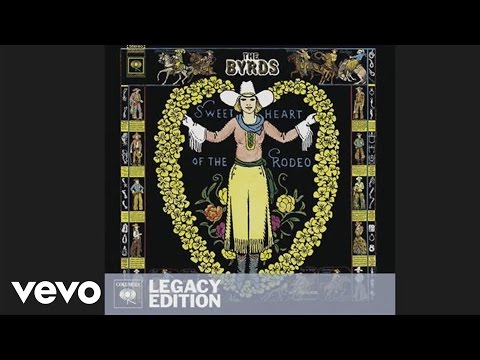
The Byrds of 1969 were a considerably different entity from the group that had scored massive hits with folk-rock interpretations of Dylan songs in 1965. Extensive lineup changes had reshaped the band, and McGuinn was the sole continuous presence connecting the group's various incarnations. The country-rock direction the band had pursued on Sweetheart of the Rodeo in 1968 had proved commercially modest but critically significant, and "Ballad Of Easy Rider" extended that aesthetic while connecting it to the most commercially visible cultural event the band would be associated with since their earliest chart successes.
The single version of "Ballad Of Easy Rider" debuted on the Billboard Hot 100 on November 1, 1969, entering at number 92. Its chart journey was gradual, eventually reaching a peak of number 65 during the week of December 6, 1969, after spending six weeks on the chart. That moderate performance belied the song's cultural impact, which was considerably larger than its chart numbers suggested. The film had become an event of enormous generational significance, and the song served as both its soundtrack and its summary statement.
The accompanying album, also titled Ballad of Easy Rider, was released in October 1969 and collected material that ranged from original compositions to covers of songs by Bob Dylan and Woody Guthrie. The album's eclecticism reflected the Byrds' ongoing interest in American musical history, connecting the folk revival sensibility that had animated their early work to the country and roots traditions they had been exploring since Sweetheart of the Rodeo. McGuinn's guitar playing throughout the album maintained the jangly, chiming quality that remained the band's most immediately recognizable sonic signature.
The film's cultural legacy ensured that "Ballad Of Easy Rider" would remain in circulation long after its brief chart run. Easy Rider became a staple of college film courses, late-night television screenings, and the developing home video market, each new screening introducing the song to audiences who encountered it as an inseparable element of the film's emotional conclusion. The image of the road, the river flowing freely to the sea, and the dissolution of individual identity into the natural world that the song described had lodged themselves in the American cultural imagination in ways that transcended any single medium.
For scholars of the period, "Ballad Of Easy Rider" represents a precise intersection of folk-rock history, the counterculture's confrontation with its own limits, and the creative networks that connected the era's most significant figures. The Dylan-McGuinn collaboration, even in its uncredited form, exemplified the communal creative culture of the late 1960s, in which the boundaries between individual artistic ownership and collective expression were frequently and productively blurred. The Byrds brought the song into being; the film gave it a context; and the decade's ending gave it its permanent resonance.
02 Song Meaning
Freedom, Fatalism, and the Open Road: The Meaning of "Ballad Of Easy Rider"
"Ballad Of Easy Rider" by The Byrds operates as an elegy before the fact, a song that mourns the fate of its subject while simultaneously celebrating the conditions that made that fate possible and perhaps inevitable. Written for Dennis Hopper's landmark 1969 film, the song captures the essential paradox at the heart of the counterculture's relationship with American freedom: the same open road that promises liberation can lead only to destruction when the society that built it regards the traveler as a threat.
The song's central image, the river flowing freely to the sea, is among the most resonant natural metaphors in American folk tradition, connecting the piece to a lineage of river poetry and song that stretches from Whitman through Woody Guthrie to the folk revival of the 1950s and 1960s. Roger McGuinn, who completed the song from a verse contributed by Bob Dylan, understood this tradition intimately. The Byrds had built their early career on bridging the folk revival and rock and roll, and in "Ballad Of Easy Rider" that synthesis found one of its most natural expressions.
Dylan's involvement in the song's genesis is thematically appropriate given his centrality to the mythology of the road and the free individual in 1960s American culture. His highway imagery, developed across records from The Freewheelin' Bob Dylan onward, had given the counterculture much of its geographical and symbolic vocabulary. By passing the song's beginnings to McGuinn, Dylan was in some sense acknowledging that the tradition he had drawn from was larger than any individual and could be extended and transformed by others who had internalized its values.
The film that the song anchors presents the freedom of the road as ultimately illusory. The protagonists' journey ends in violence that the film frames as the inevitable response of a fearful and conformist society to those who refuse its terms. The song does not flinch from this reading. Its tone is not triumphant but wistful, placing the freedom it describes in the past tense of memory rather than the present tense of experience. This temporal displacement gives the song its elegiac quality and aligns it with the broader sense at the end of the 1960s that something had been lost that could not be recovered.
The Byrds' musical setting reinforces the lyrical themes through its country and folk inflections. The jangly twelve-string guitar that McGuinn employed throughout the song connected the piece to the folk revival that had given the counterculture much of its early musical identity, while the country feel placed it in the tradition of American roots music that had long used the road as a metaphor for both freedom and danger. This musical layering gave the song a depth of historical reference that purely contemporary pop settings could not have achieved.
The meaning of "Ballad Of Easy Rider" also encompasses the specific historical moment of its creation. By late 1969, the optimism that had characterized the counterculture's early years had been severely tested. The film itself seemed designed to process this disillusionment, and the song functioned within that processing as a way of honoring what had been attempted even while acknowledging what had been lost. The freedom the protagonists sought was real, the song implies, even if the world they inhabited was not ready to grant it.
For subsequent generations encountering the song through the film or independently, "Ballad Of Easy Rider" has served as a distillation of late-1960s idealism and its costs. It preserves, in musical form, the emotional truth of a cultural moment that official history tends to reduce to a collection of events and slogans. The river image, the open road, the melancholy acceptance that freedom has limits that no individual will can overcome — these are the meanings the song carries into the present, as fresh and as troubling as when Roger McGuinn first performed them at the close of one of the defining American films of the twentieth century.
→ More from The Byrds
View all The Byrds hits →
→ More from the 1960s File
View all 1960s hits →




Keep digging