The 1960s File Feature
All I Really Want To Do
All I Really Want To Do: The Byrds Reinterpret Dylan for the Folk-Rock Age When the Byrds released their version of "All I Really Want to Do" in the summer o…
01 The Story
All I Really Want To Do: The Byrds Reinterpret Dylan for the Folk-Rock Age
When the Byrds released their version of "All I Really Want to Do" in the summer of 1965, they were participating in one of the most significant musical conversations of the decade. Bob Dylan had written and recorded the original for his 1964 album "Another Side of Bob Dylan," and the song had already circulated widely among the folk audience that was paying close attention to his developing catalog. The Byrds' decision to cover it was part of a systematic effort to translate Dylan's folk vision into the amplified, harmony-drenched sound they were developing, and the result helped define what folk-rock would mean for years afterward.
The Byrds had already released their breakthrough cover of Dylan's "Mr. Tambourine Man" earlier in 1965, and that single's enormous commercial success had established the template: take Dylan's acoustic folk compositions and reimagine them with electric guitars, close harmonies, and a rhythmic drive that connected to the pop charts. "All I Really Want to Do" was released as a single on Columbia Records in July 1965, and it entered the Billboard Hot 100 as the Byrds were consolidating their position as one of the most commercially and critically significant groups in American music.
The timing of the release created one of the more interesting chart competitions of the mid-1960s. Cher, then recording as part of Sonny and Cher as well as under her own name, released her own version of "All I Really Want to Do" almost simultaneously. The two versions competed directly on the charts, and Cher's recording ultimately reached a higher chart position in the United States, peaking at number 15 on the Billboard Hot 100 while the Byrds' version reached number 40. The Byrds fared considerably better in the United Kingdom, where their version charted more successfully. The competition illustrated the degree to which Dylan's songs had become contested territory in 1965, with multiple artists recognizing their commercial potential and moving quickly to claim them.
The production of the Byrds' recording was handled by Terry Melcher, who had been instrumental in shaping the group's sound from their earliest sessions. Melcher understood how to deploy Roger McGuinn's distinctive twelve-string Rickenbacker guitar to maximum effect, and the arrangement of "All I Really Want to Do" leaned into the chiming, ringing quality that McGuinn's instrument produced. The vocal harmonies, shared among McGuinn, David Crosby, and Gene Clark, gave the recording a brightness that contrasted interestingly with Dylan's drier, more sardonic original delivery.
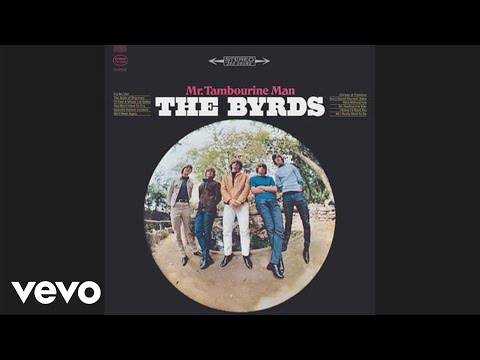
The song appeared on the Byrds' debut album "Mr. Tambourine Man," released in June 1965 on Columbia Records, which became one of the defining documents of the folk-rock movement. The album's combination of original material and Dylan covers established the Byrds' aesthetic more completely than any single recording could, and "All I Really Want to Do" served as evidence that the group could work with the full range of Dylan's material, not just his most overtly poetic compositions.
By mid-1965 Dylan himself was preparing to release "Highway 61 Revisited" and move decisively toward electric rock, a transition that the Byrds had in some ways anticipated and helped make possible. The dialogue between Dylan and the Byrds during this period was unusually productive for both parties: Dylan provided material that the Byrds transformed, and the commercial success of those transformations helped legitimize the broader folk-rock movement that Dylan was about to join with his own electric recordings.
The Byrds went on to record one more significant Dylan cover before moving more decisively into original material, releasing "Lay Lady Lay" and contributing to a broader understanding of how rock arrangements could honor the literary qualities of Dylan's writing without diminishing them. "All I Really Want to Do" was an early and important step in that process, a record that showed how two very different musical personalities could inhabit the same song without either canceling the other out. The Byrds' version remained a fixture in discussions of mid-1960s folk-rock, appearing on numerous retrospective compilations and continuing to be cited as a key document in the genre's formation.
The competition with Cher's version, rather than diminishing the Byrds' achievement, added a layer of historical interest to the recording. The fact that the same song could support two commercially successful interpretations within weeks of each other testified to the strength of Dylan's writing and to the hunger in the pop market of 1965 for material that combined folk intelligence with pop accessibility. Both versions found their audiences, and both are now understood as products of a singular cultural moment when the boundaries between folk, pop, and rock were being renegotiated in real time.
02 Song Meaning
Disarming the Romantic Myth: The Meaning of "All I Really Want to Do"
Bob Dylan wrote "All I Really Want to Do" as a deliberate dismantling of romantic cliche. The song proceeds through a long catalog of things the narrator insists he does not want, and the cumulative effect of that refusal is itself a kind of declaration. By the time the song reaches its repeated simple statement of what the narrator does want, the simplicity reads as radical because so much romantic language had been stripped away. Dylan wrote the song in 1964, at a moment when his work was moving toward a more personal and more playful register, and the lyric reflected his discomfort with the ways that romantic relationships could become entangled with ego, power, and projection.
The Byrds' version of the song transformed this intellectual content through the warmth of their arrangement. Where Dylan's original delivery was dry and slightly ironic, almost distancing the listener from the emotional core of the lyric, the Byrds' harmonies and their chiming twelve-string guitar created an atmosphere of genuine warmth and lightness. This was not a misreading of the material but a reinterpretation that emphasized different aspects of what Dylan had written. The song became, in the Byrds' hands, something closer to a genuine pop expression of uncomplicated affection.
Roger McGuinn's twelve-string Rickenbacker guitar was central to this transformation. The instrument's natural shimmer gave the recording an almost celestial quality that softened the lyric's more astringent edges. The vocal harmonies between McGuinn, David Crosby, and Gene Clark added a communal warmth that reinforced the song's stated desire for simple, uncomplicated connection. The Byrds were not being naive about the lyric; they were finding in it a possibility that Dylan's own recording had kept at a certain ironic distance.
The song's position in the Byrds' catalog is significant because it came early in their recording career, before they had fully developed their own compositional identity. Their willingness to interpret Dylan's material so freely, to make it sound genuinely like their own statement rather than a tribute, established them as artists in their own right rather than mere interpreters. The folk-rock synthesis they achieved on this recording, and on the "Mr. Tambourine Man" album more broadly, demonstrated that the boundaries between composition and interpretation were more permeable than the folk purist tradition had insisted.
For listeners in 1965, the song arrived at a moment when the simple expression of a desire for genuine, non-exploitative human connection carried considerable emotional weight. The mid-1960s counterculture was beginning to articulate its own values around authenticity and the rejection of social performance, and "All I Really Want to Do" could be heard as an early expression of those values in pop form. The Byrds gave those values a sound that was bright, accessible, and emotionally direct, helping the song reach an audience beyond the folk community that had first encountered it on Dylan's album.
→ More from The Byrds
View all The Byrds hits →
→ More from the 1960s File
View all 1960s hits →




Keep digging