The 1960s File Feature
Laugh, Laugh
Laugh, Laugh: The Beau Brummels and San Francisco's Early British-Invasion Answer "Laugh, Laugh" by the Beau Brummels was one of the first recordings by an A…
01 The Story
Laugh, Laugh: The Beau Brummels and San Francisco's Early British-Invasion Answer
"Laugh, Laugh" by the Beau Brummels was one of the first recordings by an American group to successfully capture and return to the British Invasion something of its own energy, demonstrating that the new sounds arriving from England in 1964 and 1965 had provoked a creative response in American musicians that was more than mere imitation. The record's commercial and critical success established the Beau Brummels as the leading act of the emerging San Francisco music scene months before that city became internationally associated with psychedelic rock and the Summer of Love, and it introduced one of the most significant producer figures in American music history to a national audience at a very early stage in his career.
The Beau Brummels formed in San Francisco in 1964, drawing their membership from various Bay Area musical contexts and naming themselves in a playful acknowledgment of the British Invasion that had inspired them. The group's core songwriting team of Ron Elliott and Ron Meagher developed an approach that drew on folk-rock harmonies, jangly guitar work, and a melodic sensibility influenced by both the Beatles and the Byrds before the Byrds had broken nationally. The combination produced something that was identifiably influenced by the British wave but had its own character and energy.
Autumn Records signed the Beau Brummels to the small San Francisco independent label that had been founded by Tom Donahue and Bob Mitchell, radio personalities who had recognized that the local music scene was generating commercially viable material. Autumn was a modest operation by the standards of the major labels, but it was well connected to local radio and could generate the regional momentum that might carry a strong record to national attention. "Laugh, Laugh" was among the first significant recordings to emerge from the Autumn roster.
The production of "Laugh, Laugh" was undertaken by a then-unknown figure who would go on to become one of the most consequential forces in American popular music across the following three decades. Sylvester Stewart, who would later achieve international fame as Sly Stone of Sly and the Family Stone, produced the record at the age of approximately twenty, demonstrating an instinctive understanding of how to capture and amplify the energy of a live performance in a recording studio context. Stewart was working as a radio disc jockey and part-time producer in the Bay Area at the time, and his work on the Beau Brummels' recordings constitutes some of the earliest evidence of the production talent that would later reshape popular music.
The record arrived on the national market in late 1964 and early 1965, precisely when the British Invasion was at the height of its commercial and cultural momentum. "Laugh, Laugh" climbed to number 15 on the Billboard Hot 100, a strong performance that demonstrated the group's ability to compete in the most competitive marketplace that American popular music had ever produced. The achievement was particularly notable given that it was accomplished by a regional act on a small independent label without the promotional resources that the major labels could deploy behind their priority acts.
The sound of "Laugh, Laugh" was built around Elliott's guitar work, the group's vocal harmonies, and a production approach that gave the record a directness and a sense of live energy that was characteristic of the best British Invasion recordings. The lyric, which took a pointed view of a type of person whose laughter masked cruelty or indifference, had an edge that distinguished it from the simpler romantic content of much of the era's teen pop. The combination of musical energy and lyrical intelligence was precisely what had made the early Beatles and Rolling Stones records exciting to American listeners, and the Beau Brummels had absorbed that lesson.
The follow-up single, "Just a Little," performed even better on the Hot 100, confirming that the Beau Brummels were not a one-record phenomenon but a group with genuine commercial momentum. The two singles together established a brief but significant run of chart success that made the group one of the notable American acts of the British Invasion period and helped establish San Francisco as a city capable of producing nationally competitive popular music before the psychedelic revolution of 1966 and 1967 transformed the city's musical identity entirely.
The Beau Brummels' connection to Sly Stone as producer gives their early recordings a historical significance that extends beyond their immediate commercial impact. Stone's work on these records was formative, and the skills he developed in these sessions contributed to the approach he would later bring to the Family Stone project, which would produce some of the most important and influential recordings in soul, funk, and rock history. In that sense, "Laugh, Laugh" is a document not only of the Beau Brummels' moment but of the early creative development of one of the most significant musical figures of the entire era.
The folk-rock qualities evident in the Beau Brummels' sound also connected them to a broader current in American music that was developing simultaneously with the British Invasion response. The Byrds, who would become the definitive folk-rock act, were developing their approach in Los Angeles at roughly the same time, and the parallel trajectories suggest that something in the American musical air of 1964 and 1965 was producing folk-influenced, harmonically rich rock and roll in multiple locations independently. The Beau Brummels were among the earliest groups to bring that approach to a national audience, and "Laugh, Laugh" was the record that opened that door.
02 Song Meaning
What "Laugh, Laugh" Means: Contempt, Social Performance, and the Uses of Irony in Early Folk-Rock
"Laugh, Laugh" is a song of pointed social observation, directed at a type of person whose laughter is a weapon rather than an expression of genuine amusement. The narrator addresses someone who has been dismissive, mocking, or cruel through the social mechanism of public ridicule, and the song delivers its own verdict on that behavior with an irony that was relatively unusual in the teen pop context of early 1965. The message is essentially that the person who laughed will eventually be in a position where the laughter returns to them, that cruelty deployed as social armor eventually leaves the person who uses it exposed and vulnerable.
The lyric placed the Beau Brummels in a different emotional register from the straightforward romantic celebration or lamentation that dominated most of their contemporaries' output. A song about social cruelty and its eventual reckoning had more in common with the observational folk tradition, with the songs of Bob Dylan and with the pointed social commentary of some British Invasion material, than with the love songs that constituted the bulk of the early-to-mid-1960s teen pop repertoire. This was not coincidental: the group was drawing on a wider range of influences than most American pop acts of the period.
The folk-rock sensibility of the production and arrangement reinforced the lyric's observational quality. The jangly guitar work, the close vocal harmonies, and the overall texture of the recording had a quality of earnestness that suited the moral seriousness of the lyric's central concern. This was not a song trying to be cool through ironic detachment but a song genuinely invested in the idea that behavior has consequences and that people who use laughter as a form of social control will eventually find themselves on the receiving end of the dynamic they have created.
The role of Sly Stone as producer gave the record a sound quality that maximized the effectiveness of the group's musical identity. Stone understood how to place the vocal performance in a context that made it feel both immediate and well-crafted, and his production choices on "Laugh, Laugh" reflect an instinctive understanding of what made records like the early Beatles and Rolling Stones recordings feel alive and urgent. The combination of that production intelligence with the Beau Brummels' own musical gifts produced a record that was more than the sum of its components.
The song's commercial success in the specific context of the British Invasion period carries its own ironic dimension. A song critiquing the social use of laughter and contempt found its audience at a moment when the American music industry was under enormous competitive pressure from foreign acts, and when American musicians were being tested to demonstrate that they could produce music of comparable quality and appeal. The Beau Brummels' response to that pressure was not to imitate but to draw on the same influences that had shaped the British acts and find their own voice within a shared musical context.
The San Francisco origin of the record is significant in retrospect. Within two years, the city would become internationally associated with a very different kind of music and a very different cultural moment, and the Beau Brummels' early folk-rock would seem to belong to a pre-psychedelic era that was quickly superseded. But "Laugh, Laugh" and the recordings that followed it were part of the creative environment that made San Francisco a genuinely productive musical city, and the sensibility they expressed, an emphasis on craft, melody, and social observation, was part of the foundation on which the later developments would build.
Within the Beau Brummels' catalog, "Laugh, Laugh" established a template of melodic sophistication and lyrical seriousness that the group would develop across their subsequent recordings, culminating in the more ambitious album work they pursued later in the decade. The record's lasting presence in the catalog of early American folk-rock reflects its genuine quality, a quality rooted in the combination of a well-crafted song, a performance delivered with conviction, and a production that captured both the energy and the nuance of what the group was attempting.
→ More from The Beau Brummels
View all The Beau Brummels hits →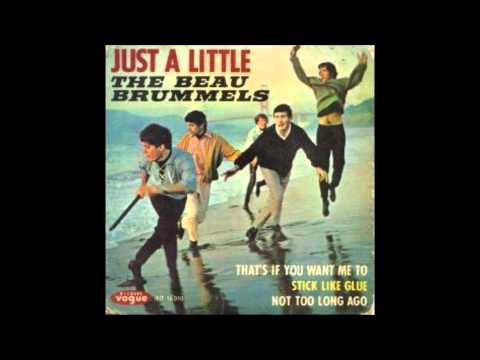


→ More from the 1960s File
View all 1960s hits →




Keep digging