The 1960s File Feature
No Arms Can Ever Hold You
The Bachelors and the Transatlantic Appeal of "No Arms Can Ever Hold You" The story of The Bachelors and their 1964 recording of "No Arms Can Ever Hold You" …
01 The Story
The Bachelors and the Transatlantic Appeal of "No Arms Can Ever Hold You"
The story of The Bachelors and their 1964 recording of "No Arms Can Ever Hold You" is a story about timing, vocal craft, and the particular moment in pop history when British and Irish acts were discovering that American audiences were more receptive to their work than anyone had anticipated. The trio from Dublin had already demonstrated their commercial instincts with a string of polished vocal pop recordings, and "No Arms Can Ever Hold You" became one of their most successful American entries, peaking at number 27 on the Billboard Hot 100 in February 1965.
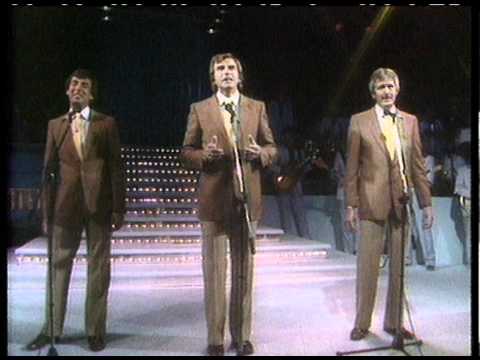
The Bachelors were formed in Dublin in the late 1950s, initially under the name the Harmonichords, before settling into the lineup and name that would carry them to international success. The group consisted of Declan Cluskey, his brother Con Cluskey, and John Stokes (born Sean James Stokes). Their sound was built on close three-part harmony singing, a style that placed them in a lineage stretching from barbershop and close-harmony vocal groups through to the early 1960s British pop boom. They were not a rock and roll act in any meaningful sense; their music was rooted in melody, sentiment, and vocal blend.
"No Arms Can Ever Hold You" was a song that originated in the United States before being taken up by The Bachelors for their own recording. The material suited their strengths perfectly, built as it was around a lyrical premise of romantic devotion expressed through gentle melodic phrasing. The production, handled within the Decca Records framework that the band operated under during their peak years, was clean and radio-friendly, foregrounding the harmonies while keeping the instrumental backing tasteful and unobtrusive.
The song entered the Billboard Hot 100 on December 26, 1964, debuting at number 98 just before the new year. From that modest starting point it climbed consistently through January and into February 1965, rising through 80, 65, 55, and 45 in successive weeks before continuing its ascent to peak at number 27 during the chart dated February 20, 1965. Ten weeks on the chart represented a healthy run, particularly for an Irish vocal group competing in an American market that was simultaneously experiencing the full force of the British Invasion.
That context is crucial. The Beatles had appeared on The Ed Sullivan Show in February 1964 and had effectively transformed the American pop landscape over the months that followed. By the time "No Arms Can Ever Hold You" was climbing the Hot 100, acts like The Rolling Stones, The Kinks, The Animals, and Herman's Hermits were all competing for American attention. The Bachelors occupied a different niche from most of these groups, appealing to an audience that wanted polished, melodic pop rather than electric guitar-driven energy. In some ways, this made them more resistant to the shifts in taste than rockier acts, since their audience had different values and was less susceptible to the novelty of the electric sound.
The group's relationship with their British and Irish audience was particularly strong throughout the mid-1960s. In the UK charts, they achieved remarkable consistency, placing numerous singles in the top ten and becoming a staple of British light entertainment television. The contrast between their UK and US profiles illustrated the different character of those two markets: in Britain, close-harmony vocal pop remained a genuinely popular mainstream form throughout the mid-1960s, while in America the market was more fragmented and more aggressively oriented toward the newer electric sounds.
Decca Records was the label that housed The Bachelors throughout their most successful period, and the relationship served both parties well. Decca's recording facilities and production infrastructure gave the group access to professional studio environments, while the label benefited from having an act with consistent commercial appeal in multiple markets. The recording of "No Arms Can Ever Hold You" reflected the label's house approach to pop production of the period: careful attention to vocal balance, string arrangements that added warmth without overwhelming the lead material, and a tempo that kept the song accessible to broadcast without feeling rushed.
The band's touring profile in this period was extensive. They were a working act in the fullest sense, performing live across Ireland, the UK, and making promotional visits to other markets where their records were selling. This visibility helped maintain their profile between record releases and built the kind of genuine audience loyalty that translated into consistent chart performance. Irish audiences in particular maintained a strong connection to the group throughout the decade, and The Bachelors became associated with a certain strand of Irish popular music that prized vocal beauty and emotional directness over musical experimentation.
Retrospectively, "No Arms Can Ever Hold You" stands as a representative example of what The Bachelors did best: a cleanly produced, harmonically rich vocal performance of well-chosen material that maximized the emotional content of the song while keeping the arrangement from interfering with the voices. It documented a group operating near the peak of their commercial powers in a market that was changing rapidly around them, and achieving genuine success on their own terms rather than by attempting to adapt to trends they were ill-suited to pursue.
02 Song Meaning
Devotion, Comfort, and the Language of Reassurance in "No Arms Can Ever Hold You"
"No Arms Can Ever Hold You" operates within one of popular music's most enduring emotional territories: the song of absolute devotion, where the singer asserts the uniqueness and completeness of a romantic bond. The Bachelors performed the song with a sincerity that matched its material, bringing their close three-part harmony style to a lyrical premise built entirely around the idea that no other embrace, no other connection, could match what the subject of the song provides to the singer.
The central statement of the title is worth examining in its structure. "No arms can ever hold you" carries a double meaning that gives the song more emotional texture than a simple love declaration might. On one reading, it is a possessive claim: the singer is asserting exclusive attachment, the idea that no other person could hold this beloved as completely or as rightly as the singer does. On another reading, it is an acknowledgment of the beloved's singular nature: that this is a person who cannot quite be contained or fully possessed, who exceeds ordinary attempts at closeness. Both readings coexist in the song without either canceling the other out.
Vocal harmony as a musical form has a particular relationship to this kind of material. When three voices blend together in close harmony, they create a sound that is simultaneously unified and multiple, a single expression that is nonetheless composite. This formal quality mirrors the lyrical content of songs about devotion and union between separate individuals. The Bachelors' performance made the most of this correspondence, using their blended voices to give the song's emotional assertions a weight and conviction that a solo performance might not have achieved as completely.
The song belongs to a category of early 1960s pop that drew on a long tradition of Tin Pan Alley writing in which romantic devotion was treated as an absolute condition rather than a provisional one. Unlike the more ambivalent love songs that would emerge later in the decade, this material assumed that romantic attachment, when genuine, was total and permanent. The singer's commitment is not presented as a choice that might be revisited but as a settled fact about the nature of their feeling. This kind of certainty was both artistically appealing and commercially effective in the early 1960s pop market, when audiences responded warmly to music that affirmed rather than complicated romantic feeling.
The Irish cultural context of The Bachelors gives "No Arms Can Ever Hold You" a faint additional resonance. Ireland's popular music tradition had long valued sentimentality, emotional directness, and the ballad form as vehicles for expressing the deepest feelings about love, loss, and longing. When Declan Cluskey, Con Cluskey, and John Stokes recorded this material, they were drawing on a performing tradition that took the expression of romantic feeling seriously as an artistic endeavor rather than treating it as commercial formula.
The song's enduring accessibility speaks to the way certain fundamental emotional experiences, the desire for total connection, the wish to be held and known, remain constant across different pop eras. What changes is the musical style in which those experiences are expressed, but the emotional content of "No Arms Can Ever Hold You" is legible across the distance of six decades because the feelings it addresses have not changed. The Bachelors found a musical language suited to those feelings, and the result was a record that achieved commercial success while also carrying genuine warmth.
→ More from The Bachelors
View all The Bachelors hits →



→ More from the 1960s File
View all 1960s hits →




Keep digging