The 1960s File Feature
I Believe
"I Believe" — The Bachelors Bring British Harmony to America, 1964 Dublin in the Middle of Beatlemania When the Beatles arrived in America in February 1964 a…
01 The Story
"I Believe" — The Bachelors Bring British Harmony to America, 1964
Dublin in the Middle of Beatlemania
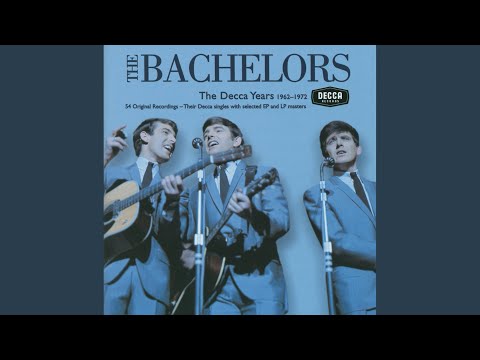
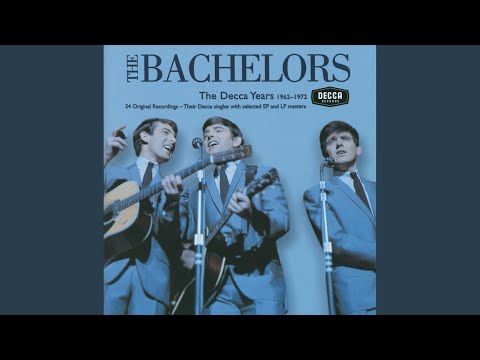
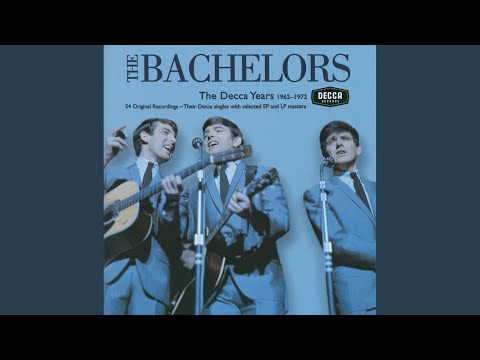
When the Beatles arrived in America in February 1964 and turned the pop world upside down, the immediate cultural narrative was one of British conquest. But the British Isles contained multitudes, and one of the groups that rode that transatlantic wave to the American charts came not from Liverpool or London but from Dublin. The Bachelors, a trio of clean-cut Irish singers with a gift for warm close-harmony pop, had been building their reputation in the United Kingdom through a run of hit singles that emphasized lush, sentimental vocalism over rock and roll energy. Their sound had far more in common with the pre-Beatles pop tradition than with the beat group explosion, and yet in the chaos of 1964, there was a sizable audience for exactly what they offered.
A Song of Enduring Faith
"I Believe" had a history before the Bachelors got to it. The song was written by Ervin Drake, Irvin Graham, Jimmy Shirl, and Al Stillman in 1953 and became a major hit for Frankie Laine, whose version spent eighteen weeks at number one on the UK charts in 1953. It was a song with deep roots in the postwar climate of spiritual aspiration, a statement of simple, undogmatic faith in a higher power and in the general goodness of things. The Bachelors' version brought those qualities forward into a different decade, trading Laine's somewhat grandiose delivery for something smoother and more intimate. On Decca Records, they had been developing exactly this approach across a string of UK hits, and the American release was a natural extension.
Harmony as the Product
What distinguished the Bachelors from their contemporaries in 1964 was a conscious commitment to vocal blend as the primary attraction. Con Cluskey, Dec Cluskey, and John Stokes brought a close harmony style that owed something to earlier American acts like the Everly Brothers and groups from the pre-rock crooner era, filtered through an Irish sensibility that leaned toward warmth and accessibility over edge or danger. The arrangement on "I Believe" surrounded those voices with orchestration designed to amplify the emotional uplift of the lyric, string-laden and unhurried, asking the listener simply to feel comforted rather than excited. In the feverish pop climate of 1964, this was almost a counterrevolutionary gesture.
The Billboard Journey
The single debuted on the Billboard Hot 100 on June 27, 1964, entering at position 83. Through the weeks that followed it climbed gradually: 71, then 66, then 53, then 50. By August 8, 1964, the track had reached its peak at number 33, completing an eight-week chart run. This was solid commercial territory for a group that could reasonably have been shut out of the American market entirely by the British Invasion's harder-edged fare. The performance confirmed that American audiences in 1964 did not form a monolithic bloc; there was genuine appetite for the kind of emotional directness and harmonic warmth the Bachelors provided, particularly among older listeners and those who found the beat group sound more exhausting than exhilarating.
Their Place in the British Invasion Story
The Bachelors' American success in 1964 and 1965 offers a useful corrective to the dominant narrative of the British Invasion as a story of youth culture upheaval. Alongside the rock and roll energy of the Beatles, the Stones, and the Kinks, there existed a quieter transatlantic exchange: pop craftsmanship, sentimental warmth, and harmonic sophistication that found its audience without needing to change the world. "I Believe" was a vehicle for exactly that exchange. Press play and hear what the other side of 1964 sounded like, the side that wasn't shaking its moptop at the Ed Sullivan audience but rather holding their hand through something gentler.
"I Believe" — The Bachelors' singular moment on the 1960s charts.
02 Song Meaning
"I Believe" — Faith, Comfort, and the Pop Song as Reassurance
A Statement of Simple Conviction
The lyric of "I Believe" makes no complicated theological arguments. It does not engage with doubt or wrestle with mystery. Instead it presents a series of observations about the natural world, specifically about continuity and renewal, and frames them as evidence for a general faith in the goodness of things. The rain falls on the just and unjust alike; somewhere in the world, something good is happening right now; love persists. This is religion at its most accessible and least contentious, a spirituality stripped of denomination, doctrine, and exclusion, available to anyone who has ever looked at something beautiful and felt briefly reassured. The song asks very little of its listener except openness to the feeling it describes.
The Postwar Spiritual Mood
Written in 1953, "I Believe" emerged from a specific cultural moment: the early years of the Cold War, when the threat of nuclear annihilation hung over daily life and the urge for spiritual reassurance was correspondingly intense. Popular culture in the early 1950s was saturated with religious content, from inspirational films to gospel-inflected pop hits. The song fit that mood precisely. By 1964, when the Bachelors revived it, the specific anxiety of the Cold War had not disappeared but the cultural context had shifted considerably. The song's reappearance in the middle of Beatlemania was in part a generational statement: some listeners wanted continuity and comfort rather than revolution and novelty.
Harmony as Emotional Architecture
Part of what makes close-harmony recordings of affirmative spiritual content so effective is the way the musical form reinforces the thematic content. When multiple voices agree, when they blend without conflict into a single sustained sound, the musical experience itself embodies the sentiment of unity and coherent belief. The Bachelors' harmonic blend on "I Believe" is not merely decorative; it is an argument made in sound for the possibility of things working out together. Listeners feel the reassurance in the physical experience of hearing those voices converge before they have processed the content of the lyrics.
Comfort Songs as a Genre
There is a category of popular music that functions primarily as emotional comfort food: songs designed not to challenge or provoke but to make the listener feel held and reassured. "I Believe" belongs to this category, and the category has always had an audience even when critical taste has run against it. The need for reassurance does not disappear during periods of cultural upheaval; if anything it intensifies. The Bachelors found their American audience in 1964 partly because that audience was real and its needs were genuine, even if those needs were invisible in the dominant cultural narrative of the moment.
Accessible Faith in Three Minutes
The lasting quality of "I Believe" as a piece of pop writing lies in its refusal to complicate its central message. It makes no enemies, offends no sensibility, and asks for nothing more demanding than a moment of receptivity. That quality makes it easy to dismiss as lightweight, but the emotional function it serves is not trivial. Songs that offer uncomplicated comfort to people who need it perform a genuine social service. The Bachelors understood this, and their recording delivered that comfort with professionalism and warmth across eight weeks on the American charts in the summer of 1964.
→ More from The Bachelors
View all The Bachelors hits →

→ More from the 1960s File
View all 1960s hits →




Keep digging