The 1960s File Feature
Footsteps
Steve Lawrence and "Footsteps": A Pop Standard at the Turn of the Decade In the spring of 1960, Steve Lawrence released "Footsteps" and watched it climb to n…
01 The Story
Steve Lawrence and "Footsteps": A Pop Standard at the Turn of the Decade
In the spring of 1960, Steve Lawrence released "Footsteps" and watched it climb to number seven on the Billboard Hot 100, where it spent thirteen weeks and established itself as one of the most commercially successful recordings of his career. The timing was significant: 1960 represented a moment of genuine transition in American popular music, a period between the first explosive wave of rock and roll and the British Invasion that would arrive four years later, when the polished, orchestrated pop that Lawrence represented could still command significant portions of the mainstream market without the defensive posture that later years would require.
Steve Lawrence had built his reputation as one of the most technically accomplished pop vocalists of his generation, a singer whose musicianship was widely respected within the industry and whose association with The Steve Allen Show had given him a television platform that translated directly into commercial visibility. His vocal style drew from the mainstream pop tradition established by figures like Perry Como and Tony Bennett, bringing classical technique to bear on popular material without allowing the technical apparatus to create an emotional distance between the performance and the audience. "Footsteps" required exactly this combination of accomplishment and accessibility, and Lawrence delivered it with characteristic authority.
The song was written by Barry Mann, one of the most significant figures in the Brill Building songwriting ecosystem that was producing some of the most commercially successful and artistically accomplished popular songs of the early 1960s. Mann, who would later achieve particular prominence for his partnership with Cynthia Weil and for compositions like "You've Lost That Lovin' Feelin'" and "On Broadway," was in 1960 still establishing his commercial standing, and "Footsteps" represented an early demonstration of the melodic sophistication and emotional intelligence that would define his mature work. The song's construction gave Lawrence's voice both the technical challenges it needed to demonstrate range and the melodic accessibility that made it viable for mass radio consumption.
The production of "Footsteps" reflected the high-craft approach that defined the best mainstream pop recording of the period. Working within the established conventions of the orchestrated pop arrangement — string sections, brass punctuation, a rhythm section that provided momentum without dominance — the producers created a sonic context that both complemented Lawrence's vocal and met the expectations of the audience that constituted his primary constituency. The arrangement had the kind of structural confidence that came from a generation of studio craftsmen who had spent years perfecting these forms and who could execute them with a precision that later, more casual production approaches sometimes struggled to match.
Steve Lawrence's career had been carefully managed by his wife Eydie Gorme, with whom he had an artistic partnership that extended well beyond their marriage into one of the most successful performing relationships in American cabaret and television. While Gorme and Lawrence were primarily known as a duo for much of their public career, Lawrence's solo work demonstrated that his commercial and artistic viability was substantial independent of the partnership. "Footsteps" was among the tracks that confirmed this independence, achieving the kind of chart success that required no assistance from the duo's combined star power to explain.
The record's thirteen-week chart run was particularly impressive for a period when singles tended to move through the chart more quickly than they had in earlier decades, as the volume of competing releases increased and radio programming became more varied and fragmented. Sustaining chart presence for three months in 1960 required a combination of genuine listener enthusiasm, consistent radio support, and the kind of melodic staying power that only well-crafted songs could deliver. "Footsteps" had all three, which accounts for both its peak position and its duration on the chart.
By 1960, the pop market that Lawrence inhabited was beginning to register the pressure of generational change, as younger listeners gravitated toward the more kinetically exciting sounds that rock and roll and its derivatives were delivering. The adult pop format that "Footsteps" represented would contract significantly over the following decade before finding more stable institutional footing in what eventually became the adult contemporary format. Lawrence and his contemporaries navigated this transition with varying degrees of commercial success, and his continued chart presence through the early part of the decade — of which "Footsteps" was a highlight — demonstrated a durability that not all of his peers managed to maintain.
The recording has been included in multiple Lawrence retrospective compilations across the decades since its initial release, acknowledged consistently as one of the defining achievements of his solo discography. Barry Mann's composition gave the record a musical foundation substantial enough to support multiple listenings, and Lawrence's performance honored that foundation with a vocal authority that the passing decades have not diminished. Together, they produced a track that documented the mainstream pop tradition at a high point of its craft, a record that could speak to the quality of what that tradition had achieved even as it was beginning the process of negotiating the changes that would fundamentally alter the popular music landscape over the following decade.
02 Song Meaning
Pursuit and Anticipation: The Emotional Logic of "Footsteps"
"Footsteps" by Steve Lawrence draws its emotional power from a physical metaphor with deep roots in the romantic imagination: the sound of an approaching beloved rendered as anticipation made audible. The footsteps of the title are not departure but arrival — not the retreating sound of someone who has left but the approaching sound of someone who is coming, who will be present, whose proximity can be felt before it is confirmed by sight. This distinction is fundamental to the song's emotional register, which is one of desire and anticipation rather than loss and regret.
The metaphor was well-chosen for the pop vocal tradition within which Steve Lawrence worked. The best songs in that tradition found concrete, physical images for abstract emotional states, grounding what might otherwise be diffuse feeling in sensory experience that listeners could recognize and inhabit. Hearing the footsteps of someone you love — the specific rhythm of their approach, the recognition of their particular gait — is an experience that combines the sensory and the emotional in a way that pure abstraction cannot achieve, and the song exploited this combination with the efficiency characteristic of well-crafted Brill Building product.
Barry Mann's compositional instincts were evident in the song's melodic architecture, which built expectation and release in structural correspondence with the emotional content. The verses established the context of waiting and listening, and the chorus delivered the resolution of arrival with a melodic opening that functioned as a sonic correlate of the emotional experience being described. This kind of structural intelligence — in which the music's formal properties mirror the content they are carrying , is one of the signatures of songwriting that operates beyond the merely competent, and it gave Lawrence's performance a framework that rewarded his considerable technical gifts.
Lawrence's vocal interpretation brought to the song a quality of genuine romantic conviction that the material required. The mainstream pop vocal tradition he worked within could, at its worst, produce performances of immaculate technical execution but limited emotional engagement , singing that impressed without moving. Lawrence avoided this pitfall consistently throughout his career, and on "Footsteps" in particular he found the balance between technical control and emotional openness that the song's subject matter demanded. His voice conveyed both the patient waiting of the verses and the joyful release of the chorus with an authenticity that the orchestral production supported without overshadowing.
The song's implicit narrative of anticipation and arrival spoke to a quality of romantic experience that transcends the specific cultural moment of its production. The state of waiting for someone you love, of hearing the first signs of their approach, of the entire sensory apparatus becoming attuned to the expected presence , this is an experience that does not require historical context to be understood. Songs that locate their emotional content in universal human experiences, as opposed to those that depend on culturally specific reference points for their meaning, tend to age more gracefully, and "Footsteps" demonstrates this property. Its chart success in 1960 and its continued presence in Lawrence retrospectives across subsequent decades both reflect this underlying durability, the quality that distinguishes songs built on genuine emotional intelligence from those that merely served the commercial requirements of their moment.
→ More from Steve Lawrence
View all Steve Lawrence hits →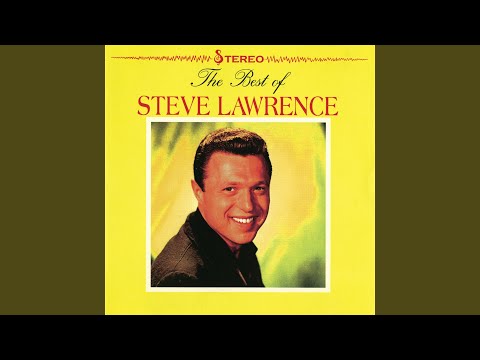

→ More from the 1960s File
View all 1960s hits →




Keep digging