The 1960s File Feature
He'll Have To Go
The Story Behind He'll Have To Go by Solomon Burke The King of Rock and Soul Finds His Footing In the early 1960s, Solomon Burke was busy inventing a sound t…
01 The Story
The Story Behind "He'll Have To Go" by Solomon Burke
The King of Rock and Soul Finds His Footing
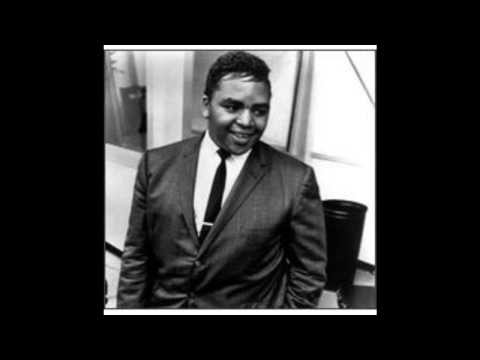
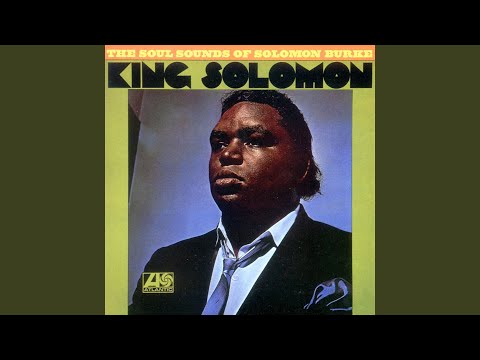
In the early 1960s, Solomon Burke was busy inventing a sound that had not quite existed before, fusing the fire of gospel with the grit of rhythm and blues to help build what would soon be called soul music. Signed to Atlantic Records, Burke had already scored hits like Just Out of Reach and Cry to Me, records that revealed his gift for wringing raw emotion out of a lyric without ever sacrificing control or musicality. By 1964, Burke had earned the nickname "King of Rock and Soul," a title that reflected both his commanding stage presence and his uncanny ability to move fluidly between genres. "He'll Have To Go" found him reaching into country music's back catalog, a bold move that showcased just how far his interpretive range could stretch.
Reinventing a Country Classic
The song had originally been a massive country hit for Jim Reeves in 1959, a smooth, velvet-voiced ballad about a man on the phone late at night, pleading with a woman to send her current suitor away. Burke, working with Atlantic's house production team, transformed the song into something entirely different: a slow-burning soul ballad thick with tension and longing, his voice moving from tender restraint to full-throated pleading within a single verse. That willingness to cross genre lines, taking a country standard and rendering it through a soul lens, was itself a quietly radical act in an era when radio formats and record labels rarely let Black and white musical traditions mingle so openly.
A Vocal Performance of Real Craft
What sets Burke's version apart is the sheer control of his vocal performance, the way he lets tension build across the arrangement rather than announcing his emotions immediately. Backed by a spare, atmospheric production that leaves room for his voice to carry the weight of the song, Burke turns what had been a polished, easy-listening country tune into something closer to a late-night confession. It is a masterclass in phrasing, the kind of vocal performance that influenced a generation of soul singers who followed him, proof that reinterpretation could be just as powerful as original composition when handled with this much skill.
A Solid Run on the Charts
"He'll Have To Go" entered the Billboard chart on February 8, 1964, debuting at number 86. It climbed steadily over the following weeks, first to 72, then to 64, before reaching its peak position of number 51, a mark it hit twice, on February 29, 1964 and again the following week. In total, the song spent 8 weeks on the chart, a solid showing that reflected Burke's growing crossover appeal at a moment when soul music was steadily expanding beyond R&B radio into broader pop consciousness. The timing mattered too, arriving right as the British Invasion was beginning to reshape American radio, making Burke's continued chart presence even more notable.
Part of a Genre-Defining Body of Work
The song fits within a broader pattern in Burke's catalog of taking material from unexpected sources, including country and pop standards, and filtering it through his gospel-trained voice and Atlantic's emerging soul sound. That approach helped lay groundwork for the genre-crossing recordings that would define soul music's golden era later in the decade, from Ray Charles's own country experiments to the countless soul reworkings of pop standards that followed. Burke's version of "He'll Have To Go" stands as an early, influential example of how thoroughly a great soul singer could reimagine material that seemingly belonged to an entirely different musical world.
Its Place in Solomon Burke's Legacy
Decades later, Burke is rightly remembered as one of the founding architects of soul music, an artist whose influence stretches from Otis Redding to Wilson Pickett to generations of singers who studied his phrasing and dynamic control. "He'll Have To Go" may not be his most famous single, but it captures his interpretive genius in vivid detail, showing exactly why Atlantic trusted him with such varied material. Press play and listen to how he stretches every syllable of longing out of a song that, in someone else's hands, might have stayed simply pretty rather than genuinely moving.
"He'll Have To Go" — Solomon Burke's singular moment on the 1960s charts.
02 Song Meaning
What "He'll Have To Go" by Solomon Burke Is Really About
A Late-Night Plea for Undivided Love
The song's narrator calls a woman late at night, aware that another man is with her, and asks her, gently but urgently, to send that man away so they can speak freely. It is a scenario built entirely around longing and quiet desperation, the ache of loving someone whose attention is currently, maddeningly, elsewhere. Burke's version leans hard into that emotional imbalance, turning what was a smooth, controlled country lament in its original form into something rawer, a man laying his vulnerability bare over the phone line rather than concealing it behind politeness.
Jealousy Without Anger
What distinguishes the lyric is its lack of hostility. The narrator does not rage against his rival or demand anything through force; instead he appeals to the woman's own feelings, trusting that if she truly loves him, she will choose to send the other man home. That approach reflects an older, more restrained model of romantic longing, one built on patience and hope rather than confrontation, and Burke's vocal performance honors that restraint even while letting real desperation seep through the edges of his delivery.
Soul Music's Gospel Roots Showing Through
Burke's background in gospel music, where he had performed since childhood, shapes how he approaches even a secular love song like this one. The pleading quality in his voice, the way he seems to be testifying rather than simply singing, echoes the emotional intensity of gospel performance traditions. That fusion, worldly subject matter delivered with the fervor of a spiritual plea, became one of the defining characteristics of soul music as a genre, and this recording stands as an early, vivid example of that fusion taking shape.
Crossing Genre and Racial Lines in 1964
Taking a beloved country song and recasting it in a soul idiom carried real cultural weight in the segregated radio landscape of the early 1960s. Burke's version quietly asserted that emotional truth in a lyric was not the property of any single genre or audience, that a story of longing could move fluidly between country and soul without losing its power. That crossing of boundaries, subtle as it may have seemed at the time, was part of a broader shift happening across American popular music, one that soul artists were pushing forward record by record.
Why the Song Resonated with Listeners
Audiences responded to the record because heartbreak and longing are universal, and Burke's interpretation gave those feelings an intensity that felt immediate and real rather than polished and distant. Listeners who had perhaps never considered themselves fans of country music found themselves drawn into the same emotional story through Burke's soul-inflected lens, proof of how a great vocal performance can transcend genre boundaries entirely. The song's steady climb up the charts reflected that crossover appeal directly.
An Enduring Lesson in Interpretation
Ultimately, "He'll Have To Go" endures as a lesson in the power of interpretation, showing how the same words and melody can carry entirely different emotional weight depending on who is singing them and how. Burke's version remains a touchstone for anyone studying how soul music transformed the American songbook in the early 1960s.
→ More from Solomon Burke
View all Solomon Burke hits →

→ More from the 1960s File
View all 1960s hits →




Keep digging