The 1960s File Feature
Got To Get You Off My Mind
Solomon Burke and "Got To Get You Off My Mind" Solomon Burke's place in the history of rhythm and blues is both central and somewhat underappreciated by the …
01 The Story
Solomon Burke and "Got To Get You Off My Mind"
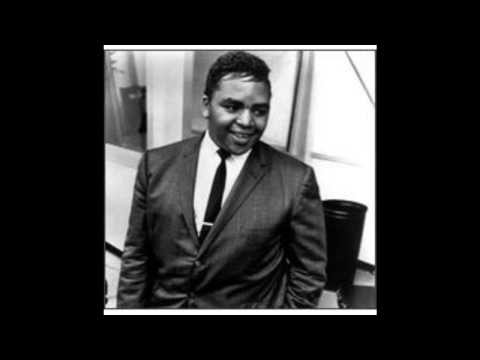
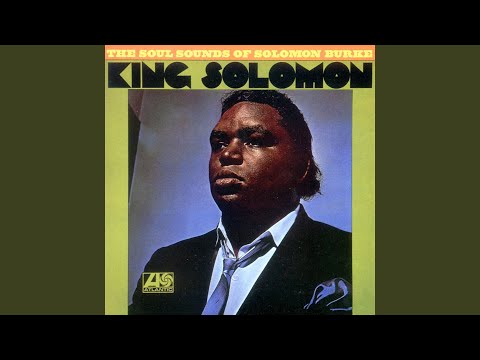
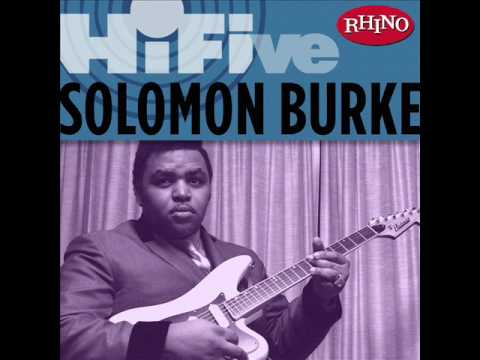
Solomon Burke's place in the history of rhythm and blues is both central and somewhat underappreciated by the standards of his actual influence. He was one of the defining vocalists of the early Atlantic Records soul era, a figure who stood alongside Wilson Pickett, Otis Redding, and Aretha Franklin in the label's remarkable roster of artists during the mid-1960s. His billing as the "King of Rock and Soul" was not merely promotional hyperbole but a reflection of a voice and a presence that commanded genuine reverence from fellow musicians and devoted audiences. "Got To Get You Off My Mind," released in 1965, stands as one of his most successful and representative recordings.
The song was produced by Bert Berns, one of the central figures in the Atlantic Records production apparatus during this period. Berns, who also wrote the song, was a prolific and instinctive talent with a particular gift for constructing rhythm and blues productions that combined urgency, commercial accessibility, and emotional authenticity. His work with Burke produced several significant recordings, and "Got To Get You Off My Mind" represented one of the most successful collaborations in their professional relationship.
The single was recorded at Atlantic's New York studios and entered the Billboard Hot 100 on March 6, 1965, debuting at number 91. The climb through the chart was measured and sustained, reflecting genuine grassroots enthusiasm in the rhythm and blues market. The record reached its peak position of number 22 during the week of May 1, 1965, after spending ten weeks on the Hot 100 in total. On the rhythm and blues chart, the performance was considerably stronger, with the song reaching number two and establishing itself as one of the major soul releases of the year.
Burke's vocal on the recording is a masterclass in controlled emotional intensity. He possessed one of the largest and most naturally commanding voices in American popular music, a baritone of extraordinary range and physical presence that he had developed through his years as a preacher and gospel performer before transitioning to secular music. The gospel foundation never left his secular recordings; it was audible in his phrasing, his approach to melodic embellishment, and his ability to invest a lyric with the kind of conviction that made listeners feel the emotion being expressed rather than simply recognizing it.
Atlantic Records during this period was at the apex of its influence in rhythm and blues and early soul music. Ahmet Ertegun and Jerry Wexler had built the label into the most important independent in American popular music, with a roster and a production philosophy that prized authenticity and emotional directness over the smoother, more heavily orchestrated approach that was beginning to characterize some mainstream pop. Burke fit perfectly into this ethos, his voice too large and too honest for the artifice of heavily commercial production.
The song itself captured a central drama of the rhythm and blues repertoire: the attempt to free oneself from feelings that have proved too powerful to dismiss by rational means. The title's declaration, "got to get you off my mind," functions as acknowledgment rather than achievement. The speaker has not succeeded in removing the person from their thoughts; they are still there, still occupying the center of attention, which is precisely why the declaration must be made. The song is about the failure of resolve in the face of genuine feeling.
Burke's career at Atlantic ran through the mid-1960s, producing a series of recordings that documented one of the great vocal instruments in American music. His subsequent career took him through multiple labels and many commercial configurations, but the mid-1960s Atlantic recordings remain the core of his legacy. His influence on later soul and gospel-influenced singers is difficult to quantify but is acknowledged by virtually every major voice that came after him. Van Morrison, who has cited Burke as a primary influence, is only the most prominent of many artists who heard in Burke's recordings a standard of emotional honesty that they spent careers trying to approach.
Burke was posthumously inducted into the Rock and Roll Hall of Fame in 2001, recognition that came decades after his commercial peak and served to introduce his recordings to new generations of listeners. He continued performing and recording until his death in 2010, maintaining the vocal power and emotional directness that had defined his recordings from the beginning. "Got To Get You Off My Mind" remains one of the most accessible entry points into his catalog, a record that captures his gifts at their most concentrated and commercially effective.
02 Song Meaning
The Meaning of "Got To Get You Off My Mind" by Solomon Burke
Solomon Burke's "Got To Get You Off My Mind" engages with a contradiction that sits at the heart of many of the great soul recordings of the 1960s: the gap between what a person knows they should want and what they actually feel. The speaker of the song has arrived at the intellectual conclusion that they need to stop thinking about a particular person, yet the song's existence as a piece of music is itself evidence that the project has not succeeded. The declaration of intent and the emotional reality are pulling in opposite directions, and Burke's performance makes that tension audible in every phrase.
The soul tradition from which Burke worked was deeply informed by gospel, and gospel music has always understood the human struggle to act in accordance with one's convictions as one of the central subjects of serious artistic attention. The church knows that people often know what they should do and find themselves unable to do it, and it treats that failure not as weakness to be dismissed but as a condition to be witnessed and worked through. Burke brought this framework from his background as a preacher and gospel performer into his secular recordings, giving songs like "Got To Get You Off My Mind" a quality of moral seriousness that elevated them beyond simple romantic complaint.
The phrase "off my mind" is important because it locates the problem not in the world but in the speaker's own consciousness. The person being addressed may or may not still be present in the speaker's life; the song is not primarily about external circumstances but about internal states. The speaker cannot control their own thoughts, cannot direct their attention away from someone who occupies the center of their mental and emotional life. This is a frank acknowledgment of the limits of will and reason when confronted with strong feeling.
Bert Berns's composition gave Burke a lyrical and melodic frame that was both emotionally direct and commercially accessible, a combination that characterized the best Atlantic soul recordings of the period. The song did not require the listener to decode complex imagery or follow an elaborate narrative. Its emotional situation was immediately recognizable, which is why the performance could carry so much of the weight. Burke's voice did not need to explain the situation because the situation explained itself; what the voice needed to do was make it felt, and that is precisely what it did.
The song also participates in a long tradition of rhythm and blues recordings that treat romantic obsession as a kind of affliction, something that happens to a person rather than something they choose. This framing is not passive; it is an honest recognition that strong emotional attachments operate with a kind of autonomous force that exceeds the capacity of the conscious self to manage. The speaker is not weak for feeling this way; they are human, which in the world of soul music is a sufficient explanation and a sufficient defense.
Burke's vocal delivery adds a layer of dignity to the confession that prevents the song from becoming simply an expression of helplessness. He sings with the authority of a man who knows his own mind even when his mind is not cooperating with his intentions. The acknowledgment of emotional vulnerability does not diminish him; if anything, the willingness to state the situation plainly and directly, without self-pity or evasion, is itself a form of strength. The song is the act of a man taking inventory of his own emotional condition with as much honesty as he can manage, which is ultimately a more demanding act than simply pretending the feeling does not exist.
→ More from Solomon Burke
View all Solomon Burke hits →

→ More from the 1960s File
View all 1960s hits →




Keep digging