The 1960s File Feature
What Kind Of Fool Am I
What Kind Of Fool Am I - Sammy Davis Jr. By 1962, Sammy Davis Jr. had already established himself as one of the most electrifying live performers in American…
01 The Story
What Kind Of Fool Am I - Sammy Davis Jr.
By 1962, Sammy Davis Jr. had already established himself as one of the most electrifying live performers in American entertainment, a singer, dancer, and actor whose talent crossed effortlessly between nightclub stages, Broadway, and television. When he took on this show-stopping ballad, originally written for the London and Broadway musical Stop the World, I Want to Get Off, he transformed it into one of the definitive vocal performances of his recording career.
A Broadway Showstopper Finds Its Ultimate Interpreter
The song had already been performed on stage by British entertainer Anthony Newley, who co-wrote it with Leslie Bricusse, but it was Davis's recorded version that truly cemented the song's place in the American popular songbook. Davis brought a theatrical intensity to the recording that matched the song's dramatic structure, building from a quiet, searching opening into a full-throated emotional climax by its final verse. That vocal arc suited Davis's particular strengths as a performer, an artist equally comfortable with subtlety and full-scale showmanship within a single three-minute performance.
A Long, Patient Climb Up the Chart
The single debuted on the Billboard Hot 100 dated September 1, 1962, entering at position 90, a modest start for a song built more around slow-burning emotional payoff than immediate pop hooks. The record's early weeks showed some hesitation, briefly dipping to 97 before beginning a steady, sustained climb, moving through 87, 71, and 54 in successive weeks as radio and audience word of mouth gradually built momentum behind it. The song eventually peaked at number 17 on the Hot 100, dated November 3, 1962, a genuinely major pop hit for a song originating on the Broadway stage rather than conventional rock or pop songwriting circles.
Fifteen Weeks of Sustained Popularity
Unlike many singles that spike quickly and fade just as fast, this record logged a substantial 15 weeks on the Hot 100, a run that reflected genuine, sustained listener engagement rather than a brief novelty surge. That longevity mattered enormously for a ballad competing against uptempo rock and pop singles for chart position, suggesting the song had found real emotional resonance with a broad cross-section of the record-buying public well beyond the traditional Broadway cast-album audience.
A Vocal Performance of Genuine Theatrical Craft
Davis approached the song less as a straightforward pop vocal and more as a piece of dramatic acting set to music, shaping dynamics and phrasing with the instincts of a performer trained for the stage rather than simply the recording booth. That theatrical sensibility gave the recording an emotional weight distinct from the more restrained crooning common on pop radio at the time, closer in spirit to a Broadway showstopper than a typical Brill Building single.
Part of a Golden Era for Standards on Pop Radio
The early 1960s still allowed considerable overlap between Broadway, jazz standards, and mainstream pop radio, a landscape that would shift dramatically once rock acts came to dominate the charts later in the decade. This song's success exemplified that overlap at its healthiest, proving that sophisticated theatrical songwriting could still compete commercially alongside more straightforwardly pop-oriented singles, provided the performance carried enough emotional conviction to translate beyond the original stage production.
A Signature Song for a Towering Talent
Decades later, the song remains inseparable from Davis's identity as a performer, a staple of his live shows and a frequently cited highlight of his recorded output. Its blend of Broadway craftsmanship and Davis's singular vocal and dramatic instincts gave the song a staying power that has kept it in circulation among singers and audiences alike, long after most of its Hot 100 chart neighbors from late 1962 have been largely forgotten.
Give it a full listen from that hushed opening to its soaring finish, and you'll understand exactly why this song became one of Davis's defining recordings.
"What Kind Of Fool Am I" — Sammy Davis Jr.'s singular moment on the 1960s charts.
02 Song Meaning
What Kind Of Fool Am I - Sammy Davis Jr.
At its core, this is a song of self-interrogation, a narrator turning inward to question his own capacity for love after realizing he's spent his life avoiding real emotional risk. It's less a romantic ballad in the traditional sense than a moment of painful self-assessment set to music.
An Honest Reckoning With Emotional Avoidance
The lyric doesn't ask for sympathy so much as demand honesty, with the narrator confronting the possibility that he has never truly allowed himself to love or be loved fully. That self-directed questioning gives the song unusual psychological depth for a mainstream pop and Broadway hit of its era, favoring genuine introspection over the more conventional expressions of longing or heartbreak common in popular songwriting at the time.
Building Toward Emotional Crisis
Structurally, the song builds steadily from quiet doubt toward a full emotional reckoning, each verse peeling back another layer of the narrator's carefully maintained detachment. That escalating structure mirrors the song's central theme: the slow, uncomfortable process of admitting a truth you've spent years avoiding. By the song's climax, the narrator arrives at something close to genuine vulnerability, having stripped away whatever defenses kept him from confronting the question directly.
A Universal Fear Given Specific Voice
Though written for a specific theatrical character within Stop the World, I Want to Get Off, the song's central question, whether one is even capable of real love, resonates far beyond its original narrative context. That universality helped the song transcend its Broadway origins, allowing it to function as a standalone statement of emotional self-doubt that countless listeners could project their own experiences onto, regardless of the specific circumstances that originally inspired it.
Vocal Performance as Emotional Argument
Much of the song's power depends on its performer's ability to sell that escalating vulnerability convincingly, and Davis's rendition succeeds precisely because he commits fully to the song's dramatic arc rather than holding back. His voice moves from restrained uncertainty to full-throated urgency, transforming what could have been a static ballad into something closer to a genuine emotional confrontation happening in real time before the listener.
Why the Song Endures Beyond Its Era
Part of what has kept the song relevant for decades is its refusal to offer easy resolution. It doesn't answer its own central question so much as sit honestly within the discomfort of asking it, a choice that gives the song more emotional staying power than a neatly resolved romantic narrative might have achieved. Listeners return to it precisely because the uncertainty feels true to real emotional life rather than tidily packaged for easy consumption.
A Standard Built on Honest Doubt
Ultimately, the song's enduring appeal rests on its willingness to sit in uncertainty rather than rush toward comfort. That honesty, delivered through one of the era's most gifted theatrical vocalists, gave the song a permanence that has carried it well beyond its Broadway origins and into the broader American songbook, where it remains a favorite for singers seeking material substantial enough to match real vocal and emotional ambition.
"What Kind Of Fool Am I" — Sammy Davis Jr.'s singular moment on the 1960s charts.
→ More from Sammy Davis Jr.
View all Sammy Davis Jr. hits →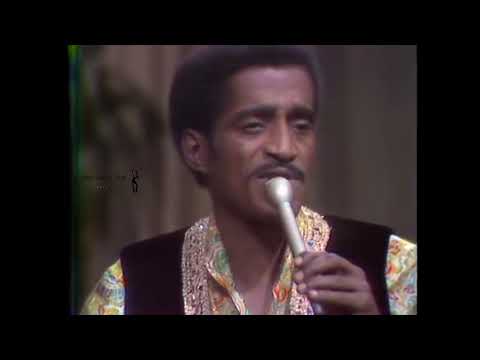

→ More from the 1960s File
View all 1960s hits →




Keep digging