The 1960s File Feature
England Swings
England Swings — Roger Miller (1965) By the autumn of 1965, Roger Miller occupied one of the most improbable positions in American popular music. A journeyma…
01 The Story
England Swings — Roger Miller (1965)
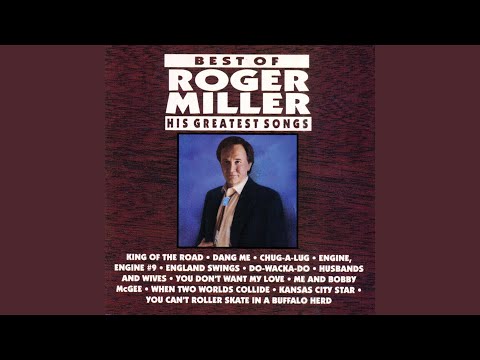
By the autumn of 1965, Roger Miller occupied one of the most improbable positions in American popular music. A journeyman Nashville songwriter and comedian who had spent years struggling to place his material with major artists, he had erupted into mainstream consciousness in 1964 with "Dang Me" and "Chug-A-Lug," two novelty-inflected country singles that crossed over to the Hot 100 and signaled that his idiosyncratic voice could reach audiences well beyond the traditional country market. "King of the Road," released in early 1965, became his signature achievement, spending six weeks at the top of the Billboard country chart and reaching number four on the Hot 100, earning him Grammy Awards for Best Country and Western Song, Best Country and Western Vocal Performance, and Best Contemporary Single. In that context, "England Swings" arrived later in 1965 as a natural follow-up designed to sustain his momentum with pop audiences.
Miller wrote "England Swings" as a warmly affectionate tourist's postcard to Britain at precisely the moment when Britain was dominating American popular culture. The Beatles had conquered the United States in February 1964, and by 1965 the British Invasion was reshaping the entire landscape of rock and roll. American consumers were buying British records, wearing British fashion, and consuming images of London as a swinging, youthful capital of cool. Miller's lyric captured that enthusiasm without irony, presenting a version of England filtered through the same folkloric romanticism that Americans projected onto the country at that moment: bobbies on bicycles, rosy-cheeked children, warm beer, and charming eccentricities.
The record was released on Smash Records, the Mercury Records subsidiary that had become Miller's label home for his remarkable mid-1960s commercial run. Smash had signed him in 1964 and immediately benefited from his extraordinary creative fertility; he was writing and recording at a pace that would have been remarkable for a healthy artist and was doing so while also managing the pressures of sudden celebrity. The production on "England Swings" kept Miller's personality front and center, with his conversational, half-spoken vocal delivery carrying the track's good-natured humor.
The single reached number eight on the Billboard Hot 100 in late 1965, confirming that Miller's pop crossover was not a one-time anomaly. It also performed strongly on the country charts, where his audience remained devoted, and the record helped sustain his status as one of the few artists of that era who could genuinely claim both audiences without compromising for either. That dual appeal was commercially exceptional in 1965, when the pop and country markets were still relatively distinct.
Miller's commercial period from 1964 to 1966 represented one of the most intense creative runs in Nashville history. He won a total of six Grammy Awards at the 1966 ceremony, a record for country music at the time and a recognition that the broader music industry had decided to take his work seriously as an artistic achievement rather than simply a commercial curiosity. "England Swings" was part of that extraordinary period, and its chart success helped confirm that Miller could write about virtually any subject and find an audience willing to follow him.
The song's timing was also notable in the context of American attitudes toward Britain. The country was simultaneously admiring British pop culture and maintaining a complex relationship with British heritage and identity, and Miller's uncritical celebration of English imagery played to nostalgic and romanticized instincts that existed among American listeners across demographic groups. Older listeners who remembered England from World War II era alliance found the imagery appealing; younger listeners who were buying Beatles records found it amusing and congruent with their own Anglophilia.
Miller's touring and television work in this period expanded his audience further. He appeared on virtually every major variety program of the era and brought his combination of musical skill and stand-up sensibility to millions of viewers who had not followed country radio. His Roger Miller Show on NBC television aired briefly in 1966, a sign of how thoroughly he had transcended the genre boundaries that would have constrained a less distinctive performer. "England Swings" was a track that suited that television persona particularly well, offering the kind of good-natured charm that broadcast audiences found comfortable.
The commercial landscape of late 1965 was intensely competitive for pop radio. The Beatles, the Rolling Stones, and a dozen other British acts were occupying significant chart real estate, and American artists were being squeezed by the ongoing Invasion. Miller's ability to reach the top ten of the Hot 100 during this period, with a track that was affectionately celebrating the very country whose artists were displacing American acts, was a notable achievement that illustrated his particular gift for finding the cultural current and swimming with it rather than against it. "England Swings" remains one of the more charming artifacts of that extraordinary mid-1960s pop moment, a genuine crossover from Nashville at a time when such crossovers were harder to manufacture and more surprising when they occurred.
02 Song Meaning
Meaning and Themes: England Swings
"England Swings" is a love letter from an American visitor to an idealized version of Britain, written and recorded at a moment when that idealization was at its peak intensity in American popular culture. Roger Miller's lyric assembles a catalogue of recognizable English imagery, the kind of images that American tourists sought out and American magazines published, and presents them with the unbothered enthusiasm of someone who has arrived somewhere delightful and wants everyone to know about it. The title phrase, with its double meaning nodding both to the swinging London of 1960s fashion culture and to the literal pendulum motion of old-fashioned British leisure, captures the song's affectionate, slightly amused relationship with its subject.
The song belongs to a tradition of novelty-adjacent writing in country music, where the humor comes not from a punchline but from an accumulation of details so precisely observed that they become funny through specificity. Miller's genius as a lyricist was to find that frequency where comedy and genuine feeling coexist without either canceling the other out, and "England Swings" operates in that territory. The images he assembles are affectionate rather than satirical; he is not mocking the English or their customs but celebrating them with the wide-eyed enthusiasm of a visitor who finds everything charming precisely because it is different from home.
Roger Miller's vocal persona was central to how the song communicated. His half-spoken, conversational delivery gave even straightforward statements the feel of an observation being shared across a back fence, and that intimacy made the lyric's enthusiasm seem genuine rather than manufactured. A different singer might have made the same material feel like a jingle; Miller made it feel like a postcard from a friend who was having the time of his life.
The cultural context of the song enriches its reading considerably. By late 1965, Britain had become the center of American youth culture's imagination, largely through the success of the British Invasion acts on the Hot 100. Miller's celebration of England was arriving at the exact moment when British pop music was dominating American radio, and there was something both comic and apt about a Nashville country artist writing an ode to the country that was simultaneously displacing American artists from their own charts. The song participates in the Anglophilia of the era while coming from a genre that was largely immune to the British Invasion's direct commercial pressures.
Within Miller's catalog, "England Swings" occupies the lighter end of a spectrum that also included more emotionally layered material. His signature song "King of the Road" is built on the romantic freedom of voluntary poverty and the dignity of the drifter's life, a theme with real philosophical weight. "England Swings" makes no such demands; it is content to be charming and to invite the listener to share in a mood of uncomplicated pleasure. That capacity for lightness without triviality was part of what made Miller's mid-1960s work so commercially and critically remarkable, demonstrating a range that few Nashville writers of his era could match.
The song's imagery also participates in a broader American construction of Englishness as pastoral, traditional, and charmingly eccentric, a construction that had been building for decades through literature, film, and travel writing and that the British Invasion had, paradoxically, both reinforced and disrupted. Miller's England is not the England of the Rolling Stones or even the Beatles; it is the England of bobbies and bicycles and village life, a place that exists more fully in the American imagination than in any contemporary London street. That gentle unreality is part of the song's appeal.
"England Swings" reached the top ten of the Billboard Hot 100 and stands as one of the more unexpected pop crossovers of its era, a piece of evidence for Miller's extraordinary ability to find the pop mainstream from inside Nashville and to write material that was simultaneously country in sensibility and universal in appeal. Its enduring presence in his catalog reflects a moment when American popular music was genuinely open to the kind of warm, witty, genre-defying material that only a handful of songwriters could deliver.
→ More from Roger Miller
View all Roger Miller hits →


→ More from the 1960s File
View all 1960s hits →




Keep digging