The 1960s File Feature
Do-Wacka-Do
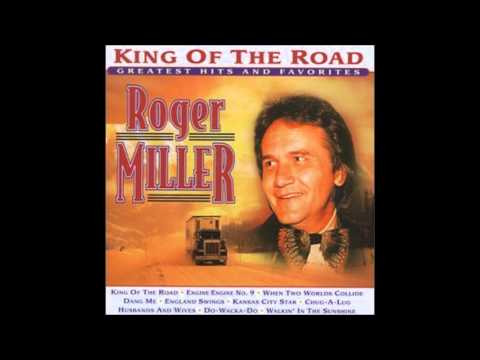
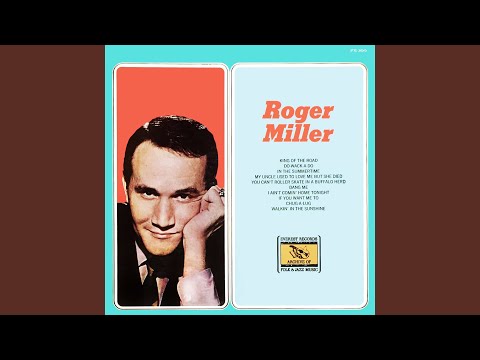
"Do-Wacka-Do" — Roger Miller's Comic Genius at Full Gallop Roger Miller in His Year of Wonders Picture the fall of 1964, and Roger Miller is simply having th…
01 The Story
"Do-Wacka-Do" — Roger Miller's Comic Genius at Full Gallop
Roger Miller in His Year of Wonders
Picture the fall of 1964, and Roger Miller is simply having the strangest, most improbable run in Nashville's history. The year had already produced "Dang Me" and "Chug-A-Lug," two singles that had demonstrated Miller's singular gift for comic, rhythmically playful country songwriting, material that could make people laugh and tap their feet simultaneously without sacrificing any of the musical craft underneath the jokes. Country radio had never quite heard anything like him, and the mainstream pop charts, which had been consolidating around the British Invasion sound, found in Miller an American original doing something so distinctly his own that no British act could credibly compete for his particular territory.
Miller had spent years in Nashville as a session musician and songwriter for other artists before his own recording career exploded in 1964. He had written hits for others, demonstrated his skills in countless ways, and accumulated the kind of industry experience that either crushes a creative personality or makes it more resilient. In Miller's case, the years of paying dues seemed to have done nothing but sharpen his instincts, and when the commercial opportunity finally aligned with his talents, he attacked it with the relaxed confidence of someone who had been ready for a long time.
The Sound of Pure Invention
"Do-Wacka-Do" exemplified what made Roger Miller's output of this period so unusual. The production was rooted in straightforward country and Western instrumentation, fiddle, steel guitar, rhythm section, but the effect was anything but conventional. Miller's approach to rhythm and phrasing had an almost jazz-like playfulness, a willingness to stretch words in unexpected directions, to place syllables where they didn't belong and make the wrongness sound exactly right. The nonsense syllables of the title were themselves a kind of manifesto, an announcement that this song was going to play by its own rules and that those rules would be invented as needed.
The lyric built a situation with Miller's characteristic gift for compressed narrative, establishing its premise with the economy of a good joke setup and delivering its payoff with the timing of a practiced comedian. The combination of musical sophistication and comic sensibility was Miller's trademark, and "Do-Wacka-Do" exhibited both qualities in full.
From November to January: The Chart Story
The single debuted on the Billboard Hot 100 on November 28, 1964, at number 96. What followed was one of the more dramatic early climbs of the period: number 71 in its second week, number 54 in its third, number 46 in its fourth. The ascent continued through December and into January 1965. The track peaked at number 31 on January 9, 1965, completing an eight-week chart run that spanned the holiday season. A peak of 31 on the Hot 100 represented Miller at his commercial best, placing him deep into the upper third of the chart with what was, fundamentally, a novelty-inflected piece of comic country songwriting.
The timing of the chart run, through the holiday period, likely worked in the song's favor. A track with Miller's warmth and humor would have suited the mood of that season particularly well.
The Grammy Sweep That Crowned a Career Year
The full scope of Roger Miller's 1964 achievement became official at the 1965 Grammy Awards, where he won six awards, a remarkable haul that acknowledged the extraordinary creative run he had been on. The Grammys recognized Miller across multiple categories, country and pop, reflecting the genuinely cross-genre appeal of his work. "Do-Wacka-Do" was part of that broader body of work that earned the recognition, one piece of an output that year which had few parallels in any genre.
The international attention followed: Miller's success in America translated into chart success in the United Kingdom and beyond, demonstrating that his particular brand of American humor and musical invention had genuine cross-cultural appeal despite being rooted in a specifically American tradition.
A Singular Comic Vision
Roger Miller's lasting contribution to American music is the demonstration that comic songwriting could achieve genuine artistry, that funny could also be sophisticated, that laughter and craftsmanship were not mutually exclusive. "Do-Wacka-Do" remains one of the purest expressions of that contribution, a song that asks nothing of its listener except to enjoy the ride, and delivers on that modest but important promise completely. Press play and let one of country music's most inventive minds show you what pure enjoyment sounds like when it's been crafted by a genuine original.
"Do-Wacka-Do" — Roger Miller's singular moment on the 1960s charts.
02 Song Meaning
"Do-Wacka-Do" — The Art of Nonsense and the Wisdom of Play
The Serious Business of Not Being Serious
Writing a funny song that is also a good song requires a skill set that critics rarely get around to properly acknowledging. The comic impulse and the musical impulse have to be synchronized with precision; a joke that lands on the wrong beat fails as both comedy and music. Roger Miller understood this at a level that made him genuinely unique in early 1960s country music. "Do-Wacka-Do" is a song that appears effortless, all lightness and play and rhythmic bounce, but that effortlessness is the product of someone who knew exactly what he was doing at every moment. The craft is invisible because it's complete.
The nonsense syllables in the title, and woven through the lyric, serve a specific function: they signal that the song is playing by its own rules, that the ordinary conventions of sense and propriety have been suspended for the duration. That suspension is the invitation to the listener to let go of their usual guardedness and simply enjoy the ride.
Humor as a Form of Honesty
Miller's comedy was never cruel or nihilistic. The worldview embedded in his best work was fundamentally warm, a perspective on human behavior that found the funny rather than the sad in ordinary situations. The situations his songs described were recognizable, the small humiliations and absurdities of everyday life, but Miller's angle of approach made them objects of affectionate laughter rather than complaint. This is a distinct moral stance in songwriting, one that refuses to take itself too seriously while still engaging with real human experience.
In 1964, American culture was going through an enormous amount of serious business. The civil rights movement, the assassination of a president the previous year, Vietnam beginning to shadow the national mood, all of this was present in the background. Against that weight, a song as purely joyful as "Do-Wacka-Do" served a genuine function: it reminded people that laughter was still available, that play was still possible, that not every cultural product needed to engage with the gravity of the historical moment.
The Country Tradition of Comic Songwriting
Comic songwriting has deep roots in country and Western music, running back through the tradition of novelty songs and humorous recitations that predated the genre's commercial emergence. Miller wasn't inventing something from nothing; he was working within a tradition that had its own pantheon of practitioners. What set him apart was the level of sophistication he brought to the form. His comic songs were structurally and melodically as strong as his serious material, which made the humor feel earned rather than gimmicky. The music was good enough to stand on its own; the comedy was an enhancement rather than a substitute for craft.
This approach contrasted with novelty acts whose appeal was largely dependent on the joke itself, songs that wore out quickly because once you knew the punchline, the song had nothing left to offer. Miller's tracks repaid repeated listening because they were genuinely musical.
Play as its Own Kind of Meaning
It might seem paradoxical to search for deep meaning in a song called "Do-Wacka-Do," but the search yields something genuine. The song argues, implicitly, that play is valuable, that the ability to take something ordinary and make it funny and musical represents a real contribution to human life. Roger Miller's gift was the ability to make that argument through the sheer quality of his work rather than through any explicit statement. "Do-Wacka-Do" means exactly what it sounds like: a celebration of language as sound, rhythm as pleasure, and music as an invitation to enjoy being alive for a few minutes. That's no small thing.
"Do-Wacka-Do" — Roger Miller's singular moment on the 1960s charts.
→ More from Roger Miller
View all Roger Miller hits →


→ More from the 1960s File
View all 1960s hits →




Keep digging