The 1960s File Feature
Hang On Sloopy
Hang On Sloopy — The Ramsey Lewis Trio's Top-10 Version of a 1960s Standard By the end of 1965, Hang On Sloopy had already had an extraordinary year. The McC…
01 The Story
"Hang On Sloopy" — The Ramsey Lewis Trio's Top-10 Version of a 1960s Standard
By the end of 1965, "Hang On Sloopy" had already had an extraordinary year. The McCoys had taken their recording to number 1 on the Hot 100 in September, and the song had become one of those seasonal phenomena that plays from every radio and jukebox simultaneously, inescapable in the way that only genuine smash hits manage to be. Into this saturated marketplace stepped the Ramsey Lewis Trio with a jazz-inflected instrumental take on the same material, demonstrating that a well-constructed song has more to give than any single version can extract from it, and that a jazz piano trio could do something with a rock-and-roll smash that the original's authors had not imagined.
Ramsey Lewis in His Commercial Prime
In 1965, Ramsey Lewis was in the middle of one of the most unexpectedly successful periods in his career. His recording of "The In Crowd" earlier that year had become a surprise hit, reaching number 5 on the Hot 100 and demonstrating that jazz piano played with swing and accessibility could cross over into the pop mainstream without abandoning the qualities that made it jazz. That breakthrough gave Lewis a commercial platform and a radio presence that was unusual for a jazz artist and that he was able to exploit quickly by returning to the pop catalog for his next project. His instinct for finding pop material that would work in his instrumental format was sharp, and "Hang On Sloopy" proved it.
What a Jazz Piano Trio Brought to the Material
The Ramsey Lewis Trio's approach to pop covers was not to reproduce them faithfully but to use them as frameworks for the kind of groove and swing that their format excelled at producing. The instrumental take removed the lyrical content entirely, leaving only the song's melody and chord structure as the raw material for Lewis's piano, Eldee Young's bass, and Redd Holt's drums to work with. The result was a record that swings in a way the McCoys' original does not and cannot, and that shows the song's underlying rhythmic resilience from a completely different angle. The crossover appeal lay in the combination: familiar material made fresh by an approach that was simultaneously more sophisticated and more physically engaging than the original.
Eight Weeks and a Peak at Number 11
The Ramsey Lewis Trio's "Hang On Sloopy" debuted on the Billboard Hot 100 on November 20, 1965, entering at number 61 and climbing rapidly over the following weeks. From 61, it moved to 28, then 21, before reaching its peak position of number 11 on December 11, 1965, where it held for a second week before beginning to slide. The record spent eight weeks on the chart in total. A top-15 finish with an instrumental jazz cover of a rock song that had already been at number 1 that same year was a remarkable commercial achievement, one that very few jazz acts in any era have matched.
Jazz's Brief Pop Moment
The mid-1960s represented an unusual period when jazz crossovers were appearing on the Hot 100 with some regularity, driven by a combination of factors: the folk revival had opened mainstream audiences to acoustic instrumental music, the pop-jazz format represented by acts like Herb Alpert and the Tijuana Brass was demonstrating that instrumental music could sell, and artists like Ramsey Lewis were finding arrangements that captured the energy of rock and soul without abandoning jazz's rhythmic intelligence. The Ramsey Lewis Trio's back-to-back top-15 hits in 1965 were a high-water mark of this moment, unlikely to be replicated as the decade progressed and formats hardened.
The Song and Its Many Lives
"Hang On Sloopy" is one of those songs that has accumulated a remarkable range of lives: rock hit, sports anthem (it is the official rock song of Ohio), jazz instrumental, and recording-session staple. The Ramsey Lewis Trio version is among the more distinctive of these lives, a document of a specific moment when jazz and pop were close enough that the same song could serve both communities simultaneously. The 167,000 YouTube views it has gathered speak to an audience that recognizes this record's unusual position in the history of both genres.
If you love the swing that a good jazz piano trio can put into familiar material, this is one of the definitive demonstrations. Press play.
"Hang On Sloopy" — The Ramsey Lewis Trio's singular moment on the 1960s charts.
02 Song Meaning
The Meaning Behind "Hang On Sloopy" by The Ramsey Lewis Trio
Instrumental recordings of pop songs occupy a unique interpretive position: without lyrics, the song's verbal meaning is absent, and what remains is the melody, the harmony, and whatever the performers choose to do with the rhythmic and tonal raw material the composition provides. When Ramsey Lewis and his trio transformed "Hang On Sloopy" into an instrumental, they were not simply removing the words; they were shifting the center of the song's meaning from what it says to what it does, from the narrative about Sloopy to the feeling that the song's structure generates when inhabited by jazz musicians playing with genuine swing.
The Song's Structure as Opportunity
"Hang On Sloopy" is a song with a rhythmic and melodic vitality that is independent of its lyrical content. The chord changes move with a forward energy, the melody has the kind of momentum that invites improvisation and elaboration, and the rhythmic feel of the original is already closer to a groove than to the more metronomic pulse of much pop rock. These qualities made it ideal raw material for a trio committed to finding pop songs that would open up under the jazz approach rather than closing down. Lewis heard something in the structure that was compatible with his format, and the recording proved him right.
What Jazz Does to Familiar Material
One of the pleasures of jazz reinterpretation of pop material is the revelation of what was already in the song but had not been heard before. A jazz piano trio brings to a melody the specific qualities of swinging rhythm, harmonic elaboration, and the dynamic conversation between three instruments that the genre developed over decades. When these qualities meet a pop melody that is solid enough to support them, the result is a record that illuminates the original from an angle that neither the original nor a straightforward cover could achieve. The Ramsey Lewis version of "Hang On Sloopy" is this kind of illumination.
The Groove as the Primary Carrier
In a jazz-inflected instrumental, the groove that Redd Holt's drumming establishes is the emotional foundation of the entire piece. The snap and swing of a jazz drummer approaching rock material with jazz sensibility produces something that occupies the space between the two forms, too swinging for straight rock and too pop-melodic for straight jazz. This in-between space was exactly what Ramsey Lewis's crossover appeal depended on, the ability to play music that jazz listeners could respect and that pop listeners could enjoy without needing to do any preparatory work to access it.
The 1965 Pop-Jazz Moment
The cultural conditions that allowed a jazz piano trio to take a rock song to number 11 were specific and somewhat fragile. The mid-1960s mainstream was unusually porous to acoustic and semi-acoustic instrumental music: the folk revival had prepared audiences for listening carefully to instruments rather than voices, and the pop-jazz crossovers of Ramsey Lewis and Herb Alpert and others had demonstrated that there was a genuine appetite for sophisticated instrumental pop. These conditions did not persist indefinitely, and the top-11 finish of "Hang On Sloopy" was a product of a particular cultural moment as much as of the recording's intrinsic quality. Both elements were necessary, and both were present.
Music That Does Not Need Words
The Ramsey Lewis Trio's recording makes an implicit argument about the nature of meaning in music: that the emotional content of a song can be communicated fully, or communicated differently but equally completely, without the mediation of language. The groove is the message; the swing is the argument; the piano's conversation with the bass and drums is the story. Those who hear this version without knowing the original will still understand what it is doing, because what it is doing is making you feel what music at its most physically engaging always makes you feel. That is enough.
→ More from Ramsey Lewis Trio
View all Ramsey Lewis Trio hits →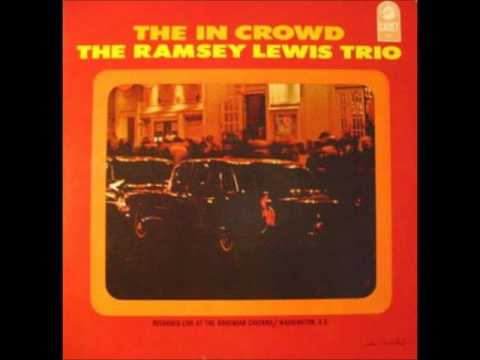
→ More from the 1960s File
View all 1960s hits →




Keep digging