The 1960s File Feature
A Hard Day's Night
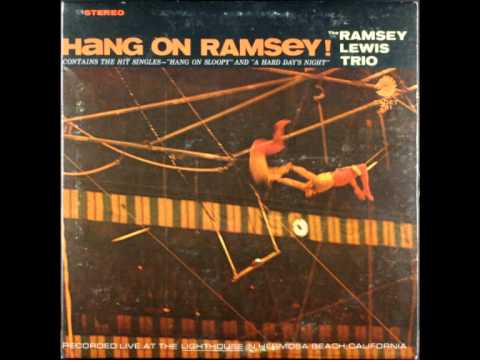
A Hard Day's Night — Ramsey Lewis Trio and the Jazz Re-Reading of 1966 Ramsey Lewis: Jazz's Greatest Communicator In 1965, Ramsey Lewis had achieved somethin…
01 The Story
A Hard Day's Night — Ramsey Lewis Trio and the Jazz Re-Reading of 1966
Ramsey Lewis: Jazz's Greatest Communicator
In 1965, Ramsey Lewis had achieved something genuinely unusual in jazz: a commercially mainstream hit with his live recording of The In Crowd, a funky, accessible piano instrumental that had crossed from jazz into the pop mainstream and brought him a new audience without abandoning the audience that had followed his career since the late 1950s. The success of The In Crowd established him as a figure who could bridge jazz credibility and pop accessibility, which made him an attractive candidate for the kind of cover project that A Hard Day's Night represented: taking a piece of enormously popular contemporary music and running it through the jazz interpretive tradition.
Rereading the Beatles Through Jazz Piano
The decision to record a jazz instrumental version of A Hard Day's Night was itself a statement about how jazz related to the pop music that was dominating the commercial landscape in 1966. Rather than ignoring or dismissing the Beatles' material, Lewis and his trio approached it as source material for genuine artistic interpretation. The jazz treatment of the song opened up its harmonic content, finding possibilities within the composition that the original recording had not fully explored, and demonstrated that Lennon and McCartney were writing material substantial enough to withstand the kind of scrutiny that jazz musicians bring to the songs they choose to interpret.
The Chart Run of Early 1966
A Hard Day's Night debuted on the Billboard Hot 100 on January 22, 1966, entering at position 58. This was a strong debut position for a jazz instrumental, suggesting that Lewis's audience was already primed for new material following his recent success. The climb over the following weeks was steady, and by February 19 the single had reached its peak of number 29, spending six weeks on the Hot 100 in total. A top-30 peak was an exceptional commercial showing for a jazz instrumental in the mid-1960s pop marketplace, confirming that Lewis had managed to reach an audience well beyond the core jazz constituency.
Jazz Pop Crossover in 1966
The mid-1960s offered a somewhat more hospitable commercial environment for jazz-influenced pop records than the subsequent decade would. Instrumental pop still had a genuine presence on the Hot 100, and jazz artists who could deliver melodically accessible records were not automatically excluded from mainstream radio consideration. Ramsey Lewis was positioned perfectly to take advantage of this environment: his piano playing was sophisticated enough to satisfy jazz listeners and melodically clear enough to appeal to pop audiences. A Hard Day's Night succeeded in both territories simultaneously, which was the achievement that The In Crowd had made seem possible.
Tribute and Transformation
The Ramsey Lewis Trio's version of A Hard Day's Night occupies a specific and interesting position in the cultural conversation around the Beatles' music. It is simultaneously tribute, transformation, and friendly argument: tribute in that it takes the material seriously enough to subject it to real interpretive work; transformation in that the jazz treatment produces something genuinely different from the original; and argument in that it implicitly asserts the superiority of the jazz interpretive tradition as a means of unlocking what is most interesting in a piece of music. All three dimensions are present in the recording, and the combination produces something more interesting than a straight instrumental cover would have been. Press play and let the piano do what piano players do best.
The In Crowd's Legacy and What It Made Possible
The enormous success of The In Crowd in 1965 had given Ramsey Lewis a commercial platform that most jazz artists never achieved, and the question of how to use that platform without compromising the artistic integrity that had made it worth having was a genuine challenge. A Hard Day's Night represented one thoughtful answer to that challenge: take material that the new mainstream pop audience was likely to recognize and demonstrate what the jazz interpretive tradition could do with it. The resulting record served multiple audiences simultaneously: jazz listeners who appreciated the interpretive seriousness of the approach, pop listeners who recognized the source material and were curious about what Lewis would do with it, and a middle group who simply enjoyed well-crafted piano trio music regardless of its genre affiliations. That multi-audience appeal was part of what made the top-30 peak possible.
“A Hard Day's Night” — Ramsey Lewis Trio's singular moment on the 1960s charts.
02 Song Meaning
The Meaning Behind “A Hard Day's Night” by Ramsey Lewis Trio
Jazz as Interpretive Re-reading
When a jazz musician covers a pop song, something interesting happens to the relationship between the two traditions. The jazz treatment does not merely perform the song but interrogates it, asking what the composition contains beyond what the original performance made audible. This interrogative relationship is built into the jazz interpretive tradition, which has always approached song as raw material for development rather than fixed text to be faithfully reproduced. The Ramsey Lewis Trio's treatment of A Hard Day's Night belongs to this tradition, using the Beatles' composition as a starting point for an exploration of its harmonic and rhythmic possibilities.
What Jazz Reveals in a Pop Composition
A pop song, stripped of its original production and vocal performance and subjected to jazz interpretation, reveals things about its underlying construction that the original recording may have obscured. The harmonic progressions become visible in ways that the vocal performance, when present, tends to cover over. The rhythmic possibilities that the original arrangement chose among many alternatives become apparent. For a composition as carefully crafted as A Hard Day's Night, this process of revelation is particularly interesting: the song's underlying sophistication, the qualities that made it respond well to jazz treatment, were always present in the original but were not the most immediately audible aspect of the record.
Communication Across Genre Boundaries
One of the things that Ramsey Lewis's work of this period demonstrated was that genre boundaries in American popular music were more permeable than they were often presented as being. The pop audience that had made The In Crowd a hit was willing to follow Lewis across genre lines, and the jazz audience that had always supported his work was willing to embrace material drawn from the pop mainstream when it was treated with genuine interpretive seriousness. A Hard Day's Night navigated this territory with the confidence of an artist who had already proved the navigation was possible, reaching listeners on both sides of the jazz-pop divide through the quality of the music rather than through genre-specific marketing.
The Piano as the Central Voice
In the absence of lyrics and vocals, the Ramsey Lewis Trio's performance required the piano to carry all of the emotional weight that the original recording distributed among multiple elements. Lewis's piano playing in this period was ideally suited to this responsibility: technically accomplished enough to handle the harmonic demands of jazz interpretation, and communicative enough to maintain emotional engagement without the audience becoming aware of the absence of a vocal performance. The best instrumental performances create a sense of vocal presence through the quality of the melodic phrasing alone, and Lewis's piano work on A Hard Day's Night achieves precisely this quality.
The Mutual Benefit of Two Traditions
The Ramsey Lewis Trio's cover of A Hard Day's Night is a small monument to the productive relationship between jazz and pop that existed in the mid-1960s. Jazz benefited from access to strong compositional material that was reaching enormous audiences; pop composition benefited from the kind of harmonic respect and interpretive seriousness that jazz musicians brought to the songs they chose. Both traditions were enriched by the exchange, and the recordings that resulted from it, including this one, remain interesting documents of what happened when two distinct musical traditions engaged each other on terms of genuine mutual respect rather than competitive dismissal.
→ More from Ramsey Lewis Trio
View all Ramsey Lewis Trio hits →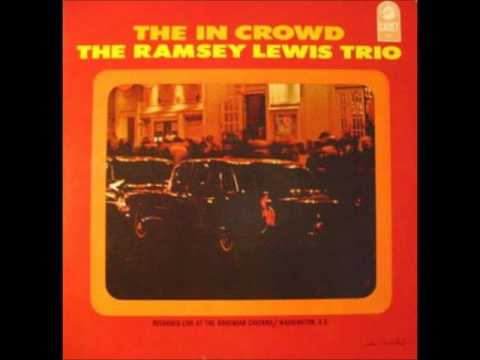
→ More from the 1960s File
View all 1960s hits →




Keep digging