The 1960s File Feature
Kiss Me Goodbye
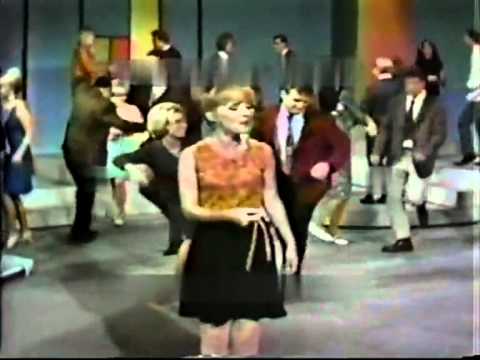
"Kiss Me Goodbye" — Petula Clark's Late-Sixties Sophistication A Voice That Crossed Every Border By February 1968, Petula Clark had already accomplished some…
01 The Story
"Kiss Me Goodbye" — Petula Clark's Late-Sixties Sophistication
A Voice That Crossed Every Border
By February 1968, Petula Clark had already accomplished something that very few British performers managed in the American market: she had become a genuine star in her own right, not a curiosity or a beneficiary of British invasion novelty, but an artist with a sustained commercial presence rooted in her own considerable talents. Her 1964 recording of "Downtown" had reached number one in the United States and earned her a Grammy Award, and the years since had produced a series of strong chart performances that kept her name prominent on American radio. "Kiss Me Goodbye" arrived in this context as another chapter in a transatlantic career that showed no signs of losing momentum.
Clark's career had begun in British radio and film in the 1940s and 1950s, making her one of the more experienced performers operating in the late-1960s pop landscape. While many of her contemporaries were teenagers or recent graduates of their teenage years, Clark brought a maturity and technical command to her recordings that reflected decades of professional experience. That quality was audible in every record she made, including "Kiss Me Goodbye."
The Recording and Its Production
"Kiss Me Goodbye" was a sophisticated piece of 1960s pop production, featuring the lush orchestral arrangements that characterized Clark's best-known recordings. The song was built around her voice, which remained one of the most technically accomplished instruments in the pop field of the period, combining warmth in the lower register with clarity in the upper range. The arrangement deployed strings and brass in the manner typical of top-tier late-1960s pop production, surrounding the vocal with a richness that pushed the recording toward the more adult-oriented end of the pop spectrum.
The lyrical content addressed a romantic parting with the kind of emotional precision that suited Clark's interpretive gifts. She had always been at her best with material that gave her emotional specificity to work with rather than generic romantic sentiments, and "Kiss Me Goodbye" provided that quality. The song's title phrase carried weight precisely because the arrangement and vocal performance around it communicated the full significance of what was being said.
The Chart Performance in 1968
"Kiss Me Goodbye" debuted on the Billboard Hot 100 on February 17, 1968, at position 82. Its climb was steep and sustained: 52 the following week, then 35, 27, 22 as the weeks passed, continuing its ascent as spring approached. The track reached its peak of number 15 on April 6, 1968, spending 11 weeks total on the Hot 100 chart. That peak placed it solidly in the mainstream commercial range, confirming Clark's continued ability to reach American radio audiences more than three years after her initial breakthrough with "Downtown."
The context of early 1968 was turbulent in ways that extended well beyond the pop charts. The assassination of Martin Luther King Jr. would occur in April of that year, and the political climate was darkening with the ongoing Vietnam War and the approaching presidential election. Pop radio in the first months of 1968 offered a complicated mix of psychedelic experimentation, soul, and more traditional pop craftsmanship. Clark's recordings occupied the latter category with skill and consistency.
The Late Sixties Pop Landscape
Understanding where Clark fit in 1968 requires appreciating how segmented the pop audience had become by that point. The youth counterculture's music was increasingly diverging from mainstream pop, with rock music developing in directions that had little to do with the polished craftsmanship of Clark's recordings. At the same time, a substantial audience for carefully produced, orchestrated pop remained active, and that audience's taste was served by artists like Clark who brought genuine artistry to the more traditional end of the format.
Clark occupied a space that was simultaneously nostalgic and contemporary, drawing on the production values and emotional register of a slightly earlier era while delivering material that worked effectively on the radio of 1968. That positioning required skill to maintain; an artist who leaned too far into the past would seem dated, while one who chased the present might lose the qualities that distinguished her. Clark navigated this balance with evident craft.
Legacy of a Sustained Transatlantic Career
"Kiss Me Goodbye" appeared on her album Petula, released in 1968, one of several albums she produced during her peak commercial period. Clark's sustained American chart presence across the mid-to-late 1960s, encompassing multiple top-40 singles, placed her among the most consistently successful British female artists of the era.
Looking back from the present, "Kiss Me Goodbye" represents a particular kind of pop craftsmanship that the late 1960s produced in abundance but that subsequent decades have found harder to replicate: the combination of sophisticated orchestration, genuinely skilled vocal interpretation, and melodic writing that rewarded the ear without demanding academic attention. Press play and hear how a genuine professional sounded in 1968.
"Kiss Me Goodbye" — Petula Clark's singular moment on the 1960s charts.
02 Song Meaning
"Kiss Me Goodbye" — Farewell, Dignity, and the Art of the Parting
Romantic Endings as Subject Matter
There is a category of song that addresses itself specifically to romantic endings, to the moment of parting and what it requires of the people involved. "Kiss Me Goodbye" belongs to this tradition, focusing on the request embedded in its title: not a plea to stay, not an expression of anger or betrayal, but a dignified appeal for a proper farewell. The emotional register is composed rather than devastated, and that composure gives the song a particular quality of restraint that distinguishes it from more dramatic treatments of the same subject.
The emotional sophistication of the request is worth considering. To ask for a kiss goodbye is to acknowledge that the relationship is ending, to accept that reality without fighting it, and simultaneously to ask that it be honored with an appropriate gesture of recognition. There is something graceful in that position, a willingness to let something end well rather than badly, that gives the song a quality of emotional maturity.
Clark's Interpretive Intelligence
Part of what makes "Kiss Me Goodbye" effective as a recording is the quality of intelligence that Petula Clark brought to her vocal interpretations. She was not simply a vehicle for the material; she was an active interpreter who understood what a lyric was saying and delivered it accordingly. Her rendering of the song's emotional content communicated the specific register of dignified sadness that the material required, neither overselling the feeling nor underplaying it.
This quality of interpretive precision was one of the defining characteristics of the generation of performers who had trained in British entertainment before the pop era. They understood how to inhabit a lyric, how to let the words do their work without decorating them unnecessarily, how to serve the song's emotional content rather than substituting their own. In an era when rock music was increasingly foregrounding emotional rawness and spontaneity, this more disciplined approach to performance offered a different kind of artistic value.
The Cultural Moment of 1968
The spring of 1968 was one of the most turbulent periods in modern American history, a season of political violence, social upheaval, and collective anxiety. Pop music played its usual ambivalent role in such moments, sometimes reflecting the cultural distress and sometimes providing relief from it. Songs like "Kiss Me Goodbye" offered audiences a space of emotional clarity within the surrounding confusion, a focused engagement with a recognizable human experience that required no decoding and no political navigation.
The appeal of straightforward emotional narrative in such a context should not be underestimated. When the external world feels chaotic, the interior world of personal relationships and their rituals, including their endings, can feel like solid ground. Pop music that served that need in 1968 was performing a genuine function for its audience.
The Persistence of the Well-Made Song
What "Kiss Me Goodbye" demonstrates, alongside the broader body of Clark's 1960s work, is the durability of well-crafted pop songwriting and production when executed by artists with genuine technical command. The specific stylistic conventions of late-1960s orchestrated pop are dated in their surface details, but the underlying musical architecture remains effective because it was built on sound melodic and harmonic principles that do not expire.
Listeners who encounter the song now will hear the period production immediately. What they will also hear is a genuinely skilled vocalist delivering a genuinely well-constructed melody with the kind of care and precision that rewards close listening. Those qualities exist independently of the era that produced them, which is why the recording continues to hold up.
→ More from Petula Clark
View all Petula Clark hits →



→ More from the 1960s File
View all 1960s hits →




Keep digging