The 1960s File Feature
Don't Sleep In The Subway
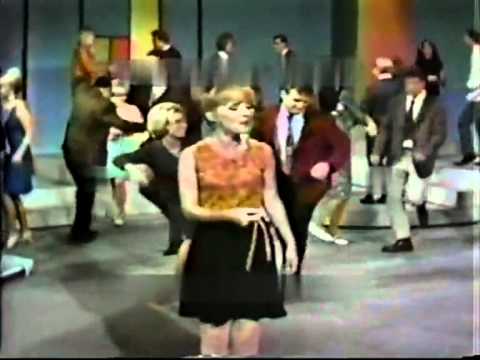
"Don't Sleep In The Subway" — Petula Clark's 1967 Summer Hit The Summer of Love, the London Sound The summer of 1967 is one of the most mythologized periods …
01 The Story
"Don't Sleep In The Subway" — Petula Clark's 1967 Summer Hit
The Summer of Love, the London Sound
The summer of 1967 is one of the most mythologized periods in pop music history, a season when the San Francisco scene was generating the counterculture's most extreme experiments while the British pop establishment was producing some of its most polished and commercially sophisticated work. Petula Clark, by 1967, had already established herself as one of the most internationally successful British pop artists of the decade, following "Downtown" and "I Know a Place" with a string of transatlantic hits that confirmed her ability to navigate both the British and American markets with unusual fluency. "Don't Sleep In The Subway" arrived in this context as her next major international statement, and it delivered.
Tony Hatch and the Craft of the Song
The track was written and produced by Tony Hatch, who had been the architect of much of Clark's commercial success throughout the decade. Hatch had also written "Downtown," the song that had broken Clark into the American market in 1964, and their creative partnership produced some of the most carefully constructed pop music of the era. "Don't Sleep In The Subway" demonstrates Hatch's characteristic approach: melodically memorable, rhythmically assured, and built around a lyrical scenario specific enough to be vivid but resonant enough to carry emotional meaning beyond its immediate subject. The song's title is concrete and slightly unexpected, which immediately separates it from the more generic romantic language of much contemporary pop.
Chart Performance
The track's ascent on the Billboard Hot 100 was steady and substantial. Entering the chart at number 76 on June 3, 1967, it climbed consistently over the following weeks, reaching its peak position of number 5 on July 8, 1967. The song spent ten weeks on the Hot 100 in total, a strong showing that confirmed Clark's continued commercial power in the American market three years after "Downtown" had established her there. Reaching the top five on the American singles chart was a meaningful commercial achievement in any era, but in 1967, with the chart populated by a full spectrum of sounds from psychedelia to soul, it represented a particularly broad-based appeal.
Clark's International Career
What makes Petula Clark's career interesting from a historical perspective is the genuine internationalism of her commercial success. She was a British artist who recorded extensively in French, who had significant careers in both the English-language pop market and the French-language market, and who navigated the American industry at a time when British Invasion artists were reshaping what American pop radio sounded like. Her American success predated the Beatles in one sense (her 1954 UK work had been significant for years) but accelerated alongside the British Invasion in ways that positioned her differently from the beat groups that dominated that story. She was a pop craftsperson and a genuine star, and "Don't Sleep In The Subway" was among the clearest expressions of that craft.
The Song's Place in the 1960s Pop Canon
In retrospect, "Don't Sleep In The Subway" occupies a specific position in the mid-1960s pop landscape: it represents the sophisticated mainstream pop that existed alongside and often outsold the more critically celebrated psychedelic and rock records of the era. The song is not a relic; it holds up precisely because it was built with genuine care. The production is elegant, the melody is indelible, and Clark's vocal is assured and warm without being cloying. The track remains one of her signature recordings, frequently included in retrospective collections and regularly cited as one of her best work alongside "Downtown." It captures a moment when British pop songcraft was operating at its highest level of commercial sophistication.
Find a good recording and let that melody carry you straight back to 1967.
"Don't Sleep In The Subway" — Petula Clark's singular moment on the 1960s charts.
02 Song Meaning
"Don't Sleep In The Subway" — Communication, Reconciliation, and the Art of the Pop Scenario
A Domestic Drama in Three Minutes
The lyrical world of "Don't Sleep In The Subway" is unusually specific for a mid-1960s pop hit. Rather than the abstract romantic declarations that dominated the charts, the song places its emotional argument inside a recognizable domestic scenario: a couple in the aftermath of an argument, one partner refusing to communicate and the other gently, insistently urging a return to openness. The subway reference in the title is vivid and urban, grounding the song's emotional situation in a concrete city environment that gave the scenario an immediacy unusual in the pop songs of the era.
Communication as the Central Theme
The song's emotional core is the argument for communication over silence. Its lyrical perspective urges a partner who has shut down emotionally to stop avoiding the relationship's difficulties through physical escape (sleeping in the subway, wandering the streets) and return to honest engagement. That theme of emotional openness as the necessary condition for lasting love carries a sophistication that goes somewhat beyond the straightforward desire and loss that animated much contemporary pop. The song is not about falling in love or losing love; it is about the work of maintaining it, which is a more mature and in some ways more interesting subject.
The 1967 Emotional Landscape
In 1967, the culture was conducting a very loud conversation about what authentic human connection meant and what conventions stood in its way. The counterculture was making maximalist arguments about love, community, and liberation; the mainstream pop world was making quieter, more personal arguments in three-minute increments on the radio. "Don't Sleep In The Subway" participates in that quieter conversation, making the case that genuine love requires the willingness to sit with difficulty rather than flee from it. That argument was not countercultural in the 1967 sense, but it carried its own small radicalism: the insistence that a relationship could and should be worked through rather than abandoned.
Clark's Vocal and the Song's Emotional Register
Much of the song's effectiveness comes from the tone Petula Clark brings to the lyrical perspective. She does not perform the song as accusation or complaint; her delivery is warm, patient, and gently firm, the sound of someone who loves their partner enough to ask for more from them. That tonal choice transforms what could have been a scolding lyric into something generous and appealing. The listener sides with the speaker not because the speaker is righteous but because she is clearly motivated by love. The craft of that vocal interpretation is a significant part of what makes the song work across decades and contexts.
"Don't Sleep In The Subway" — Petula Clark's singular moment on the 1960s charts.
→ More from Petula Clark
View all Petula Clark hits →



→ More from the 1960s File
View all 1960s hits →




Keep digging