The 1960s File Feature
That's How Strong My Love Is
"That's How Strong My Love Is" — Otis Redding Macon's Son on the Rise The winter of 1965 was a moment of extraordinary ferment in American soul music. Atlant…
01 The Story
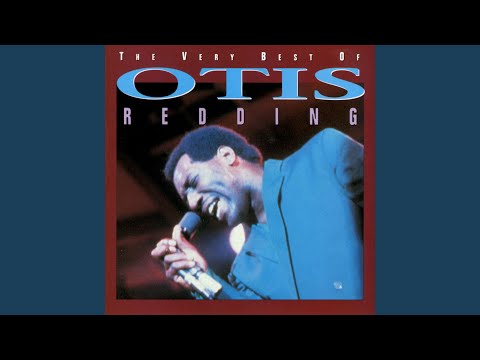
"That's How Strong My Love Is" — Otis Redding
Macon's Son on the Rise
The winter of 1965 was a moment of extraordinary ferment in American soul music. Atlantic Records, Motown, and the small but brilliant ecosystem around Stax Records in Memphis were producing music that would define not just the decade but the entire history of American popular song. Inside that ferment, a 23-year-old singer from Macon, Georgia, was beginning to register with national audiences after years of dues-paying on the Southern chitlin circuit. Otis Redding had signed with Stax's subsidiary label Volt in 1962, and the Stax/Volt creative environment, with its house band Booker T. & the M.G.'s and its tight rhythmic architecture, was proving to be exactly the right home for his particular gifts.
"That's How Strong My Love Is" was not original to Redding; the song was written by Roosevelt Jamison, a Mississippi songwriter. Redding's recording transformed it into something that sounded definitively his own, applying the combination of vocal abandon and emotional control that was already emerging as his signature. The recording was made at Stax Studios in Memphis, with the distinctive sound of the Memphis house band giving the track the warm, funky foundation that distinguished Stax product from the more polished soul coming out of Motown in Detroit.
The Recording and Its Sound
What Redding did with "That's How Strong My Love Is" was characteristic of his early approach: he took a song whose structure was conventional and poured into it a vocal performance that was anything but. His voice in 1965 was already possessing qualities that would become legendary, the ragged edge at the top of his range, the way he could drop into a near-whisper and then surge into a full-throated cry within a single phrase. The horns, piano, and rhythm guitar created the architecture while Redding treated the vocal melody as a starting point rather than a destination.
The song's premise is the hyperbolic declaration of love, the singer promising feats of devotion calibrated to the extremity of his feeling. Redding delivered this material with the physical conviction that characterized all his best work, making emotional extravagance sound not like exaggeration but like simple truth. The production by Jim Stewart, Stax's co-founder, kept the arrangement spare enough to let the vocal breathe while providing the rhythmic drive that made the track work on dance floors.
The Chart Run of Early 1965
The song entered the Billboard Hot 100 on January 30, 1965, debuting at number 90. Over the following weeks it climbed steadily: number 80 the week of February 6, then reaching its peak position of 74 on February 13, 1965, where it held for two consecutive weeks before falling from the chart. Four weeks total on the Hot 100 was a respectable run for an emerging soul artist whose audience was still primarily Southern and Black, with the broader pop market only beginning to come around to the music that Stax and Atlantic were producing.
Redding's Hot 100 chart history in this period tells a story of gradual accumulation. He was not yet the figure he would become in 1967 and 1968, when his career reached its stratospheric peak just months before his death in a plane crash. But each single, each chart appearance, was building the national recognition that would eventually make him one of the most celebrated figures in soul music.
The Rolling Stones Connection
A note that illuminates how the song traveled: The Rolling Stones covered "That's How Strong My Love Is" on their 1965 album Out of Our Heads, part of their sustained engagement with American rhythm and blues that characterized their early career. The Stones' cover introduced the song to the enormous rock audience that was consuming British Invasion music throughout 1965, a population that might not have found Redding's version on its own. This cross-pollination between the Memphis original and the British adaptation was a characteristic feature of mid-1960s pop culture.
Where It Sits in the Redding Legacy
Among Otis Redding's catalog of remarkable recordings, "That's How Strong My Love Is" belongs to the early period when his greatness was evident but not yet fully recognized by mainstream America. The deep catalog, including tracks like this one, reveals the consistency of his gift across his entire brief recording career. Press play and you hear the voice that Sam Cooke's death in December 1964 had left the world needing to find: Redding, at 23, already filling that space.
"That's How Strong My Love Is" — Otis Redding's singular moment on the 1960s charts.
02 Song Meaning
"That's How Strong My Love Is" — Devotion, Hyperbole, and the Soul Tradition
The Language of Extreme Devotion
Soul music in the 1960s developed a particular strategy for conveying emotional intensity: the escalating declaration, the promise of ever-greater feats of devotion in service of love. This tradition drew from gospel, from blues, from the courtly love conventions embedded deep in Western popular song, and made something new from all of it. "That's How Strong My Love Is" belongs squarely in this tradition, a song whose structure is essentially a series of increasingly expansive pledges, each one designed to measure the depth of the singer's feeling by the scale of what he would do to demonstrate it.
Roosevelt Jamison's songwriting placed natural imagery at the center of the song's metaphorical framework, using the ocean, the stars, and vast physical distances as measures of the love being declared. This kind of lyrical scope was characteristic of soul ballads that sought to convey feelings too large for ordinary language, reaching for the cosmic to describe the intimate.
Otis Redding and Emotional Authenticity
What distinguished Redding's delivery of this material from hundreds of other singers who worked with similar lyrical frameworks was his extraordinary ability to make grand declarations sound personally true. The hyperbole of the soul declaration becomes meaningful only when the voice delivering it carries genuine conviction, when the listener feels that the singer is not performing emotion but actually in it. Redding's vocal performances consistently achieved this quality, the sense that the feeling was real even when the vehicle was a cover song written by someone else about a fictional relationship.
This quality, which critics would later describe variously as raw authenticity, gospel-rooted expressiveness, or physical abandon, was the central fact of Redding's artistry. He transformed material through sheer vocal force and conviction, making songs his own in a way that transcended competent interpretation.
The Soul Landscape of 1965
To understand what "That's How Strong My Love Is" meant in early 1965, it helps to understand what was happening in soul music at that moment. Sam Cooke, the genre's most polished and commercially successful figure, had died in December 1964. James Brown was establishing the funk template that would transform American music within a few years. Aretha Franklin had not yet recorded the Atlantic sides that would make her a superstar. Soul music was between peaks, transitioning from the smooth crossover approach of early-1960s R&B toward the more emotionally raw and politically resonant sounds that would define the genre's late-1960s peak.
Redding, in early 1965, was part of the Stax sound that was developing an alternative to both Motown's polished pop and the more gospel-inflected approach of other Atlantic artists. The Memphis approach he embodied was gritty, rhythmically complex, and emotionally intense in ways that would prove enormously influential on virtually every form of popular music that followed.
A Blueprint for What Came After
The song's 1965 recording documents a voice and an approach that would go on to influence decades of subsequent music. The performers who cite Redding as a primary influence span genres and generations, from rock artists who heard in him a permission to be physically and emotionally uninhibited on stage, to soul singers who took his vocal technique as a template for their own development. "That's How Strong My Love Is" is an early artifact of that influence, a recording that shows the approach fully formed before the world had entirely noticed it was there.
→ More from Otis Redding
View all Otis Redding hits →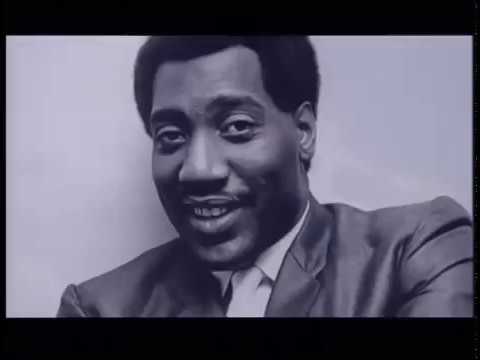
→ More from the 1960s File
View all 1960s hits →




Keep digging