The 1960s File Feature
Satisfaction
Otis Redding Reinvents Satisfaction Imagine the audacity. In the mid-1960s, the Rolling Stones owned the airwaves with one of the most recognizable guitar ri…
01 The Story
Otis Redding Reinvents "Satisfaction"
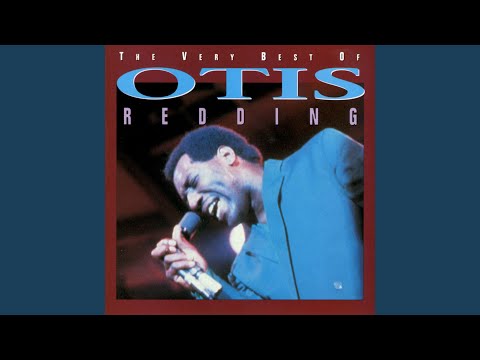
Imagine the audacity. In the mid-1960s, the Rolling Stones owned the airwaves with one of the most recognizable guitar riffs in rock history, a song that practically defined teenage frustration for a generation. Then a young soul giant from Georgia decided he could do it better, or at least entirely his own way. Otis Redding's version of "(I Can't Get No) Satisfaction" is one of the great acts of musical reinterpretation, a Stax-powered explosion that takes a rock anthem and drags it, sweating and shouting, straight into the church of Southern soul.
A Rising Force Out of Memphis
By 1966, Otis Redding was the beating heart of the Stax Records sound, a label whose raw, horn-driven productions stood in vivid contrast to the polished glamour of Motown up north. Redding had already established himself with deeply felt ballads and barn-burning uptempo numbers, his voice an instrument of almost unbearable urgency. He was backed by Booker T. and the M.G.'s and the Mar-Keys horns, the house musicians whose tight, muscular grooves gave Stax its unmistakable identity. Tackling a Stones hit was a bold statement of confidence from an artist who knew exactly what his band could do. Redding had a way of treating any song as raw material to be rebuilt from the ground up, and his choice to cover such a recent and recognizable smash showed just how fearless he had become. The Memphis sound he helped define was built on feel and immediacy rather than studio gloss, and that philosophy suited a song about pure, unfiltered frustration perfectly.
Turning a Rock Riff Into a Soul Stomp
What Redding and his band did with the song is remarkable. The famous fuzz-guitar hook becomes a stabbing horn line, the steady rock beat dissolves into a churning, almost frantic soul groove. Redding doesn't so much sing the lyric as attack it, improvising, exhorting, half-inventing words in the heat of the moment because the original wording could barely contain his energy. The result feels less like a cover and more like a conversation, one master songwriter's idea passed through the body of a completely different kind of genius. The arrangement transforms restlessness into ecstatic release.
A Respectable Climb Up the Hot 100
The single made a solid showing on the pop chart. It entered the Billboard Hot 100 dated March 5, 1966, at number 79, then climbed steadily week after week. It reached its peak of number 31 on April 16, 1966, and spent a total of eight weeks on the chart. For a soul reinterpretation of a song everyone already knew, cracking the top 40's neighborhood was a genuine achievement, and it pushed Redding's distinctive voice further into the pop mainstream.
Part of a Legendary Catalog
This recording sits within one of the most concentrated runs of greatness in music history. Redding would go on to record "Try a Little Tenderness" and, after his tragic death in a 1967 plane crash, the posthumous "(Sittin' On) The Dock of the Bay," which became his first number-one hit. His version of "Satisfaction" helped cement his reputation as an artist who could take any material and stamp it indelibly with his own personality. Even Keith Richards has spoken warmly of how the cover honored the song.
Press Play and Feel the Heat
To hear this record is to understand why Redding remains a towering figure in American music. There is nothing tentative about it, no hint of an artist intimidated by the original. Drop the needle and you are swept into a whirlwind of horns and holler, a performance so committed it nearly bursts its own seams. It is the sound of one of soul's greatest voices claiming a rock classic as his birthright, and few covers in the history of popular music feel quite so triumphant.
"Satisfaction" — Otis Redding's singular moment on the 1960s charts.
02 Song Meaning
The Meaning Behind Otis Redding's "Satisfaction"
The original song was a howl of generational frustration aimed at advertising, conformity, and a culture that left a restless young man cold. When Otis Redding got hold of it, the meaning shifted in fascinating ways, filtered through the lens of soul music's particular relationship with desire and discontent.
Frustration Made Physical
At its core, the song is about wanting and not getting, the gnawing sense that whatever you reach for stays just out of grasp. Redding's interpretation makes that frustration feel less like cynical social commentary and more like raw, full-body hunger. His delivery turns abstract dissatisfaction into something visceral, a man practically clawing at the air. Where the original simmered with cool irritation, Redding boils over, and that emotional escalation gives the same words a brand-new charge.
The Soul Tradition of Yearning
Soul music has always been preoccupied with longing, whether for love, for justice, or for some undefined satisfaction always promised and never delivered. By placing this lyric inside the Stax sound, Redding connects pop frustration to a deeper well of feeling. The song becomes part of a larger conversation about desire that runs through gospel and rhythm and blues. His version suggests that the want at the heart of the lyric is universal, crossing the boundaries of race, genre, and audience that defined the era's music.
Improvisation as Honesty
One of the most telling aspects of Redding's reading is how loosely he treats the words. He admitted he didn't know all the original lyrics, so he filled the gaps with his own ad-libs and exhortations. That spontaneity becomes its own kind of meaning, an artist responding in real time rather than reciting. The effect is thrilling because it feels unrehearsed and true, the sound of a singer in the grip of genuine feeling instead of careful recitation.
Why It Resonated
Audiences responded because the performance is so alive. It takes a familiar song and makes it feel discovered all over again, proving that meaning in music lives as much in the delivery as in the writing. Listeners who knew the Stones version got the jolt of recognition plus the shock of total transformation. For soul fans, it was further proof that Redding could inhabit any song and make it his own.
A Bridge Between Worlds
Ultimately, this recording means something larger than its lyric. It represents the cross-pollination of British rock and American soul at a pivotal cultural moment, two streams of popular music acknowledging and energizing each other. Redding's "Satisfaction" is a handshake across genres, and a reminder that great songs belong to whoever can breathe new life into them. The fact that a Black soul singer from Georgia could reclaim a British rock band's interpretation of American blues forms says something hopeful about how music travels and transforms. In Redding's hands, the song stops being about consumer culture and becomes about the eternal human ache for fulfillment, a meaning that feels even more universal than the original.
→ More from Otis Redding
View all Otis Redding hits →


→ More from the 1960s File
View all 1960s hits →




Keep digging