The 1960s File Feature
Red Red Wine
Red Red Wine — Neil Diamond Before the Superstar Status In 1968, Neil Diamond was not yet the arena-filling institution he would become. He was a songwriter …
01 The Story
Red Red Wine — Neil Diamond
Before the Superstar Status
In 1968, Neil Diamond was not yet the arena-filling institution he would become. He was a songwriter who had turned performer, a young man from Brooklyn who had spent years writing hits for other artists before deciding his own voice deserved an audience. His early recordings for Bang Records had given him moderate pop success, and by the time he signed with Uni Records he was building a momentum that would eventually carry him to genuine superstardom. "Red Red Wine," released in early 1968, came at this transitional moment, when Diamond was still defining himself as a recording artist rather than simply a hitmaker for hire.
The Song and Its Atmosphere
Diamond wrote "Red Red Wine" himself, which was standard practice for a songwriter who had never been shy about performing his own material. The track occupies an interesting sonic space for its period: it has a lilting, almost reggae-adjacent rhythm that sounds slightly out of step with the hard rock and psychedelic pop dominating the radio landscape in early 1968. The production has a lightness that suggests a deliberate choice to avoid the sonic density of the era's most fashionable sounds. Diamond's vocal on the track is controlled and melodic, emphasizing his strengths as a craftsman rather than a soul-baring belter.
A Chart Run That Underdelivered
The single debuted on the Billboard Hot 100 on April 13, 1968, at position 73. Its climb was modest. The record reached a peak of number 62 on April 20, 1968, holding that position for two weeks before dropping off the chart entirely after a total run of just three weeks. For an artist with Diamond's commercial instincts and growing reputation, this was a quiet performance. The pop landscape in spring 1968 was fiercely competitive, and the track did not find sufficient radio traction to push it into the upper half of the chart.
The UB40 Transformation
The full story of "Red Red Wine" cannot be told without acknowledging what happened to it sixteen years later. The British reggae group UB40 recorded their version of the song and released it in 1983 in the United Kingdom, where it became a hit. When it was re-released in the United States in 1988, the UB40 recording reached number 1 on the Billboard Hot 100, giving Diamond's composition a chart life that the original 1968 recording never achieved. The UB40 cover leaned fully into the reggae rhythms that Diamond's original had only hinted at, making explicit what the earlier recording had suggested.
Diamond's Relationship with His Own Catalog
The trajectory of "Red Red Wine" illustrates something true about Diamond's career: his strengths as a songwriter often outlasted his records' immediate commercial fortunes. Songs he wrote were covered, reinterpreted, and found new audiences across multiple decades. His catalog includes compositions that had longer shelf lives than their initial chart performances suggested. The fact that a modestly charting 1968 single would become a number 1 hit twenty years later through someone else's interpretation speaks to the durability of Diamond's melodic writing. For all the success he found performing his own material, he was always first and foremost a songwriter of extraordinary commercial instinct.
Songs That Outlive Their Moment
Neil Diamond's transition through the late 1960s and into the 1970s produced a catalog of recordings that generated enormous royalty income through cover versions and licensing long after the original releases had faded from radio. "Red Red Wine" is among the clearest examples of this pattern: a song that performed modestly on its first outing, then found a substantially larger audience when another artist revealed the full commercial potential of the underlying composition. The lesson embedded in this trajectory is one that the music industry has had to relearn in every generation: the commercial performance of a song's first recording is not a reliable indicator of the song's actual quality or long-term value. Great songs sometimes need the right arrangement, the right voice, or simply the right moment to find their audience. The 1968 Diamond original is where the story began, a quiet first statement of a melody that the world would eventually learn to love. Press play on the 1968 original and hear the seed of what would eventually become a pop standard.
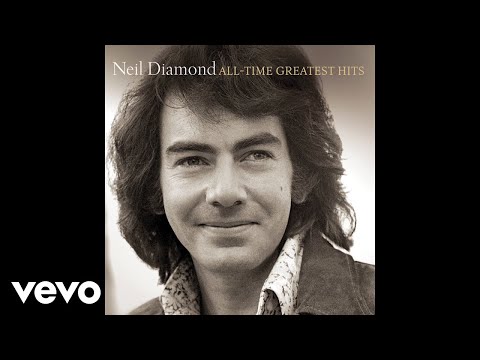
"Red Red Wine" — Neil Diamond's singular moment on the 1960s charts.
02 Song Meaning
Red Red Wine — Meaning and Cultural Legacy
Comfort as Capitulation
Diamond's lyric for "Red Red Wine" circles a very specific emotional territory: the use of wine not as celebration but as sedative, as a way of quieting the noise of a romantic loss that cannot be reasoned away. The narrator turns to drink not from hedonism but from exhaustion, from the recognition that grief has its own momentum and sometimes you simply have to find a way to survive it. The song frames intoxication as an act of self-preservation rather than self-destruction, which gives it a psychological nuance that distinguishes it from simpler drinking songs.
The 1968 Pop Landscape and Emotional Quietude
In a year when popular music was frequently loud, politically charged, and sonically aggressive, there was something quietly radical about a song that asked listeners to sit with sadness rather than fight it. "Red Red Wine" did not offer resolution or empowerment. It offered company in defeat. The tone is resigned without being despairing, sad without being melodramatic. Diamond's gift for writing emotionally legible songs without over-explanation is on display here, the lyric saying enough to anchor the feeling but leaving enough space for the listener's own experience to fill in the rest.
Why the Reggae Arrangement Unlocked the Song
When UB40 recorded the song in the early 1980s, they made a crucial creative choice: they leaned into the rhythmic suggestion that was already present in Diamond's original. The lilting, slightly off-kilter pulse that Diamond's 1968 production had incorporated became the entire structural logic of the UB40 version. In doing so, they revealed something about the song's inner life that the original had only partially articulated. The reggae arrangement suits the lyric perfectly because reggae, as a genre, has its own tradition of finding groove and ease in difficulty. The rhythm became a formal expression of the song's emotional content.
A Composition That Transcended Its First Recording
The commercial history of "Red Red Wine" is a case study in how a song can be greater than any single version of it. Diamond's 1968 recording peaked at number 62. UB40's 1988 American re-release reached number 1. The two recordings are separated by twenty years and a complete reimagining of the sonic context, yet both are recognizably expressions of the same emotional truth. This kind of song-level durability is the hallmark of writing that operates at a deeper level than trend; it survives format changes, genre shifts, and generational turnover because the feeling at its center is simply accurate.
Diamond's Enduring Songwriting Fingerprint
Looking back across Diamond's catalog, "Red Red Wine" fits comfortably into a body of work characterized by emotional directness, melodic generosity, and a slight melancholy that never becomes self-pity. These qualities made him one of the most commercially successful songwriters of the late 20th century, generating hits for himself and for other artists across multiple decades. The song demonstrates why his writing translated across performers and interpretations: the emotional core was clear enough to survive any arrangement and strong enough to carry any voice placed atop it.
→ More from Neil Diamond
View all Neil Diamond hits →


→ More from the 1960s File
View all 1960s hits →




Keep digging