The 1960s File Feature
Holly Holy
"Holly Holy" — Neil Diamond's Majestic Moment A Voice That Filled the Room Close your eyes and try to imagine American radio in the autumn of 1969. The count…
01 The Story
"Holly Holy" — Neil Diamond's Majestic Moment
A Voice That Filled the Room
Close your eyes and try to imagine American radio in the autumn of 1969. The country was raw with the aftermath of Woodstock, still processing the moon landing, and searching for music that could hold contradictions: personal and cosmic, intimate and vast. Neil Diamond, already a successful songwriter and performer with a string of pop hits behind him, stepped into that searching moment with something that felt like a hymn and a love song at the same time. "Holly Holy" arrived in November of that year, and it hit differently from everything else on the dial.
The Spark of Creation
By 1969, Neil Diamond had already proven himself a formidable commercial force. His songwriting credits included hits for other artists, and his own recordings had climbed the charts steadily through the late 1960s. Diamond wrote and recorded "Holly Holy" for Uni Records, the label that had been his home since 1966. The track was built around a churning, gospel-inflected production with a full choir arrangement that gave the song a cathedral-like scale rarely heard in pop music at the time. The production leaned into the tension between the earthly and the transcendent, pairing a propulsive rhythm section with voices lifted in near-religious ecstasy.
What made the recording distinctive was its emotional sweep. The song moves from yearning to jubilation within its running time, and Diamond's vocal performance anchors every shift. His baritone had always carried a raw, unguarded quality, and on this track, that quality was amplified by the arrangement surrounding it. The choir was not decorative; it was structural, carrying the emotional argument of the lyric as much as the lead vocal did.
From Debut to the Top Ten
The Billboard Hot 100 chart run for "Holly Holy" was a steady and satisfying climb. The single debuted on November 1, 1969, entering the chart at number 71. Week by week it pushed upward: to 44, then 32, then 28, then 18, before ultimately peaking at number 6 on December 27, 1969, a chart position that placed it firmly among the biggest commercial records of that holiday season. It spent nine weeks on the Hot 100 in total, a respectable tenure that reflected both strong radio support and genuine listener enthusiasm.
The record was a significant moment in Diamond's trajectory. He had scored top-ten hits before, but "Holly Holy" arrived with a particular confidence and ambition that signaled he was pushing for something larger than pop formula. The gospel choir, the elevated lyrical imagery, the surging dynamics: all of it pointed toward an artist who was beginning to think in terms of spectacle and catharsis rather than mere commercial appeal.
Neil Diamond at the Crossroads
The late 1960s were a decisive period for Diamond. He was navigating the transition from Brill Building-schooled songwriter to fully realized recording artist in his own right. The success of "Holly Holy" reinforced that his instincts about scale and emotional directness were commercially viable, not just artistically satisfying. The following years would see him pursue even more ambitious projects, eventually leading to the celebrated Hot August Night live album and the landmark Jonathan Livingston Seagull soundtrack, but the roots of that larger ambition were visible in this 1969 recording.
The track also demonstrated Diamond's gift for songs that functioned in multiple registers simultaneously. Listeners who heard it as a straightforward pop record found a compelling melody and an infectious chorus. Those who heard it as something more spiritual found a text rich enough to sustain that reading. That double quality, the ability to satisfy on several levels at once, became a hallmark of his most enduring work.
A Legacy Written in Sound
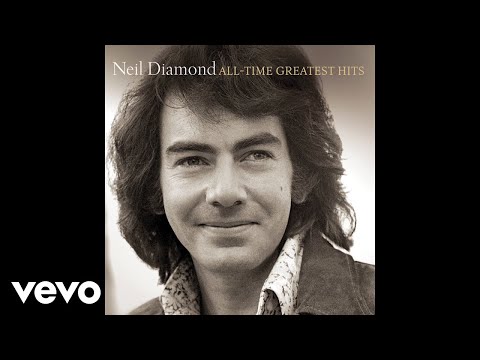
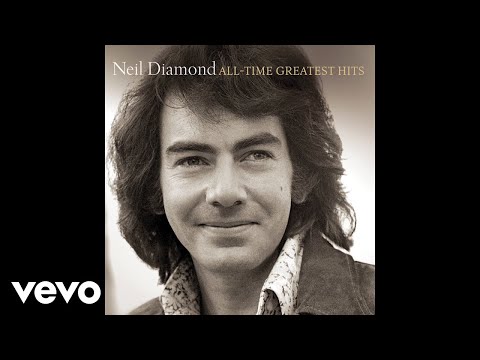
Across the decades, "Holly Holy" has retained a place in Neil Diamond's concert repertoire and in his critical reputation. It appears on greatest-hits compilations and streaming playlists dedicated to late-1960s pop, where it holds its own alongside much more celebrated recordings from that era. The song's choir arrangement has been cited as an early example of gospel-pop crossover production that prefigured the sound many artists would pursue in the 1970s.
For listeners discovering Diamond's catalog fresh, "Holly Holy" serves as an ideal entry point precisely because it captures him at a hinge moment: confident enough to reach for grandeur, skilled enough to make the reach feel earned. The production has aged gracefully. The choir still lifts. The vocal still commits. Press play and you will understand immediately why November 1969 belonged, for at least a few weeks, to this extraordinary record.
"Holly Holy" — Neil Diamond's singular moment on the 1960s charts.
02 Song Meaning
"Holly Holy" — Meaning, Themes, and Lasting Power
The Sacred and the Human Intertwined
There is a reason "Holly Holy" has always occupied an unusual space in the Neil Diamond catalog. On the surface, it reads as a love song: a narrator pouring devotion onto a figure named Holly, conjuring her presence as something that can move him, transform him, lift him clear of ordinary life. But the language Diamond uses keeps sliding toward the religious. The imagery of light, of singing, of being carried somewhere higher by the power of this person's presence gives the track a quality that hovers between the secular and the devotional. That productive ambiguity is the emotional engine of the song.
Diamond never resolves the tension between romantic and spiritual love, and that is precisely the point. The "Holy" in the title is not accidental. The song invites listeners to map their own meaning onto its central figure, to hear in Holly whatever transcendence they happen to be seeking. In 1969, when many Americans were questioning inherited religious frameworks while simultaneously searching for new forms of communal feeling, that kind of open-ended spiritual vocabulary resonated deeply.
Longing as a Driving Force
The emotional core of the lyric is longing, and Diamond articulates it with a specificity that keeps the abstract from becoming vague. The narrator is not simply content; he describes being ignited, transported, made whole by the presence of this beloved figure. The imagery builds toward a collective celebration, a crowd brought together by the mere invocation of Holly's name. That communal dimension, the sense that one person's devotion can become a shared ritual, gives the song a scope far beyond typical pop romance.
It is worth noting that the year 1969 was saturated with music about collective experience: the festival spirit was at its peak, and songs that could function as anthems for a gathering crowd had particular cultural traction. "Holly Holy" fit that moment without pandering to it. The choir arrangement made the communal feeling sonic rather than merely lyrical.
The Cultural Weight of 1969
To understand why "Holly Holy" landed with such force, one must reckon with the specific anxieties and hungers of late-1969 America. The idealism of the decade was beginning to curdle; political violence had marked the year, and the simple certainties of early-1960s pop felt permanently out of reach. Music that could hold both joy and ache, that could gesture toward transcendence without pretending the darkness wasn't there, answered a genuine need. Diamond's gospel-inflected production tapped into African-American church music traditions in a way that was common in soul and R&B but unusual in the pop mainstream, lending the track a gravitas that purely secular arrangements rarely achieved.
Why It Still Resonates
Decades on, "Holly Holy" endures because its emotional argument remains universally legible. The experience of encountering someone whose presence rearranges your inner world, of feeling that a single person or idea or belief carries the power to transform the ordinary into the sacred, is not specific to any era. Diamond's genius was in giving that universal experience a sound grand enough to match it. The swelling choir, the insistent rhythm, the vocal that never quite lets go of its urgency: together they create the sensation the lyric describes, which is the most any pop song can hope to achieve.
Listeners returning to the track now will find it remarkably undated. It belongs to its moment without being trapped there. That is the measure of its craft.
"Holly Holy" — Neil Diamond's singular moment on the 1960s charts.
→ More from Neil Diamond
View all Neil Diamond hits →


→ More from the 1960s File
View all 1960s hits →




Keep digging