The 1960s File Feature
You've Been In Love Too Long
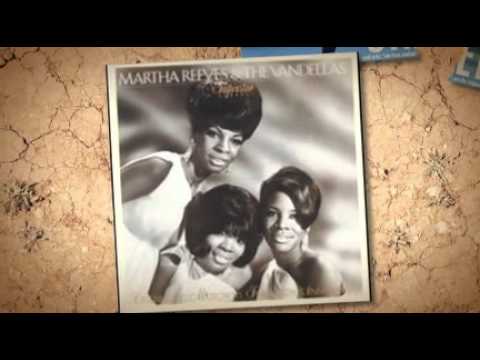
You've Been In Love Too Long — Martha and the Vandellas and the Motown Machine in Full Stride Martha Reeves and the Vandellas: Dance Hall Royalty By the summ…
01 The Story
You've Been In Love Too Long — Martha and the Vandellas and the Motown Machine in Full Stride
Martha Reeves and the Vandellas: Dance Hall Royalty
By the summer of 1965, Martha and the Vandellas had already carved out a permanent place in the Motown story. Their 1963 breakthrough Heat Wave had announced them as one of the label's most viscerally exciting acts, and the subsequent run of singles had confirmed that first impression. Unlike some Motown acts who leaned toward a more polished, uptown sophistication, the Vandellas had a rawness and a drive to their best recordings that connected to something closer to pure rhythm and blues. Martha Reeves herself had a voice that could raise the temperature of any room it entered: powerful, urgent, and capable of communicating excitement in a way that felt completely unforced.
A Sound Built for Summer Radio
You've Been In Love Too Long arrived in the middle of the 1965 summer season, and it had the energy of that moment built into its construction. The track moves with the particular propulsive quality that the best Motown productions of this period achieved: a rhythm section locked into a groove that demanded physical response, the Funk Brothers providing their characteristically precise yet swinging instrumental foundation, and Reeves riding the track with the confidence of a performer at the height of her powers. It was the kind of record that arrived from the car radio and immediately made the summer feel a little more intense, a little more alive.
The Chart Run of Late Summer 1965
The single debuted on the Billboard Hot 100 on August 14, 1965, entering at position 75. The climb through the late summer was steady and encouraging. By the first week of September, it had pushed past 50, and it continued its ascent. The song peaked at number 36 during the week of September 18, 1965, spending a total of seven weeks on the Hot 100. A peak of 36 in the crowded mid-1960s pop landscape represented genuine commercial success: the mid-1960s Hot 100 was intensely competitive, and any single that cracked the top 40 had fought its way past a remarkable field of competing records.
Motown's Assembly Line of Brilliance
The Motown Records of the mid-1960s operated with an efficiency and a quality control that remains one of the great achievements in the history of popular music production. The combination of in-house songwriters, the Funk Brothers session band, and Berry Gordy's quality-control process created an environment where even the less celebrated releases maintained a level of craft that many competitors would have considered exceptional. You've Been In Love Too Long benefited from this system: it arrived with the Motown production values that guaranteed a certain baseline of musical quality, with Martha Reeves's performance elevating that baseline into something genuinely exciting.
A Necessary Entry in the Vandellas Catalog
Martha and the Vandellas never quite achieved the same retrospective prominence as some of their Motown label-mates, which is a genuine injustice given the quality of their catalog. Dancing in the Street, Nowhere to Run, and Heat Wave tend to dominate their legacy discussion, but the run of singles that surrounded those iconic tracks was remarkably consistent. You've Been In Love Too Long belongs to that surrounding territory: not the most famous entry in the catalog, but a thoroughly excellent record that demonstrates exactly why this group deserved to be taken seriously as one of the defining acts of the mid-1960s pop scene. Press play and let it remind you why.
The Summer of 1965 and Motown's Commercial Momentum
The summer of 1965 was one of the peak seasons in Motown's astonishing mid-decade run. The label had multiple artists simultaneously competing for attention on the Hot 100, and the quality of the material across the entire roster was remarkable by any standard. You've Been In Love Too Long entered this crowded marketplace and performed well precisely because it had everything that distinguished the best Motown singles: a rhythm section that locked in and drove, a vocalist who could carry the emotional weight of the lyric without strain, and production values that placed it firmly in the premium tier of what American pop radio was offering that summer. For Martha and the Vandellas, the single was confirmation that their place in the Motown hierarchy was secure and that their particular combination of drive and soul could hold its own against any competition the label or the broader market could produce.
“You've Been In Love Too Long” — Martha and the Vandellas' singular moment on the 1960s charts.
02 Song Meaning
The Meaning Behind “You've Been In Love Too Long” by Martha and the Vandellas
A Warning Disguised as a Dance Record
There is something interesting happening beneath the driving rhythm of this song. It is, in its lyrical content, a caution: the narrator is addressing someone who has invested too heavily in a relationship that is not returning the emotional investment in kind. This is not the celebratory love song that most Motown hits of the era presented; it is something more complicated, a song that acknowledges the possibility of misplaced devotion and speaks to its subject with a kind of tough-love urgency. The contrast between the driving, upbeat production and the concerned lyrical content is part of what gives the record its particular tension.
Motown's Emotional Range
The Motown Records catalog of the mid-1960s is sometimes characterized as a production line of uniformly upbeat, uncomplicated romantic optimism. That characterization is inaccurate. While the label certainly produced its share of celebrations of love and joy, it also produced a significant body of work that engaged with heartbreak, uncertainty, loss, and the complicated territory between the beginning and the end of romantic relationships. You've Been In Love Too Long occupies that more complicated emotional space, addressing the experience of loving someone who does not reciprocate fully and the danger of persisting in that love past the point of self-preservation.
The Voice as Emotional Authority
What makes the cautionary lyrical content of the song effective is Martha Reeves's delivery. The advice the song offers does not come from a position of detached wisdom but from genuine urgency. Reeves sings with the intensity of someone who means it, who wants the person she is addressing to actually hear what she is saying rather than dismiss it as conventional wisdom. That intensity transforms what might otherwise be a somewhat preachy lyrical message into something that feels genuinely invested in the outcome. The voice is the emotional authority that makes the song's argument convincing.
Female Solidarity in Mid-1960s Soul
One of the underexplored dimensions of mid-1960s soul and R&B is the degree to which certain songs, particularly those performed by female acts, encoded a kind of female solidarity: one woman addressing another, or a female group addressing their audience, with a directness that male performers rarely achieved in the same lyrical register. You've Been In Love Too Long participates in this tradition. The message is one woman telling another to protect herself, to recognize when she is not being valued appropriately and to act accordingly. For female listeners in 1965, hearing that message delivered with authority and urgency by Martha Reeves had a specific resonance that extended well beyond pop entertainment.
The Song's Enduring Emotional Logic
The emotional situation described in this song has not dated because the underlying human dynamic it addresses has not changed. People still persist in relationships past the point of rational self-interest; they still invest emotional capital in connections that do not return it equally; they still need, sometimes, for someone to tell them what they already know. The song's enduring usefulness is precisely this quality of honest confrontation: it does not coddle its subject or offer false comfort, but addresses the situation with the kind of directness that is only possible between people who genuinely care about the outcome. That directness, delivered with Martha Reeves's remarkable vocal authority, is what keeps the record vital across all the decades since its original chart run.
→ More from Martha & The Vandellas
View all Martha & The Vandellas hits →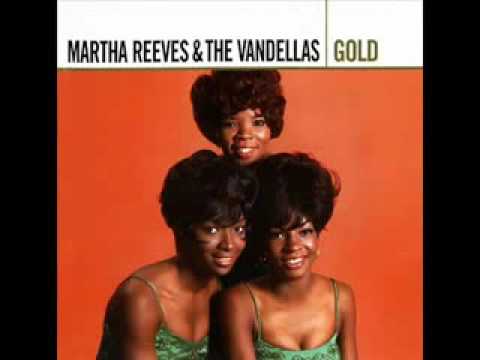
→ More from the 1960s File
View all 1960s hits →




Keep digging