The 1960s File Feature
Nowhere To Run
Nowhere To Run — Martha The Vandellas (1965) "Nowhere to Run" stands as one of the essential recordings in the Motown catalog and one of the defining stateme…
01 The Story
Nowhere To Run — Martha & The Vandellas (1965)
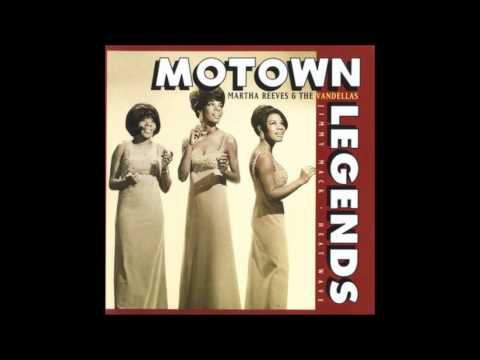
"Nowhere to Run" stands as one of the essential recordings in the Motown catalog and one of the defining statements of the Holland-Dozier-Holland songwriting and production partnership at the height of their creative powers. Released in early 1965 on Gordy Records, the Motown subsidiary label that carried Martha Reeves and her group, the single represented the culmination of a working relationship between the writers and the singer that had already produced several significant hits and would go on to generate some of the most celebrated recordings in the history of American popular music.
Brian Holland, Lamont Dozier, and Eddie Holland were by 1965 operating at a level of commercial and artistic achievement that made them, alongside Berry Gordy himself, the primary architects of Motown's distinctive sound. Their work combined infectious melodic hooks, intricate rhythmic arrangements featuring the Funk Brothers session musicians, and lyrical frameworks that captured specific emotional situations with unusual precision and intensity. "Nowhere to Run" demonstrated all of these qualities in concentrated form, built around a relentless rhythmic drive and a lyrical premise of emotional entrapment that gave Martha Reeves's performance its extraordinary urgency.
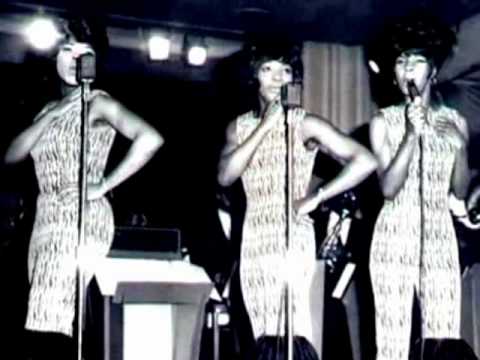
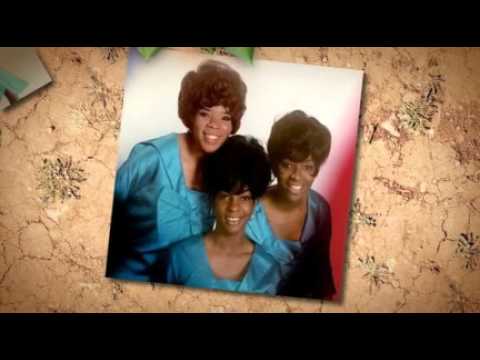
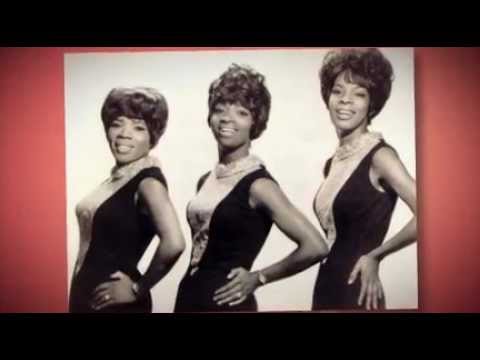
Martha Reeves had come to Motown through an unusual path, beginning as a secretary before transitioning to recording artist, and she brought to her performances a raw, gospel-inflected intensity that distinguished her voice from the more polished, elegant sounds associated with some of Motown's other female acts. The Vandellas, who sang with her on "Nowhere to Run," were Rosalind Ashford and Betty Kelly at the time of this recording, and their harmonies created a tight vocal ensemble that amplified the urgency of the lead vocal rather than simply supporting it.
The single reached number eight on the Billboard Hot 100, confirming Martha and the Vandellas' position as genuine crossover stars capable of competing with the full spectrum of American popular music at the peak of its mid-decade commercial vitality. The chart performance was a validation of both the quality of the recording and Motown's by-then-formidable promotional and distribution infrastructure, which had evolved from a small Detroit operation into a national commercial force capable of placing records across the country's radio markets.
The recording sessions at Motown's Hitsville U.S.A. studios featured the Funk Brothers, the house band whose musicianship underpinned virtually all of the label's classic recordings. The driving rhythm of "Nowhere to Run," built around a propulsive drum pattern and insistent bass line, reflected the ensemble's ability to create rhythmic frameworks of almost physical intensity that gave Motown records their characteristic combination of accessibility and urgency. The production was dense without being cluttered, and each element served the overall emotional effect of the recording.
The timing of the single's release in 1965 placed it in the most competitive period in American pop history. The British Invasion had transformed the commercial landscape, and American artists faced pressure to hold their own against waves of British acts who were dominating the charts. Motown had responded to this challenge with particular effectiveness, developing a sound that was so distinctively American in its roots while being so universally appealing in its execution that it could compete on equal commercial terms with the British acts. "Nowhere to Run" was a prime example of this competitive strategy in practice.
"Nowhere to Run" was later featured in the 1987 film Good Morning, Vietnam, which introduced the song to a new generation of listeners and contributed to its enduring cultural visibility. This kind of retroactive pop culture placement, common for the best Motown recordings of the 1960s, confirmed the song's status as a genuine American cultural artifact rather than merely a period commercial success. Holland-Dozier-Holland wrote and produced dozens of enduring hits during their Motown tenure, and "Nowhere to Run" is consistently cited alongside their most celebrated work.
Within Martha Reeves and the Vandellas' catalog, "Nowhere to Run" sits alongside "Dancing in the Street" and "Heat Wave" as one of the recordings that most fully captures the group's specific contribution to Motown's legacy. The combination of rhythmic intensity, emotional urgency, and vocal power that characterizes "Nowhere to Run" represents the group at their most distinctive, and the record's continuing presence in retrospective discussions of 1960s soul and pop music confirms its enduring artistic and historical significance.
02 Song Meaning
What "Nowhere To Run" Means
"Nowhere to Run" is a song about the experience of being caught in an attachment from which there is no clean escape, of being fully aware that something is destructive or inappropriate while being completely unable to act on that awareness. The lyrical situation Holland-Dozier-Holland constructed is one of absolute emotional entrapment: the narrator knows she should leave, understands that the relationship is causing harm, can articulate the problem with clarity and precision, and yet cannot take the action that her knowledge would seem to demand. This paradox, the gap between knowing and doing in the territory of romantic attachment, is one of the most precisely observed emotional situations in the entire Motown catalog.
What makes "Nowhere to Run" exceptional is the directness and honesty with which it refuses the consolations that pop songs of the era typically offered. Many love songs of the period resolved their emotional conflicts through declarations of commitment, hope, or resilience. "Nowhere to Run" does not resolve anything; it describes a state that simply continues, in which the narrator remains trapped not by external force but by her own emotional reality. This refusal of easy resolution gives the song a psychological sophistication that has made it resonate with listeners across decades and changing social contexts.
Martha Reeves's vocal performance is the primary vehicle for the song's meaning, and it is one of the great performances in the history of American popular music. Her voice conveys simultaneously the intellectual clarity of someone who fully understands her situation and the emotional incapacity to escape it. There is frustration, resignation, longing, and self-awareness all present at once in her delivery, and the tension between these states is what gives the performance its urgency. The gospel tradition that informed her singing was particularly well-suited to this kind of emotionally complex material, where the voice must communicate multiple registers of feeling without resolving them into a single, simplified emotional statement.
The rhythmic intensity of the music is itself an argument about the song's theme. The driving, relentless percussion and bass arrangement creates a musical analog to the experience of being unable to stop, to rest, to escape. The music does not slow down or soften to reflect the narrator's desire for relief; it continues with the same propulsive energy regardless of what the lyrics describe, enacting through sound the very entrapment that the words name. Holland-Dozier-Holland's production decision to maintain this rhythmic intensity throughout the recording was a sophisticated choice that aligned form and content in a way that elevates "Nowhere to Run" above the typical pop single.
The song also participates in a tradition of soul music that gave voice to emotional experiences that the mainstream popular culture of the early 1960s largely refused to acknowledge. White pop music of the period was heavily oriented toward optimism, resolution, and the satisfying narrative arc of romantic success. Black soul music in this era was more willing to sit with difficulty, to describe emotional situations that did not resolve neatly, to give voice to the kinds of trapped, complicated feelings that real human experience includes but that conventional pop narratives exclude. "Nowhere to Run" is a particularly eloquent example of this difference.
For Martha Reeves and the Vandellas as artists, "Nowhere to Run" demonstrated their capacity to handle material of genuine emotional weight and complexity. The song placed the group in a different register from the pure dance-floor exuberance of "Dancing in the Street" and showed that their artistic range extended to darker, more complicated emotional territory. This range is part of what has given the group's legacy its depth, and "Nowhere to Run" is the recording that most fully demonstrates the emotional breadth of their most significant creative period.
→ More from Martha & The Vandellas
View all Martha & The Vandellas hits →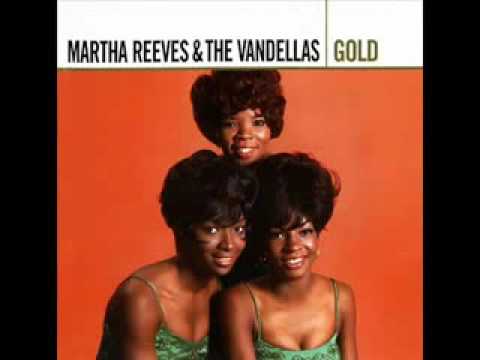
→ More from the 1960s File
View all 1960s hits →




Keep digging