The 1960s File Feature
Love (Makes Me Do Foolish Things)
Love (Makes Me Do Foolish Things): Martha and the Vandellas and the Holland-Dozier-Holland Machine In 1965, the Motown production operation was running at pe…
01 The Story
Love (Makes Me Do Foolish Things): Martha and the Vandellas and the Holland-Dozier-Holland Machine
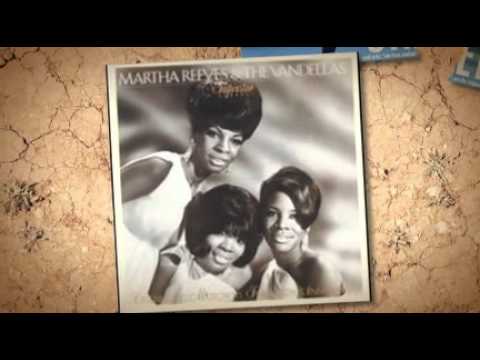
In 1965, the Motown production operation was running at peak efficiency, producing a stream of singles that consistently conquered the pop and R&B charts while maintaining a remarkably high standard of musical and emotional quality. Within that operation, the songwriting and production team of Holland-Dozier-Holland, comprising brothers Brian and Eddie Holland along with Lamont Dozier, stood at the absolute center of the hit-making enterprise. Their work with Martha and the Vandellas produced some of the most urgent and physically compelling recordings of the era, and "Love (Makes Me Do Foolish Things)" was a characteristic product of that ongoing collaboration.
Martha Reeves had been recording for Motown since the early 1960s, initially as part of the label's secretarial staff before being discovered as a vocalist of exceptional power and presence. Her voice combined raw emotional directness with a disciplined technique that allowed her to perform within the exacting demands of the Motown production template without losing any of her natural intensity. The Vandellas, originally comprising Rosalind Ashford and Annette Beard (later replaced by Betty Kelly), provided harmonies that buttressed and amplified Reeves's lead without ever upstaging it.
Holland-Dozier-Holland wrote "Love (Makes Me Do Foolish Things)" as a vehicle for precisely the kind of emotional confession that Reeves excelled at delivering. The songwriting team had an almost uncanny ability to identify the emotional states that resonated most powerfully with their target audiences and to construct songs that gave those states a memorable melodic and lyrical form. The premise of this track, that love compromises rational behavior and leads otherwise sensible people into actions they would never otherwise take, was one that could find sympathetic listeners in virtually any demographic.
The production, recorded at Hitsville U.S.A., Motown's Detroit studios at 2648 West Grand Boulevard, employed the full resources of the Funk Brothers, the legendary house band whose collective musicianship underpinned almost every major Motown recording of the era. The rhythm section's tight, propulsive groove gave the track immediate radio appeal, while the horn arrangement added a celebratory, almost defiant quality that kept the song from feeling simply mournful despite its thematic content. This tonal complexity was characteristic of the best Holland-Dozier-Holland work with the Vandellas, music that simultaneously celebrated and lamented the power of romantic feeling.
The single was released on Gordy Records in 1965, the Motown subsidiary that served as the primary label for Martha and the Vandellas. It reached the Billboard Hot 100 and performed creditably on the R&B charts, adding to the Vandellas' already impressive string of chart entries during the mid-1960s. While it did not reach the spectacular heights of "Heat Wave" or "Dancing in the Street," it demonstrated the consistent quality of the Reeves-Holland-Dozier-Holland partnership and reinforced the group's position as one of Motown's most reliable commercial acts.
The mid-1960s context for this recording is essential to understanding its cultural significance. Motown was engaged in a deliberate strategy of crossover appeal, presenting Black artists in ways that would attract both African-American audiences and the broader mainstream pop market. Holland-Dozier-Holland's songwriting style was specifically calibrated to achieve this dual appeal, drawing on gospel and rhythm and blues traditions while maintaining melodic accessibility that translated across racial and regional listening habits. Martha and the Vandellas were one of the primary vehicles through which this strategy was executed.
Martha Reeves herself was a distinctive presence within the Motown roster because her vocal style leaned toward the rawer, more explicitly gospel-rooted end of the spectrum compared to, for instance, the Supremes, whose sound was more polished and pop-oriented. This gave the Vandellas recordings a particular emotional urgency that distinguished them within the label's catalog. "Love (Makes Me Do Foolish Things)" showcases this quality, with Reeves attacking the material with a conviction that makes every sentiment in the lyric feel personally experienced rather than professionally manufactured.
The Funk Brothers' contribution to the track deserves specific mention. Bassist James Jamerson, drummer Benny Benjamin, and the other members of the house band had developed an ensemble approach of extraordinary sophistication by 1965, capable of generating precisely calibrated rhythmic and harmonic environments for any song the creative team brought into the studio. Their work on this track exemplifies their ability to serve the song's emotional requirements while maintaining the physical momentum that made Motown records so effective on dance floors and radio alike.
In the broader context of Martha and the Vandellas' catalog, the track sits comfortably among the group's consistent mid-decade output, a period during which they regularly placed singles on the charts and maintained a demanding touring and television performance schedule. Reeves later discussed this period as one of the most creatively productive of her career, even as the physical demands of the Motown performance machine were considerable. The recordings from this period capture a group at the height of its powers, operating within a production system that was itself at the peak of its creative and commercial effectiveness.
02 Song Meaning
Romantic Surrender and Self-Knowledge: The Meaning of Love (Makes Me Do Foolish Things)
"Love (Makes Me Do Foolish Things)" belongs to a rich tradition of songs that explore the gap between what people know to be rational and what they actually do when in the grip of strong romantic feeling. The narrator of the song possesses clear self-awareness about her own behavior, recognizing that love has compromised her judgment and led her into actions that she would otherwise regard as undignified or unwise. This combination of self-knowledge and helplessness is the emotional engine of the piece.
The word "foolish" in the title is crucial. It carries connotations not of stupidity but of a particular kind of wisdom-overridden-by-feeling that is one of the most universally recognized human experiences. The narrator is not presenting herself as a victim of love's power in a passive sense but rather as someone actively aware of the absurdity of her situation while being unable to step outside it. This nuance, the difference between being made a fool by love and knowingly doing foolish things because of love, is what gives the lyric its psychological sophistication.
Holland-Dozier-Holland's writing consistently operated at this level of emotional intelligence. The creative team understood that the most powerful popular songs gave listeners not simply a reflection of their emotional states but a more articulate and organized version of those states, something that felt both personally true and somehow larger than personal experience. The narrator's confession functions as a form of communal emotional testimony, inviting listeners to recognize themselves in the portrait.
Martha Reeves's performance adds a further dimension to the song's meaning. Her vocal delivery communicates not shame but a kind of defiant acceptance, as if the narrator has decided that the foolishness love demands is worth the price. This is a woman who acknowledges her condition without apologizing for it, and Reeves's powerful, gospel-inflected voice ensures that the declaration carries conviction rather than self-pity. The emotional register is ultimately one of affirmation rather than lamentation, despite the surface acknowledgment of irrational behavior.
In the context of mid-1960s popular music, the song participated in a broader cultural conversation about women's emotional lives and their relationship to romantic love. The girl group tradition, of which the Vandellas were a significant part, had developed a sophisticated vocabulary for exploring female desire, romantic longing, and the complicated emotions of relationship dynamics. Songs in this tradition gave voice to women's inner lives in ways that mainstream popular culture had previously largely ignored, and they resonated powerfully with the young women who constituted the primary audience for such music.
The track also reflects the specific Motown approach to emotional expression, which tended to present romantic feeling in ways that were simultaneously personal and communal, intimate and celebratory. The production environment, with its buoyant rhythmic energy and warm harmonic textures, ensures that even the admission of foolishness feels joyful rather than merely confessional. The groove insists that being undone by love is not a tragedy but a condition worth dancing to, which is one of the ways that the best Motown recordings managed to be both emotionally honest and irresistibly entertaining.
For Martha and the Vandellas as artists, the track represents the kind of sophisticated emotional material that distinguished them from simpler pop confections of the era. Reeves was always at her best when the material gave her something complex to deliver, a voice that needed more than surface cheerfulness to express its full range. The paradox embedded in this song's title and premise provided exactly the kind of emotional challenge that brought out the most compelling aspects of her artistry, making the recording a small but genuine contribution to the catalogue of songs about how love reshapes human consciousness.
→ More from Martha & The Vandellas
View all Martha & The Vandellas hits →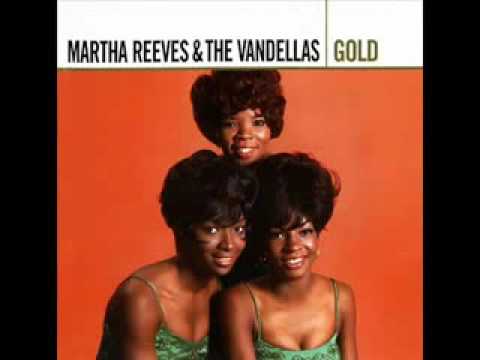
→ More from the 1960s File
View all 1960s hits →




Keep digging