The 1960s File Feature
Come And Get These Memories
Martha and the Vandellas and the Birth of a Motown Sound: "Come And Get These Memories" The debut chart single for Martha and the Vandellas arrived in the sp…
01 The Story
Martha and the Vandellas and the Birth of a Motown Sound: "Come And Get These Memories"
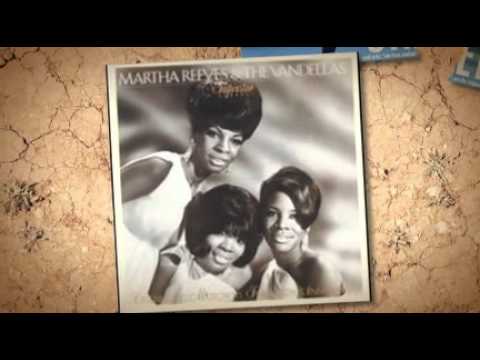
The debut chart single for Martha and the Vandellas arrived in the spring of 1963 as one of the first unmistakable dispatches from what would soon be recognized as a coherent and revolutionary musical movement. "Come and Get These Memories" introduced Martha Reeves, Rosalind Ashford, and Annette Sterling to the Billboard Hot 100 and established the template that would carry the group through one of the most celebrated runs in Motown history. It reached number twenty-nine on the pop chart and spent sixteen weeks on the listing — a substantial debut for any act, and a remarkable one for a group that had been assembled almost by accident.
Martha Reeves had originally come to Motown not as a signed artist but as a secretary in the A&R department, a position that placed her in proximity to the label's creative infrastructure and gave her insight into how its productions were assembled. When she was called to the studio to substitute for an absent Mary Wells, Reeves seized the opportunity. Her voice — powerful, rhythmically assured, capable of both tenderness and urgency — immediately caught the attention of the label's creative staff, and within months she was being developed as a lead artist in her own right, with Ashford and Sterling recruited to provide the backup vocal support that would become one of the group's defining characteristics.
The song was written by William "Mickey" Stevenson and Marvin Gaye, a pairing that produced some of the most commercially successful material in Motown's early catalogue. Stevenson was the label's head of A&R and one of the most active figures in its songwriting operation; Gaye, still early in his own career as a recording artist, was already demonstrating the compositional gifts that would define his legacy. Their collaboration on "Come and Get These Memories" produced a song that balanced melancholy and forward momentum with precision, giving Reeves material that tested the full range of her interpretive abilities.
The recording took place at Hitsville U.S.A., the Detroit studio at 2648 West Grand Boulevard that functioned as the nerve center of the Motown operation. The house band known as the Funk Brothers provided the musical foundation, as they did for virtually every Motown recording of the era. Their contribution to "Come and Get These Memories" — a rolling, rhythmically propulsive arrangement that framed Reeves's vocal without overshadowing it , exemplified the studio approach that would define the Motown Sound across dozens of subsequent hits. The production was overseen by Smokey Robinson initially but was refined through the standard Motown quality control process that subjected every release to intense collective scrutiny before it reached the public.
Gordy's Gordy Records label released the single, which entered the Hot 100 in April 1963 and climbed steadily through the spring and early summer. Its peak of number twenty-nine was respectable but understated the song's cultural importance. "Come and Get These Memories" was immediately recognized within the music industry as evidence that Motown had solved a complex commercial puzzle: how to create Black American music that crossed demographic boundaries without sacrificing emotional authenticity.
The success of the debut also shaped the group's subsequent recording strategy. The team of Stevenson and Gaye continued to write for Martha and the Vandellas, producing "Heat Wave" later the same year, a record that reached number four on the Hot 100 and transformed the group from a promising act into bona fide stars. The directness and rhythmic intensity of "Come and Get These Memories" had established what Reeves and her partners did best, and the Motown production apparatus quickly refined and amplified those qualities.
In retrospect, "Come and Get These Memories" occupies a position of considerable historical significance in American popular music. It marked the beginning of one of the defining acts of the 1960s and introduced Motown's creative community , its songwriters, producers, and studio musicians , to an audience that would grow substantially in the months and years that followed. The sixteen weeks it spent on the Hot 100 reflected not merely commercial performance but cultural durability: audiences returned to the record repeatedly because it delivered something that felt both immediate and lasting.
02 Song Meaning
Memory, Loss, and the Architecture of Motown Emotion in "Come And Get These Memories"
"Come and Get These Memories" is constructed around one of the most economically efficient emotional conceits in early Motown songwriting: the idea that the mementos of a failed relationship are not simply painful reminders but active burdens, objects that must be physically removed before emotional freedom becomes possible. This framing transformed a conventional breakup song into something with the dramatic weight of a scene rather than a sentiment. Martha Reeves's delivery made that scene vivid and immediate, turning an implicit narrative into something that felt witnessed rather than described.
The songwriting partnership of William "Mickey" Stevenson and Marvin Gaye produced a lyrical architecture that was characteristic of early Motown's approach to emotional subject matter: direct, unambiguous in its central situation, but rich enough in specific detail to reward repeated listening. The image of physical objects holding emotional memory was not new in popular song, but the invitation extended to the departed lover — the instruction to come and collect these things — introduced an element of agency and self-determination that elevated the narrator beyond the passive grief figure common in contemporary pop.
Musically, the record demonstrates the Motown production philosophy in its earliest fully realized form. The rhythm section work of the Funk Brothers gave the track a propulsive forward motion that prevented the emotional weight of the subject matter from collapsing into stasis. Grief, in the Motown aesthetic, was not permitted to slow the tempo; instead, the production's energy suggested that life continues even in the midst of loss, that the beat goes on regardless of personal circumstance. This was an ideological as well as a musical choice, one that aligned with the label's understanding of what its audience needed from its music.
The vocal performance by Reeves established characteristics that would define her throughout her career with the Vandellas. Her voice carried authority without harshness, emotional vulnerability without sentimentality. The backup vocal interplay contributed by Rosalind Ashford and Annette Sterling gave the performance a communal texture, suggesting that grief of this kind was shared experience rather than private affliction. This communal framing was central to Motown's cultural project: making the specific feel universal, the personal feel collectively recognized.
The record's significance in the history of Black American popular music extends beyond its commercial performance. It arrived at a moment when the cultural integration of American radio was still incomplete, and the challenge of crossing demographic boundaries without abandoning authenticity was one that the Motown organization faced with every release. "Come and Get These Memories" cleared that barrier by grounding its emotional appeal in musical and lyrical specificity rather than attempting to smooth over its origins. The result was a record that sounded like it came from somewhere real, which was precisely why listeners who came from entirely different places responded to it.
The song's influence on subsequent Motown production is traceable through the records that followed it from the same creative stable. The combination of rhythmic momentum, emotional directness, and skilled backup vocal arrangement that "Come and Get These Memories" deployed became a template that shaped dozens of subsequent releases. Berry Gordy's quality control process, which subjected every potential Motown single to competitive evaluation, recognized in this record the qualities that distinguished commercially durable material from one-dimensional novelty. The lessons encoded in its production informed the label's output for the remainder of the decade.
→ More from Martha & The Vandellas
View all Martha & The Vandellas hits →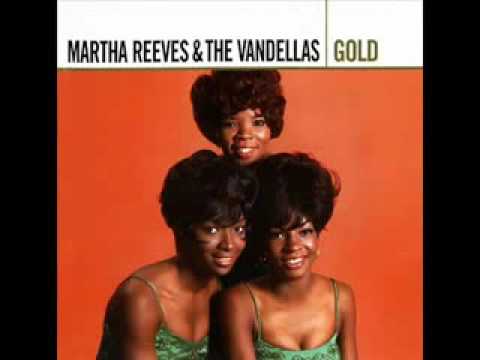
→ More from the 1960s File
View all 1960s hits →




Keep digging