The 1960s File Feature
My Little Red Book
"My Little Red Book" — Love Los Angeles, 1966, and a Band Like No Other Spring 1966 in Los Angeles was a city in creative ferment. The Sunset Strip was begin…
01 The Story
"My Little Red Book" — Love
Los Angeles, 1966, and a Band Like No Other
Spring 1966 in Los Angeles was a city in creative ferment. The Sunset Strip was beginning its transformation into one of the most consequential cultural corridors in American music history, and a collection of young musicians from wildly different backgrounds were finding each other and making something unprecedented. Love, the band formed around Arthur Lee, was among the most fascinating products of this ferment: a racially integrated rock group led by a Black singer and songwriter with a musical vision that drew on folk, psychedelia, R&B, and garage rock without settling comfortably into any of those categories. "My Little Red Book" was their first significant introduction to a national audience.
Arthur Lee was twenty years old and already operating with a sense of artistic ambition that few contemporaries could match. He had assembled around him a group of musicians, including guitarist Bryan MacLean, drummer Don Conka (later replaced by Michael Stuart), and others, whose collective chemistry produced a sound that was distinctly the band's own. Their debut single was a cover of a Burt Bacharach and Hal David composition that had originally appeared in the 1965 film What's New Pussycat, recorded there by Manfred Mann. Love's version transformed the material entirely.
From Film Song to Garage Assault
The Bacharach-David original was, characteristically, a sophisticated, melodically elegant pop construction. Love's 1966 recording took that material and ran it through the energy and attack of garage rock, producing something considerably rougher, more aggressive, and more emotionally raw than what the composers had likely imagined for the song. The tempo increased, the dynamics intensified, and Arthur Lee's vocal delivery carried an edge of real feeling that transformed the lyric's romantic frustration from elegant wit into something closer to genuine anguish.
This act of creative transformation was a statement of artistic intent. The band was declaring, through their choice and treatment of material, that they were not content to simply execute someone else's vision, even a vision as accomplished as Bacharach and David's. The Love version of the song became sufficiently well known that it overshadowed the original film version in the memory of listeners who encountered it.
Charting Through the Spring of 1966
The single entered the Billboard Hot 100 on April 30, 1966, debuting at number 99. Its ascent through the spring chart was gradual, moving through the lower reaches with consistency: 99, 97, 91, 83, 68, before eventually reaching its peak of number 52 during the week of June 25, 1966. The record spent eleven weeks on the Hot 100, a surprisingly extended run for a record that began at the very bottom of the chart and worked its way up through slow accumulation of radio play and sales.
Reaching number 52 gave Love their most significant Hot 100 showing in what would prove to be a commercially inconsistent but artistically celebrated career. The band's subsequent albums, particularly the 1967 masterpiece Forever Changes, achieved far greater critical recognition than commercial success, making this early chart showing an interesting data point in understanding how Love related to mainstream audiences.
Elektra Records and the Emerging Scene
Love was signed to Elektra Records, a label that had built its reputation on folk music and was in the process of transitioning toward rock acts as that genre's commercial potential became clear. The label's willingness to release a racially integrated rock band fronted by an idiosyncratic Black artist was not entirely without commercial calculation, but it also reflected Jac Holzman's genuine interest in music that did not fit easy commercial categories. Elektra's investment in Love gave Arthur Lee and his collaborators resources and distribution that independent-label alternatives of the period would not have provided.
The West Coast rock scene in 1966 was beginning to attract national attention, and Love's chart showing with "My Little Red Book" placed them among the early beneficiaries of that attention. They were part of the first generation of Los Angeles rock bands to achieve mainstream chart presence.
A Record That Opened Doors
Whatever commercial trajectory Love ultimately followed, which never quite matched the critical reputation Forever Changes would eventually accumulate, "My Little Red Book" served as a genuine introduction to a band that would prove one of the most important of its era. Press play and hear the moment Arthur Lee announced himself to the American mainstream.
"My Little Red Book" — Love's singular moment on the 1960s charts.
02 Song Meaning
"My Little Red Book" — Romantic Failure and the Anger of the Spurned
The Little Red Book as Symbol
The central image of the song, a small red book filled with phone numbers of romantic prospects, carries a very specific cultural resonance. In the mid-1960s, before digital contact management existed, the physical address book was a concrete artifact of one's social and romantic life, a literal record of connections made and maintained. The narrator's contemplation of this object after being rejected by a particular person transforms it from a neutral record-keeping tool into something charged with irony and pain. All those names and numbers, all that potential, and yet the one person who matters is unavailable. The gap between abundance and the specific absence that feels unbearable is the song's emotional subject.
Burt Bacharach and Hal David wrote the original lyric with the elegant wit that characterized their best work, understanding that romantic frustration could be rendered as both genuinely painful and gently absurd. Arthur Lee's vocal performance for Love added something darker to this foundation, making the narrator's predicament feel less like sophisticated comedy and more like authentic distress.
Love's Transformation of the Material
The relationship between Love's 1966 recording and the Bacharach-David source material raises interesting questions about artistic interpretation and the meaning that performance creates. The original film version, performed by Manfred Mann, treated the song with a kind of knowingness that kept emotional distance between the narrator's pain and the listener's sympathy. Love's version collapsed that distance, using the aggression and intensity of garage rock to make the emotional stakes feel higher and more immediate.
This transformation is meaningful because it reveals something about how musical context shapes lyrical meaning. The same words, in the same order, can produce entirely different emotional effects depending on the musical setting and vocal performance that surround them. The Bacharach-David composition was flexible enough to contain both readings, which is itself a mark of the writing's quality.
Arthur Lee and the Los Angeles Psyche
Arthur Lee's artistic sensibility was formed in a Los Angeles that was simultaneously sunny and anxious, a city of enormous creative energy and considerable social tension. His music, including Love's take on this Bacharach-David song, consistently showed an awareness of the shadows that fell across the California sunshine of mid-1960s pop mythology. The romantic failure narrated in "My Little Red Book" fit naturally into this sensibility: the song is not about someone who is ultimately content; it is about someone genuinely troubled by what they cannot have.
This willingness to engage with difficulty rather than resolve it neatly into optimism is a thread that runs through Love's best work and is already present in their debut single. It explains part of why the band eventually attracted the kind of intense critical devotion that Forever Changes has maintained: there was something honest in their approach that listeners with particular emotional needs recognized and valued.
The Lasting Resonance
Decades after its 1966 chart run, "My Little Red Book" remains a recognizable piece of the Love catalog, introduced to successive generations through the band's critical reputation and through the way rock history has incorporated Forever Changes into the canon of essential 1960s records. The single itself, as the group's Hot 100 debut, occupies a different place in that story: the moment when a genuinely unusual band first made contact with a mainstream audience.
The emotional situation the song describes, wanting someone who does not want you back with the same intensity, retaining all the trappings of romantic possibility while experiencing its specific failure, is as familiar in 2024 as it was in 1966. That universality is the foundation of the song's continued life in playlists and memory.
→ More from Love
View all Love hits →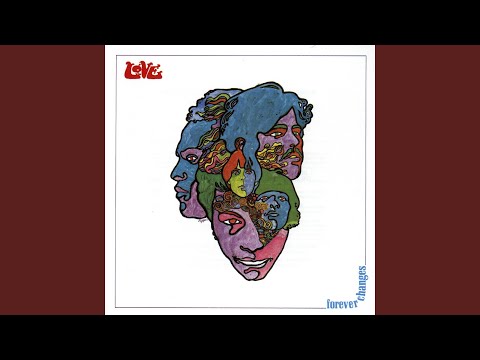
→ More from the 1960s File
View all 1960s hits →




Keep digging