The 1960s File Feature
7 And 7 Is
The Restless Snarl of 7 And 7 Is by Love Blink and you would miss it entirely: barely two minutes of pure combustion, guitars ratcheting up like a countdown …
01 The Story
The Restless Snarl of "7 And 7 Is" by Love
Blink and you would miss it entirely: barely two minutes of pure combustion, guitars ratcheting up like a countdown clock ticking toward detonation, a band from Los Angeles racing to see how much chaos they could cram into a single pop song before the needle finally lifted off the record. That was Love in 1966, and "7 And 7 Is" remains one of the most furious, uncompromising things ever to sneak onto American radio during a summer still dominated by folk-rock jangle and sunshine harmonies.
A Band Ahead of Its Own City
Love had formed on the Sunset Strip scene a year earlier, led by the restless, prolific songwriting instincts of Arthur Lee, a Black frontman leading a racially mixed band in an era when that alone was a quiet, meaningful act of defiance against an industry still largely segregated by genre and audience. Alongside guitarist Bryan MacLean, whose gentler songwriting voice would later balance Lee's intensity on record, the band had already built a reputation as the loudest, most unpredictable act working the Strip's club circuit. By the time of their second album, Da Capo, the group had already outpaced much of the folk-rock competition surrounding them, pushing toward something rougher, stranger, and considerably closer to proto-punk than anything else climbing the charts that year.
Two Minutes, No Mercy
Lee wrote "7 And 7 Is" largely alone, reportedly working through the song's tumbling, almost stream-of-consciousness lyric in a single feverish sitting fueled by whatever chaos was running through his head that week. The band recorded it with a manic, barely-controlled energy, drummer Alban "Snoopy" Pfisterer reportedly needing dozens of exhausting takes to nail the song's breakneck tempo before Michael Stuart eventually took over behind the kit for the released version that fans know today. Session accounts describe a band pushing itself well past the point of comfort, chasing a tempo few drummers of the era could sustain cleanly. That combination of frantic, unrelenting pacing and an explosive sound effect punctuating the song's final verse gave it a jolt unlike anything else climbing the American charts that particular summer, a genuine shock to the system dressed up as a two-minute pop single.
A Hot 100 Climb
Released as a single in the summer of 1966, "7 And 7 Is" entered the Billboard Hot 100 on July 30, 1966 at number 89 and steadily climbed over the following weeks, eventually reaching a peak position of number 33 during the chart week of September 24, 1966, where it notched its tenth week on the survey. For a band this uncompromising and this sonically abrasive by mid-1960s pop standards, cracking the top 40 at all was no small feat, and it remains, to this day, the highest-charting single of Love's entire career.
Legacy Bigger Than the Chart Number
The song's actual chart peak significantly undersells its lasting influence. "7 And 7 Is" has been cited repeatedly by generations of punk and garage-rock musicians as a genuinely foundational text, its velocity and controlled chaos anticipating the Ramones and countless bands that followed a full decade later, long before punk had a name or a scene of its own. Rolling Stone would eventually rank it among the greatest songs of all time in later critical reassessments, a reappraisal that far outstrips its comparatively modest original chart run.
Where It Sits in Love's Story
Arthur Lee would go on to make Forever Changes, the album most critics consider Love's true masterpiece and one of the era's great overlooked records, but "7 And 7 Is" remains the moment the band first showed just how far they were willing to push a three-minute pop single past its normal breaking point. Drop the needle and brace yourself; two minutes later it is over, and you will want to hear it again immediately, maybe twice.
"7 And 7 Is" — Love's singular moment on the 1960s charts.
02 Song Meaning
What "7 And 7 Is" by Love Is Really About
Ask ten people what "7 And 7 Is" means and you will likely get ten different answers, and that ambiguity is not a bug in Arthur Lee's songwriting so much as it is the entire engine of the track. This is a song built from fragments, images colliding faster than any listener can fully parse them in real time, which mirrors exactly the frantic mental state it seems intent on describing rather than explaining.
A Portrait of Racing, Anxious Thought
The lyric moves in flashes rather than any conventional linear narrative, jumping restlessly between images of frustration, disorientation, and a mind that simply refuses to sit still for even a moment. Rather than telling a coherent story, Arthur Lee seems to be attempting something closer to sound-painting an entire psychological state: anxious, keyed-up, teetering constantly on the edge of some explosion that the song's climactic sound effect finally makes shockingly literal.
The Bomb at the Center
That explosive burst near the song's very end, a jarring sound effect dropped abruptly into the mix like an actual detonation, has been read by listeners over the decades as everything from a metaphor for romantic release to a commentary on Cold War-era nuclear dread to simply a pressure valve for all the pent-up tension the song deliberately builds across its short runtime. Lee himself was famously cagey in interviews about pinning down any single fixed meaning, which has only fueled the decades of ongoing interpretation that followed the song's release.
Speed as Meaning
Part of what the song communicates is not contained in the words at all but lives entirely in the tempo itself. The band plays with an urgency that borders on outright panic, and that breakneck pace functions as its own kind of message: this is what it felt like to be young, wired, and slightly out of control in mid-1960s Los Angeles, a city rapidly filling with new sounds, new drugs, new political tensions, and new anxieties that folk-rock's gentler side rarely addressed head-on.
A Mixed-Race Band Making Noise in 1966
Context matters here too, and it shapes the song's undercurrent even when the lyrics stay abstract. Love was one of the first prominent racially integrated rock bands in America, fronted by a Black singer-songwriter at a moment when the country was still working through the immediate aftermath of the Civil Rights Act. That backdrop does not make the song explicitly political in any direct sense, but it does color the sense of restlessness and urgency running through it, a band refusing quietly but firmly to be contained by anyone's expectations, sonic or social, industry or audience.
Why the Chaos Still Resonates
Decades later, the song's flat refusal to resolve into any tidy, singular meaning is exactly why it keeps getting rediscovered by new generations of listeners. It does not explain itself, and it clearly has no interest in doing so; the tension, the relentless sprint, and that final detonation say everything a straightforward, literal lyric never could have managed on its own.
→ More from Love
View all Love hits →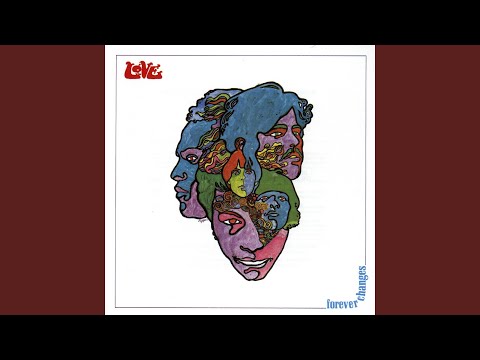

→ More from the 1960s File
View all 1960s hits →




Keep digging