The 1960s File Feature
Working In The Coal Mine
Lee Dorsey and "Working In The Coal Mine": New Orleans Soul and the Anatomy of a Classic In the summer of 1966, a record emerged from New Orleans that captur…
01 The Story
Lee Dorsey and "Working In The Coal Mine": New Orleans Soul and the Anatomy of a Classic
In the summer of 1966, a record emerged from New Orleans that captured the working-class experience with a directness and rhythmic vitality that few pop records have equaled before or since. "Working In The Coal Mine," recorded by Lee Dorsey and produced by the incomparable Allen Toussaint, entered the Billboard Hot 100 on July 23, 1966, debuting at number ninety. Over the following weeks it climbed with impressive momentum, reaching its peak position of number eight during the week of September 3, 1966, and spending twelve weeks on the chart. It was among the most successful records of Dorsey's career and one of the defining documents of New Orleans soul in the era of its greatest commercial viability.
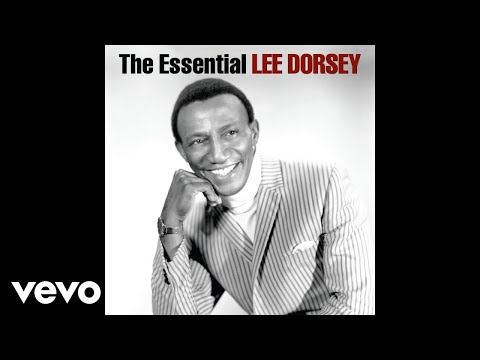
Lee Dorsey was born Irving Lee Dorsey in New Orleans in 1924 and had a genuinely unusual biography before he became a recording artist. He had served in the United States Navy during World War II and had worked as a professional boxer under the name Kid Chocolate before transitioning to music in the late 1950s. His early recording career was sporadic but promising, and he first achieved significant chart success in 1961 with "Ya Ya," a novelty-inflected record that reached number seven on the Hot 100. That song also came from the creative partnership with Allen Toussaint that would define the most commercially successful phase of Dorsey's career.
By 1966, Toussaint had established himself as one of the most important figures in American rhythm and blues, functioning simultaneously as songwriter, arranger, and producer from his base at Sansu Enterprises in New Orleans. His particular gift was for crafting arrangements that felt simultaneously rooted in the deep traditions of New Orleans music and utterly contemporary in their rhythmic feel. The Meters, who served as the core session band for many of Toussaint's productions during this period, brought an interlocking rhythmic precision to their playing that was unlike anything being produced elsewhere in American popular music, and their contribution to "Working In The Coal Mine" is central to the record's enduring power.
"Working In The Coal Mine" was written by Toussaint himself, and the song's construction reflects his mastery of economy and groove. The lyric describes the exhausting daily labor of a coal miner with a combination of complaint and resigned humor that gives the song a distinctive tonal complexity. The narrator is tired, the work is hard, and the conditions are difficult, yet the arrangement is propulsive and joyful in a way that creates a productive tension between the song's subject matter and its sonic presentation. That tension is at the heart of the record's appeal.
Dorsey's vocal performance is one of the finest of his career. His voice had a naturally warm and slightly roughened quality that suited working-class subject matter perfectly, and he brought to the recording a physical, committed energy that made the narrator's fatigue feel genuine even as the rhythm section drove forward with irresistible momentum. The call-and-response elements in the arrangement, with backing vocals answering Dorsey's lead lines, gave the record a communal quality that reinforced its subject matter: this was the sound of shared labor and shared endurance.
The Amy Records release was distributed nationally at a moment when New Orleans soul was finding an unusually receptive audience. The success of other Toussaint-produced records alongside concurrent releases by artists on the Stax and Volt labels based in Memphis had created a substantial appetite for Southern soul in the American pop market, and "Working In The Coal Mine" benefited from that receptivity. It crossed over from rhythm and blues formats to pop radio with notable ease, and its peak of number eight on the Hot 100 was matched by strong performance on the R&B charts as well.
The song's cultural afterlife has been considerable. It was featured prominently in the 1980 film Caddyshack, which introduced it to an entirely new generation of listeners, and it has been covered by artists across numerous genres including Devo, whose 1981 version appeared on the Heavy Metal soundtrack and brought the song to yet another audience. These successive waves of rediscovery speak to the fundamental durability of Toussaint's composition and the timelessness of its central subject: the universal experience of hard work and the question of what sustains people through it.
Lee Dorsey continued recording throughout the late 1960s and into the 1970s, achieving further success with songs including "Ride Your Pony" and "Holy Cow," all produced by Toussaint. He died in New Orleans in 1986, but his recordings endure as essential documents of one of American music's most distinctive regional traditions. "Working In The Coal Mine" stands at the center of that legacy, a record that distills everything exceptional about the New Orleans approach to rhythm and blues into a compact, perfectly realized form. Its combination of rhythmic sophistication, melodic directness, and genuine emotional authenticity has kept it in active circulation for six decades, and its place in the canon of American popular music is thoroughly secure.
02 Song Meaning
Labor, Groove, and Endurance: What "Working In The Coal Mine" Communicates
"Working In The Coal Mine" is a song about exhaustion that refuses to be exhausting. This paradox sits at the center of the record's meaning and accounts in large part for its remarkable durability. Allen Toussaint, who wrote the song, understood that the experience of hard, repetitive physical labor contains within it not only suffering and complaint but also a kind of rhythm that is inseparable from the work itself. The coal miner's day has a beat, and Toussaint captured that beat in an arrangement that makes the music feel like labor transformed into pure groove.
The song's lyrical stance is one of weary honesty rather than protest or celebration. The narrator does not idealize the coal mine or romanticize its dangers; the work is genuinely hard, the hours are long, and the body registers the toll. Yet neither does the song offer the kind of explicit social critique that characterized much labor-themed music of the period. Toussaint was writing a soul record, not a political manifesto, and his genius was to locate the universal human dimension of the working experience without reducing it to a political position. The coal miner's fatigue is the fatigue of anyone who has ever done difficult, repetitive work for a living, and the song's appeal crosses occupational and social boundaries accordingly.
Lee Dorsey's vocal interpretation deepens the song's meaning considerably. His delivery is simultaneously tired and vital, capturing the paradox of a body worn down by labor that somehow keeps moving forward. The physical quality of his voice, with its roughened edges and warm timbre, suits the subject matter in a way that a more polished vocal approach never could. Dorsey sounds like a man who knows what hard work is because he has done it, and that credibility is a crucial component of the record's emotional impact.
The call-and-response structure embedded in the arrangement carries its own layer of meaning. Coal mining historically was communal labor, performed by groups of workers in conditions of shared difficulty and mutual dependence. The interplay between Dorsey's lead vocal and the backing voices in the recording echoes that communal dimension, suggesting a shared experience rather than an individual complaint. This structural choice transforms the song from a personal account into something closer to a collective testimony, a quality that resonates with the traditions of work songs and field hollers that lie deep in the history of African American music.
The song's commercial success, reaching number eight on the Billboard Hot 100 in September 1966, demonstrated that its themes resonated with a broad popular audience at a moment when the United States was undergoing significant social change. Working-class identity and the dignity of physical labor were subjects that pop music rarely addressed directly, and "Working In The Coal Mine" filled a genuine gap in the cultural conversation. Its popularity confirmed that pop listeners were not exclusively interested in romantic narratives and that records addressing the textures of everyday working life could find a substantial audience.
The endurance of the song across subsequent decades, through its appearance in Caddyshack, through Devo's iconic cover, and through countless other reinterpretations, reflects something fundamental about what it communicates: the experience of working hard and keeping going is not historically specific or culturally bounded. Every era has its coal mines, its exhausting routines, its question of what makes human beings persist through difficulty. Toussaint wrote a song that answers that question not with ideology but with music, proposing that the groove itself, the irresistible forward motion of the rhythm, is what keeps people moving when the work gets hard. That is a profound and enduring idea, and it explains why the record remains as vital now as when Dorsey first laid it down in New Orleans in 1966.
→ More from Lee Dorsey
View all Lee Dorsey hits →

→ More from the 1960s File
View all 1960s hits →




Keep digging