The 1960s File Feature
Muddy River
Muddy River — Johnny Rivers The summer of 1969 occupied a peculiar position in American rock's timeline. Woodstock was still a month away. The psychedelic er…
01 The Story
Muddy River — Johnny Rivers
The summer of 1969 occupied a peculiar position in American rock's timeline. Woodstock was still a month away. The psychedelic era was beginning to exhale its last breath, and the harder blues-rock that would define the early 1970s was assembling itself in studios and rehearsal spaces. Meanwhile, on the pop radio dial, a different story was playing out: artists who had found their commercial footing in the mid-1960s were navigating a rapidly changing landscape, trying to maintain their audiences while the musical center of gravity kept shifting. Johnny Rivers was one of these navigators, a veteran of the Whiskey a Go Go, a reliable hitmaker since 1964, and in the summer of 1969 a man who spent eleven weeks on the Billboard Hot 100 with a recording called Muddy River.
Johnny Rivers at the Crossroads
By 1969, Rivers had accumulated a substantial catalog of Hot 100 entries, including genuine top-ten performances like "Secret Agent Man," "Poor Side of Town," and "Baby I Need Your Lovin'." He had built his commercial identity partly on well-executed covers and partly on originals that shared those covers' accessible, radio-ready quality. Rivers was not an artist who broke new stylistic ground, but he was one of the more consistent commercial performers of his era, a craftsman who understood what his audience wanted and delivered it reliably. By 1969, the question was whether that audience was still large enough and loyal enough to sustain the chart presence he had maintained throughout the decade.
The Record and Its Sound
Muddy River fit comfortably within the late-1960s folk-rock and soft-rock territory that Rivers had been exploring as psychedelia's commercial wave crested. The production had the warm, organic quality that characterized the best California-based recordings of the period, with acoustic guitar and piano providing the foundation and the arrangement staying spare enough to let the melody and lyric breathe. Rivers's vocal delivery on this material was notably more restrained than his earlier rockabilly-influenced work, reflecting both the maturation of his voice and the different emotional register the song required.
The Chart Run
Muddy River debuted on the Hot 100 on June 28, 1969, entering at number 97. Its climb was brisk in the early weeks: to 88, then 60, then 56, 55, and continuing upward through July and August before reaching its peak position of number 41 during the week of August 23, 1969. Eleven weeks total on the chart, representing a genuine and sustained commercial moment. A peak of 41 in the summer of 1969 placed the record in clear earshot of the top 40, which was the standard threshold for what most industry observers considered a real hit in the format radio era.
Southern Rivers and Western Pop
The imagery in the title, and presumably in the lyric, reached toward the South as a source of emotional depth in the American folk-rock tradition. The muddy river as a symbol of the American South, with its associations of history, geography, and the particular aesthetic of lowland life, had been a recurring image in American music long before Rivers recorded this song. Employing that imagery in a late-1960s pop context was a choice that connected the record to a broader tradition of American roots music while packaging it in the accessible production style that Rivers's label and commercial audience expected.
The LA Pop Scene
Rivers had been a fixture of the Los Angeles music scene since the early 1960s, and by 1969 he was embedded in a professional network that included many of the most productive musicians, producers, and songwriters of the California pop world. His recordings of this period benefited from the studio resources and session musician depth that made LA the dominant recording center for commercial American pop. The production quality of California pop in 1969 was extraordinarily high, and even a record that charted at number 41 rather than number one would have been crafted with care and professional precision that reflected the standards of that particular creative ecosystem.
A Career That Outlasted the Hit Parade
Rivers continued performing and recording long after his peak Hot 100 years, maintaining a connection with audiences who had followed him since the Whiskey a Go Go days and who valued the consistency and craft of his performances over the decades. The eleven-week chart run of Muddy River belongs to the tail end of his commercial peak period, a genuine entry in a substantial Hot 100 history that documented nearly a decade of reliable chart activity from a performer who understood his audience and gave them what they came for. That consistency, across multiple format shifts and half a decade of rapid stylistic change in American popular music, was itself a form of professional achievement worth acknowledging.
Let the river run and let the song take you downstream.
"Muddy River" — Johnny Rivers's singular moment on the 1960s charts.
02 Song Meaning
Water and Wandering: The Meaning of "Muddy River"
Rivers are among the oldest metaphors in human expression, running through the imagery of cultures across the world precisely because their properties so accurately reflect certain qualities of time and experience. They move in one direction, carry things with them, gradually shape the land they run through, and can be navigated but not stopped. A muddy river specifically evokes the American South, with its particular history and particular way of embedding that history in the landscape itself.
The South as Emotional Geography
In the American popular music tradition, the South has functioned as an emotional geography as much as a physical one. The Mississippi, the Delta, the bayous and slow-moving rivers of the lowlands: these places are loaded with cultural meaning that extends far beyond their geographical reality. When pop and folk-rock artists reached for Southern imagery in the late 1960s, they were connecting to a tradition of meaning-making that associated those landscapes with depth, with history, with the kind of feeling that the quick, bright surfaces of pop culture could not easily accommodate.
The River as Time
Rivers move through time in a way that mirrors memory and experience. They carry sediment from upstream, deposit it as they slow, change their course over decades, and maintain their essential character while constantly changing their specific content. As a metaphor for lived experience, the river is almost too apt: the muddy water suggests not the clarity of immediate experience but the accumulated silt of memory, of everything that has been carried along by the current of a life. A muddy river is not an impure river; it is a river that has been places, that bears the evidence of its history.
Folk-Rock and the Roots Tradition
Late-1960s folk-rock was engaged in a sustained project of reconnecting American popular music to its pre-rock-and-roll roots, finding in country, blues, and folk traditions resources that could sustain more complex emotional and artistic ambitions than straight pop allowed. Southern imagery was part of this reconnection project, a way of grounding commercially accessible music in a tradition that carried its own weight of authenticity and historical depth. Rivers's use of the muddy river image placed his record in this broader conversation, claiming a connection to something older and more rooted than the immediate demands of the pop format.
Wandering and the American Road
Water imagery in American pop frequently intersects with movement imagery, the river as road, the flow as journey, the bank as somewhere you pause before moving on. The suggestion of wandering that runs through much of the folk-rock tradition of this period reflected a genuine cultural mood: a generation that had left home and was uncertain where it was going found in images of rivers and roads an honest representation of its own experience. Movement without clear destination, flow without certain arrival: these were emotionally accurate metaphors for the late 1960s experience of being young in America.
Why the Image Endures
The muddy river as image has persisted in American music because the experience it represents is not historically specific. Every generation navigates its own muddy waters, carries its own accumulated history, moves through its own landscape of loss and persistence. The specific production choices of 1969 will always date the recording, but the emotional territory it inhabits is the kind that remains available to listeners across time. When the song finds you, it finds you with the full weight of the metaphor, whatever particular river you happen to be running alongside when you first hear it.
→ More from Johnny Rivers
View all Johnny Rivers hits →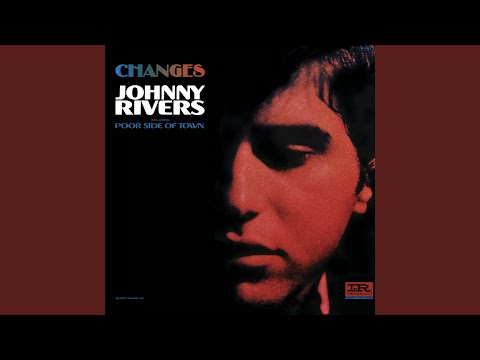

→ More from the 1960s File
View all 1960s hits →




Keep digging