The 1960s File Feature
Memphis
The Electric Charm of Memphis by Johnny Rivers Picture a packed nightclub on the Sunset Strip in 1964, the air thick with energy, the crowd pressed close to …
01 The Story
The Electric Charm of "Memphis" by Johnny Rivers
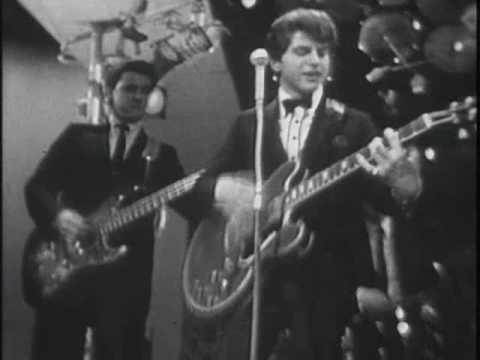
Picture a packed nightclub on the Sunset Strip in 1964, the air thick with energy, the crowd pressed close to a small stage where a young man with a guitar is whipping the room into a frenzy. That club was the famous Whisky a Go Go, and that performer was Johnny Rivers, whose live-wire rendition of "Memphis" would launch him into stardom and capture the rowdy, intimate magic of the era's hottest venue.
A Star Made on the Sunset Strip
Johnny Rivers was already a working musician when the 1960s caught fire, but it was his residency at the Whisky a Go Go that transformed him into a sensation. The club had become the epicenter of Los Angeles nightlife, a place where the new go-go culture and dance crazes collided. Rivers, with his clean-cut looks and infectious energy, was the perfect house act. His ability to electrify a crowd with rock and roll covers made him a local legend, and a recording of those performances would carry that excitement to the rest of the country.
A Live Recording That Crackled With Energy
"Memphis" was a song written by Chuck Berry, the rock and roll pioneer whose compositions formed the bedrock of the genre. Rivers took Berry's tale and made it his own, recording it live at the Whisky a Go Go so listeners could feel the heat of the room. The arrangement is lean and driving, propelled by chiming guitar and a rhythm that practically demands movement. You can hear the audience, the immediacy, the sense of a performance happening in real time. That liveness gave the record a vitality that polished studio cuts often lacked. You can practically picture the dancers, the flashing lights, the sweat on the walls of a club packed past capacity.
An American Answer to the British Invasion
The timing of the song's success makes it all the more striking. In 1964, the Beatles and a wave of British bands had stormed the American charts, leaving many homegrown acts scrambling for attention. Johnny Rivers offered an American counterpoint, a reminder that the roots of this music lay in the rock and roll and rhythm and blues of the United States. By taking a Chuck Berry song and electrifying it for a new audience, he honored that lineage while sounding completely of the moment. His live recordings captured a distinctly American kind of excitement, the energy of a club scene that would soon make Los Angeles a rival to London and Liverpool as a center of pop culture.
A Smash on the Hot 100
The single rocketed up the Billboard Hot 100. It debuted at number 88 on May 30, 1964 and climbed with remarkable speed, leaping into the top ten within weeks. It ultimately peaked at number 2 on July 11, 1964, held off the top spot but firmly established as one of the summer's biggest hits. The song spent twelve weeks on the chart and announced Johnny Rivers as a major new force in American pop, all the more impressive given the British Invasion that was dominating the charts that very year.
The Foundation of a Lasting Career
"Memphis" was the breakthrough that set Rivers on his way. He would go on to score a string of hits through the 1960s and beyond, building a catalogue of energetic covers and originals. His success also helped cement the Whisky a Go Go's reputation as a launchpad for stars. The song endures as a snapshot of a particular moment when live recordings could capture lightning in a bottle and turn a club act into a national phenomenon.
Press Play and Feel the Room
Put this one on and let the live energy wash over you. You can almost smell the club, feel the crowd, sense the thrill of a performance caught at full tilt. It is rock and roll at its most immediate and joyful, a window into a vanished world of go-go dancing and Sunset Strip nights.
"Memphis" — Johnny Rivers's singular moment on the 1960s charts.
02 Song Meaning
What "Memphis" by Johnny Rivers Really Means
For a song built on such joyful, danceable energy, "Memphis" tells a surprisingly tender and emotionally clever story. Originally written by Chuck Berry, the lyrics unfold as a phone call, with the narrator pleading with an operator to connect him to someone in Memphis. The real meaning only reveals itself in the final lines, giving the song an emotional twist that has charmed listeners for decades.
A Story Told Through a Phone Call
The narrative is framed entirely around the desperation of a man trying to reach a loved one named Marie. He begs the long-distance operator for help, listing the few details he knows about where she lives. For most of the song, the listener assumes this is a tale of romantic longing, a man trying to reconnect with a lover who has slipped away from him.
The Heartbreaking Reveal
The genius of the lyric lies in its closing revelation. Marie is not a lost lover but the narrator's young daughter, separated from him by a broken marriage. Suddenly the entire song recontextualizes itself, and what seemed like a romantic plea becomes the ache of a father cut off from his child. It is a masterclass in storytelling economy, packing a genuine emotional gut-punch into a brisk pop song.
Energy Masking Sorrow
What makes Rivers's version so distinctive is the contrast between the upbeat delivery and the melancholy heart of the story. The driving rhythm and live excitement almost disguise the sadness underneath. This tension is part of the song's enduring appeal; it works as a dance-floor filler and as a small piece of narrative heartbreak, depending on how closely you listen. The energy never lets the sorrow become maudlin.
Why It Connected
Audiences in 1964 responded to both the irresistible groove and the relatable human story at its core. The theme of family separation and longing is timeless, touching anyone who has been kept apart from someone they love. Chuck Berry's original songwriting gave the track its emotional bones, and Johnny Rivers's electric performance gave it the spark that carried it up the charts. Together they created a record that makes you move and, if you are paying attention, makes you feel. The twist ending rewards close listening in a way few dance hits ever do, turning a casual party record into something you remember long after the music stops. That combination of irresistible groove and genuine emotional payoff is exactly why the song has endured, covered and celebrated for decades after Rivers first lit up the Whisky a Go Go with it. It proves that a great pop record can do two things at once, filling a dance floor while quietly breaking a heart. That double life is the mark of songwriting at its most economical and most affecting.
→ More from Johnny Rivers
View all Johnny Rivers hits →

→ More from the 1960s File
View all 1960s hits →




Keep digging