The 1960s File Feature
Maybelline
Maybelline — Johnny Rivers (1964) Note: This is Johnny Rivers's 1964 cover version of "Maybelline," originally written and recorded by Chuck Berry in 1955. R…
01 The Story
Maybelline — Johnny Rivers (1964)
Note: This is Johnny Rivers's 1964 cover version of "Maybelline," originally written and recorded by Chuck Berry in 1955. Rivers's recording appeared on Imperial Records and is a distinct commercial release from Berry's original.
Johnny Rivers arrived on the national commercial music scene through a combination of talent, timing, and a venue that would become legendary in the history of American rock and roll. The Whisky a Go Go on Sunset Strip in West Hollywood had opened in January 1964, and Rivers became the club's resident act almost immediately, developing a reputation for high-energy performances that drew celebrities and industry insiders in numbers that translated into serious commercial attention. It was in this context that his recordings for Imperial Records gained their initial momentum, with live recordings from the Whisky capturing an energy and immediacy that the controlled environment of the studio could not fully replicate.
Rivers's version of "Maybelline" was recorded for Imperial Records in 1964, the year he was establishing himself as a genuine commercial force in American pop and rock. The original composition by Chuck Berry had been released in 1955 on Chess Records and had reached number one on the rhythm-and-blues chart while also crossing into the pop top five, a remarkable achievement in that racially segregated commercial landscape. By 1964, Berry's original had become a touchstone of the rock-and-roll vocabulary, a song that any aspiring rock-and-roll performer was expected to know and be able to perform.
Rivers's approach to the material reflected his understanding of how the song worked on a live audience. The driving guitar figure that Berry had made central to the original's appeal was preserved, but Rivers and his band brought to it a slightly different rhythmic feel that placed it more firmly in the early 1960s rock-and-roll tradition that had developed from Berry's innovations. The production, while capturing some of the live energy that was Rivers's commercial calling card, was sufficiently controlled to function as effective radio programming.
The choice to record "Maybelline" was significant in the context of 1964. The British Invasion had arrived with the Beatles' appearance on The Ed Sullivan Show in February of that year, and American acts were under significant pressure to demonstrate that domestic rock and roll retained its commercial and artistic vitality. Reaching back to Chuck Berry, whose guitar-based compositions had directly influenced the Beatles and the Rolling Stones, was both a statement of artistic values and a practical commercial strategy. Rivers was essentially asserting the primacy of the American rock tradition at the precise moment that tradition was under the most significant competitive challenge it had faced.
Imperial Records had the distribution and promotional infrastructure to ensure that Rivers's recordings received meaningful radio attention, which was essential in the pre-album-oriented-radio era when singles dominated the commercial landscape. The label had been one of the important independent labels of the 1950s and had navigated the transition to the 1960s by signing acts who could compete in the new commercial environment. Rivers was one of their most significant assets during this period.
The broader context of Rivers's career at this moment is essential to understanding the record's significance. He had been working as a professional musician since his mid-teens and had developed a wide-ranging musical education that encompassed country, folk, rhythm and blues, and rock and roll. This eclecticism made him effective as a live performer capable of responding to audience energy, and it informed his choices of material in ways that gave his recordings a range uncommon among pure pop acts of the era.
Rivers performed extensively at the Whisky a Go Go during 1964, and recordings from this period were released as live albums that became significant commercial properties. The combination of live and studio recordings from this year established his commercial identity in a way that would sustain his career through the significant changes in the music industry that followed. His ability to communicate the energy of the live experience through studio recordings, and to choose material that resonated with his audience's expectations and enthusiasms, was the central skill that "Maybelline" and similar records demonstrated.
The song's position within the Chuck Berry catalog also gave it a specific cultural significance that Rivers's version inherited. Berry's original was one of the founding documents of rock and roll, a record that had helped establish the guitar-based, rhythmically assertive sound that would dominate popular music for decades. By performing it in 1964, Rivers was participating in the ongoing project of establishing and transmitting a musical tradition, demonstrating that the roots of rock and roll remained vital and commercially relevant even as the music evolved in new directions.
Rivers continued to record and perform through the 1960s and beyond, accumulating a catalog of hits that established him as one of the more durable figures of his generation. "Maybelline" represented one contribution to the early phase of that career, a demonstration of his ability to take established material and make it his own while honoring what had made it significant in the first place.
02 Song Meaning
Meaning and Themes: Maybelline (Johnny Rivers, 1964)
Note: This discussion concerns Johnny Rivers's 1964 cover version. Chuck Berry's original composition from 1955 established the song's themes and narrative, which Rivers preserved in his recording.
"Maybelline," as composed by Chuck Berry and performed by Johnny Rivers, is a car-chase narrative that uses the conventions of automotive culture to tell a story of romantic pursuit and betrayal. The narrator is chasing the titular Maybelline in his car, having spotted her driving away with another man. The pursuit is both literal and figurative: he is chasing a vehicle, but he is also chasing a relationship he believes he is losing, and the outcome of the race will determine the outcome of his romantic claim.
The use of cars as a central metaphor was not accidental. In the mid-1950s, when Berry wrote the original, automobile culture was at the peak of its symbolic importance in American life. Cars represented freedom, social status, masculine identity, and sexual prowess in ways that made them ideal vehicles (in every sense) for popular song. The car chase in "Maybelline" was immediately legible to audiences as a story about male competition and romantic rivalry, with the highway as the arena where the contest would be decided.
Johnny Rivers's 1964 recording updated this symbolism for a new generation without abandoning any of its original force. By 1964, the car culture Berry had referenced had become even more deeply embedded in American popular consciousness, and the rock-and-roll tradition that Berry had helped create had made car songs a recognized and beloved genre. Rivers's version therefore arrived as both a piece of heritage and a piece of contemporary pop, simultaneously honoring a founding text of rock and roll and demonstrating its continuing relevance.
The competitive dynamic at the heart of the song deserves attention. The narrator's anger is directed not only at the rival who has his girl but at the girl herself, whose agency in the situation is acknowledged by the fact that she is the one driving away. Maybelline is not a passive object being contested between two men; she is an active participant in the drama, making her own choices and compelling the narrator to respond to them. This element of female agency within what might otherwise read as a straightforward masculine competition narrative gives the song a complexity that has contributed to its longevity.
The energy of Rivers's performance brought its own layer of meaning to the material. His approach communicated the urgency and excitement of the chase directly through tempo and vocal delivery, making the listener experience something of the breathless quality of the race rather than merely being told about it. This quality of immediacy was central to rock and roll's appeal as a genre, and Rivers understood how to deploy it effectively.
The song also participates in a tradition of American narrative song, in which a story is told efficiently and dramatically with a clear beginning, middle, and end. The economy of storytelling in "Maybelline," the way Berry packed a complete dramatic arc into the format of a pop single, was one of the qualities that made it a model for subsequent rock-and-roll songwriting. Rivers's cover honored this narrative efficiency while adding his own interpretive presence.
Within the context of Rivers's 1964 catalog, the song represented his commitment to the roots of rock and roll at a moment when those roots were being both challenged and celebrated from multiple directions simultaneously. His willingness to engage directly with Berry's material was a statement about artistic values and musical lineage that resonated with audiences who were also navigating the complex relationship between American rock-and-roll tradition and the new sounds arriving from Britain. The song's themes of pursuit, competition, and the uncertain outcomes of romantic rivalry were rendered through a performance that confirmed the continuing vitality of the tradition in which both Berry's original and Rivers's cover belonged.
→ More from Johnny Rivers
View all Johnny Rivers hits →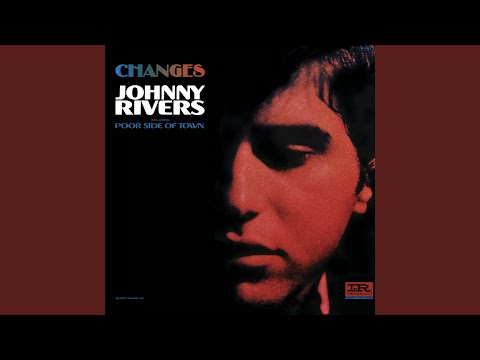

→ More from the 1960s File
View all 1960s hits →




Keep digging